

Researchers in Bonn have identified rare genetic variants that are involved in male-pattern hair loss.
Previous studies on male pattern hair loss, or androgenetic alopecia, have identified several common genetic variations linked to this condition, characterized by a receding hairline, loss of hair at the crown, and eventually a horseshoe-shaped pattern of baldness.
Researchers from the University Hospital of Bonn (UKB) and the University of Bonn’s Transdisciplinary Research Unit “Life & Health” have recently conducted a comprehensive analysis to determine the role of rare genetic variants in contributing to this disorder.
For this purpose, they analyzed the genetic sequences of 72,469 male participants from the UK Biobank project. The analyses identified five significantly associated genes, and further corroborated genes implicated in previous research. The results have now been published in the prestigious scientific journal Nature Communications.
Challenges in Studying Rare Genetic Variants
Male-pattern hair loss is the most common form of hair loss in men, and is largely attributable to hereditary factors. Current treatment options and risk prediction are suboptimal, thus necessitating research into the genetic underpinnings of the condition.
To date, studies worldwide have focused primarily on common genetic variants, and have implicated more than 350 genetic loci, in particular the androgen receptor gene, which is located on the maternally inherited X chromosome. In contrast, the contribution to this common condition of rare genetic variants has traditionally been assumed to be low. However, systematic analyses of rare variants have been lacking.
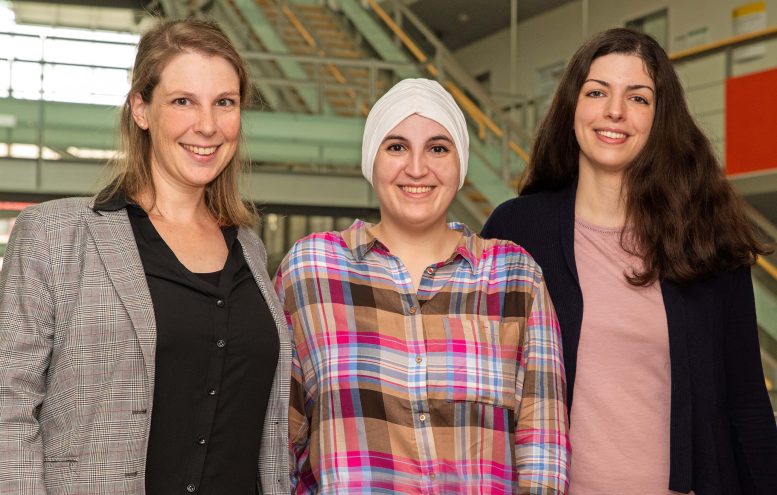
“Such analyses are more challenging as they require large cohorts, and the genetic sequences must be captured base by base, e.g., through genome or exome sequencing of affected individuals,” explained first author Sabrina Henne, who is a doctoral student at the Institute of Human Genetics at the UKB and the University of Bonn. The statistical challenge lies in the fact that these rare genetic variants may be carried by very few, or even single, individuals.
“That is why we apply gene-based analyses that first collapse variants on the basis of the genes in which they are located,” explained corresponding author PD Dr. Stefanie Heilmann-Heimbach, who is a research group leader at the Institute of Human Genetics at the UKB at the University of Bonn.
Among other methods, the Bonn researchers used a type of sequence kernel association test (SKAT), which is a popular method for detecting associations with rare variants, as well as GenRisk, which is a method developed at the Institute of Genomic Statistics and Bioinformatics (IGSB) at the UKB and the University of Bonn.
Possible relevance of rare variants in male-pattern hair loss
The research involved the analysis of genetic sequences from 72,469 male UK Biobank participants. Within this extensive data set, Bonn geneticists, together with researchers from the IGSB and the Center for Human Genetics at the University Hospital Marburg, examined rare gene variants that occur in less than one percent of the population.
Using modern bioinformatic and statistical methods, they found associations between male-pattern hair loss and rare genetic variants in the following five genes: EDA2R, WNT10A, HEPH, CEPT1, and EIF3F.
Prior to the analyses, EDA2R and WNT10A were already considered candidate genes, as based on previous analyses of common variants.
“Our study provides further evidence that these two genes play a role and that this occurs through both common and rare variants,” explained Dr. Stefanie Heilmann-Heimbach. Similarly, HEPH is located in a genetic region that has already been implicated by common variants, namely the EDA2R/Androgen receptor, which is a region that has consistently shown the strongest association with male-pattern hair loss in past association studies. “However, HEPH itself has never been considered as a candidate gene. Our study suggests that it may also play a role,” explained Sabrina Henne.
“The genes CEPT1 and EIF3F are located in genetic regions that have not yet been associated with male-pattern hair loss. They are thus entirely new candidate genes, and we hypothesize that rare variants within these genes contribute to the genetic predisposition. HEPH, CEPT1, and EIF3F represent highly plausible new candidate genes, given their previously described role in hair development and growth.”
Furthermore, the results of the study suggest that genes that are known to cause rare inherited diseases affecting both skin and hair (such as the ectodermal dysplasias) may also play a role in the development of male-pattern hair loss. The researchers hope that the puzzle pieces they have discovered will improve understanding of the causes of hair loss, and thus facilitate reliable risk prediction and improved treatment strategies.
Reference: “Analysis of 72,469 UK Biobank exomes links rare variants to male-pattern hair loss” by Sabrina Katrin Henne, Rana Aldisi, Sugirthan Sivalingam, Lara Maleen Hochfeld, Oleg Borisov, Peter Michael Krawitz, Carlo Maj, Markus Maria Nöthen and Stefanie Heilmann-Heimbach, 22 September 2023, Nature Communications.
DOI: 10.1038/s41467-023-41186-w
The research was supported by funding from the Medical Faculty of the University of Bonn. Prof. Dr. Markus Nöthen, Director of the Institute of Human Genetics at UKB and co-author of the study, is a member of the Transdisciplinary Research Area (TRA) “Life and Health” at the University of Bonn. The publication costs in open-access format were funded by the DEAL project of the University of Bonn.
Never miss a breakthrough: Join the SciTechDaily newsletter.
Follow us on Google and Google News.
1 Comment
Is the gene stopping or limiting the amount of natural oils sebum needed vitamins maybe.