
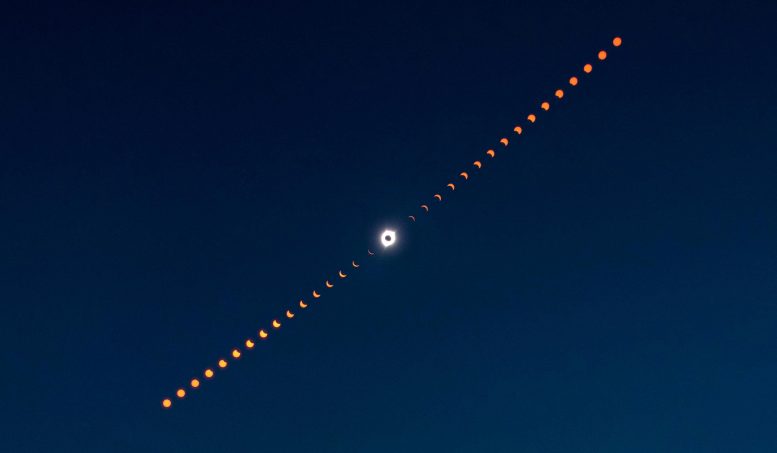
NASA is funding five diverse research projects to exploit the scientific opportunities presented by the total solar eclipse on April 8, 2024. Using a mix of high-altitude cameras, spectrometers, ham radios, and citizen science, the projects aim to investigate the Sun’s corona, radio wave propagation during solar eclipses, solar radiation’s impact on Earth’s upper atmosphere, and the activity of solar “hot spots.” These studies will enhance our understanding of the Sun and its influence on Earth.
A total solar eclipse will darken a swath of North America as the Moon blocks the light of the Sun for a few minutes on April 8, 2024. In addition to casting a breathtaking, passing shadow over the heads of millions of people, this total solar eclipse gives scientists a unique opportunity to study the Sun, Earth, and their interactions.
NASA will fund five interdisciplinary science projects for the 2024 eclipse to make the most of this opportunity. The projects, which are led by researchers at different academic institutions, will study the Sun and its influence on Earth with a variety of instruments, including cameras aboard high-altitude research planes, ham radios, and more. Two of the projects also encourage participation from citizen scientists.
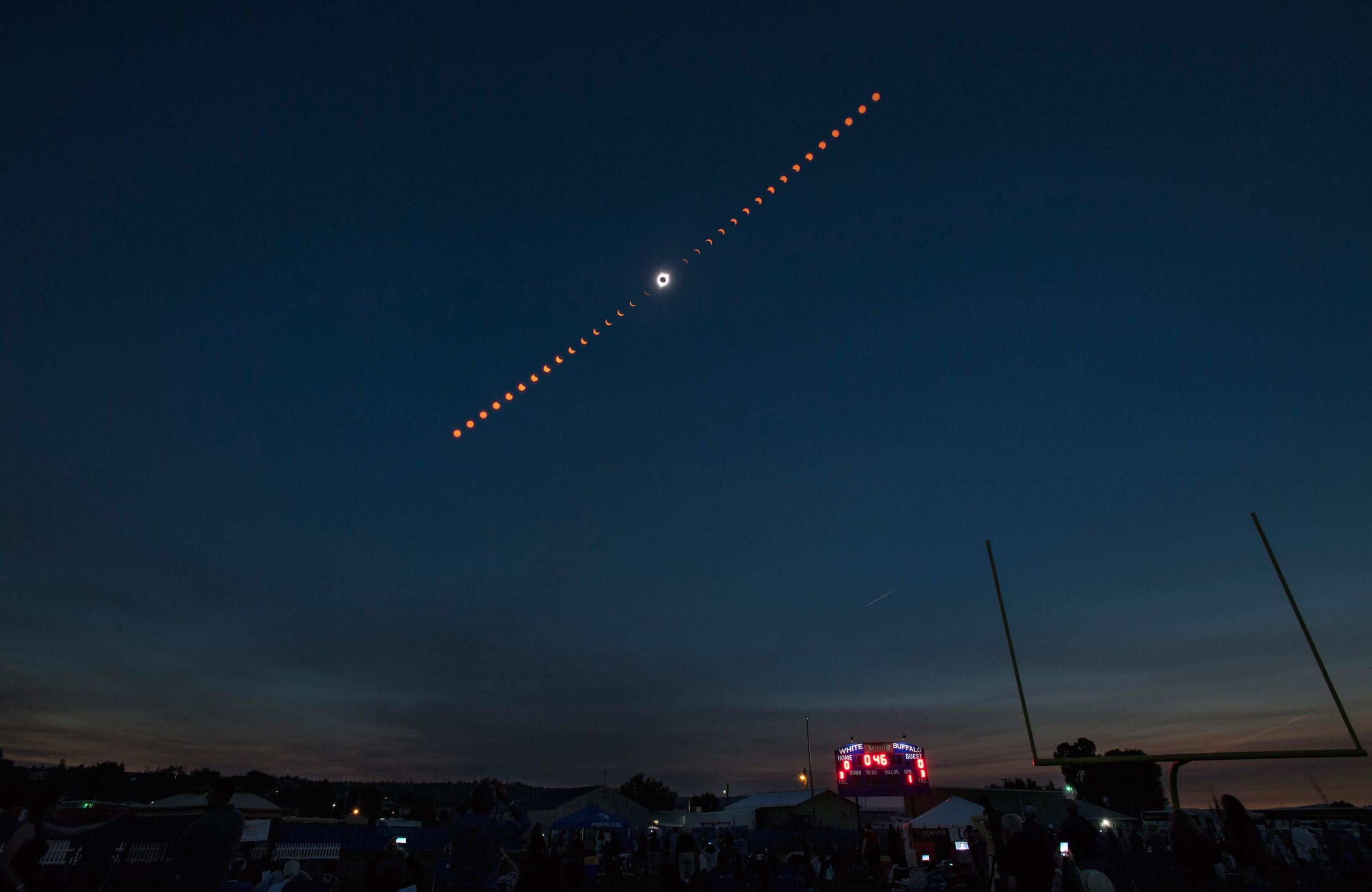
“Seven years after the last American total solar eclipse, we’re thrilled to announce the selection of five new projects that will study the 2024 eclipse,” said Peg Luce, acting director of the Heliophysics Division in the Science Mission Directorate at NASA Headquarters in Washington. “We’re excited to see what these new experiments will uncover about our Sun and its impact on Earth.”
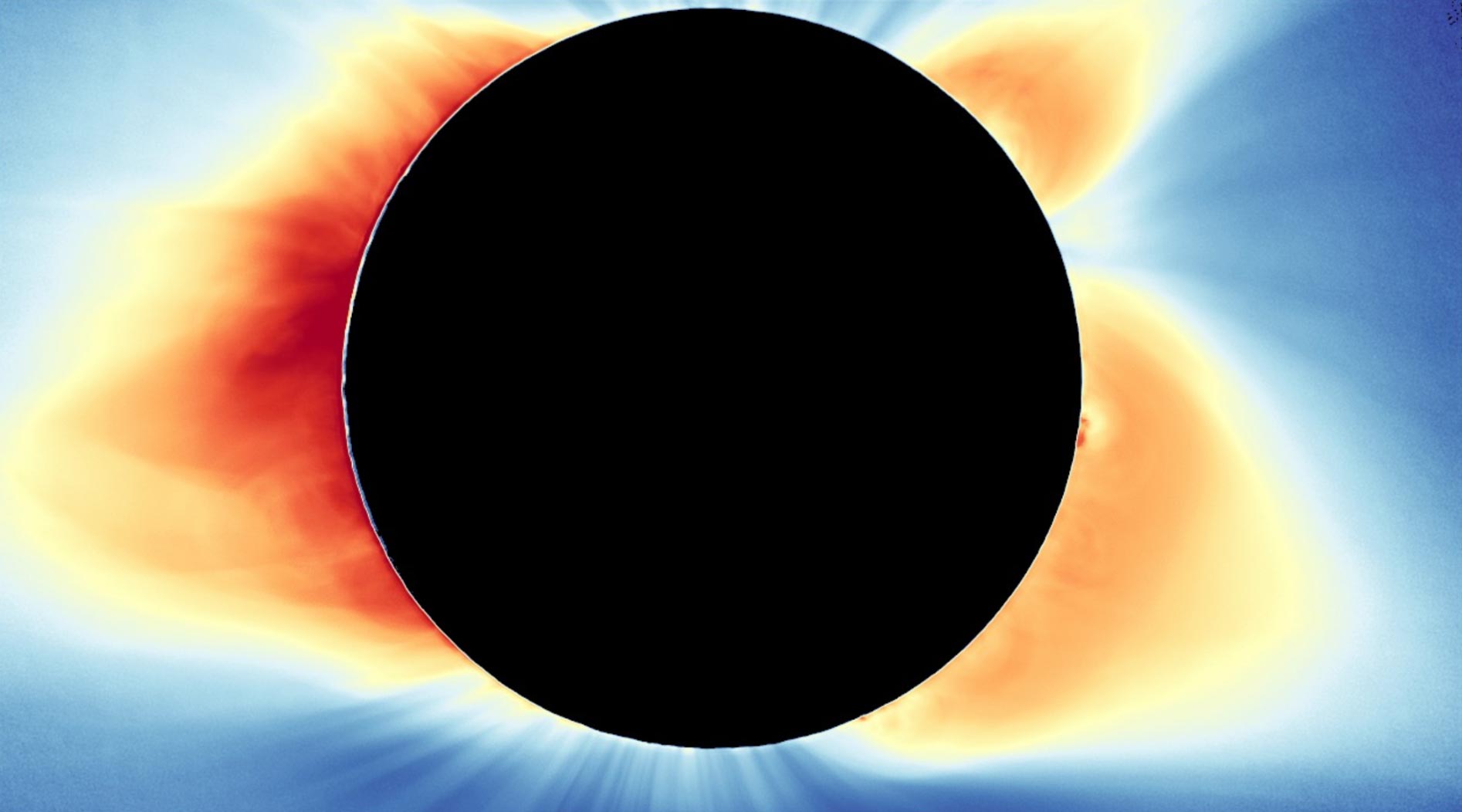
During total solar eclipses, the Moon perfectly blocks out the face of the Sun, allowing the Sun’s wispy outer atmosphere – called the corona – to be seen clearly.
“Scientists have long used solar eclipses to make scientific discoveries,” said Kelly Korreck, program scientist at NASA Headquarters. “They have helped us make the first detection of helium, have given us evidence for the theory of general relativity, and allowed us to better understand the Sun’s influence on Earth’s upper atmosphere.”
Chasing the Eclipse with NASA’s High-Altitude Research Planes
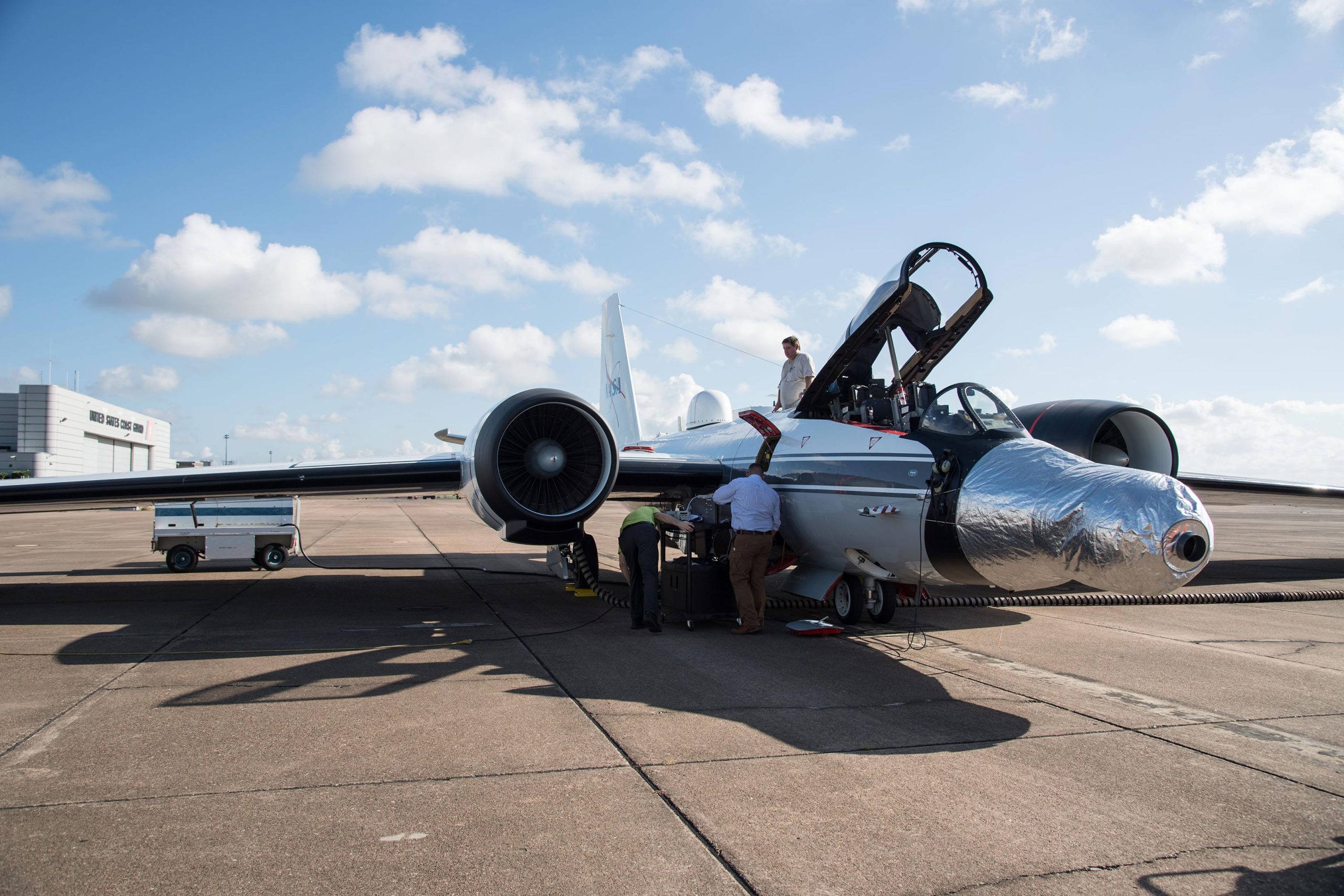
Using NASA’s WB-57 high-altitude research aircraft, one project will capture images of the eclipse from an altitude of 50,000 feet above Earth’s surface. By taking these images above the majority of Earth’s atmosphere, the team hopes to be able to see new details of structures in the middle and lower corona. The observations, taken with a camera that images in infrared and visible light at high resolution and high speed, could also help study a dust ring around the Sun and search for asteroids that may orbit near the Sun. The project, led by Amir Caspi at the Southwest Research Institute in Boulder, builds on Caspi’s successful 2017 project with a new camera suite.
Airborne Imaging and Spectroscopic Observations of the Corona
NASA’s WB-57s will also fly cameras and spectrometers (which study the composition of light) to learn more about the temperature and chemical composition of the corona and coronal mass ejections, or large bursts of solar material. By flying along the eclipse path, they also hope to extend their time in the Moon’s shadow by over two minutes. The team hopes these observations will provide new insights into structures in the corona and the sources of the constant stream of particles emitted by the Sun, the solar wind. The team is led by Shadia Habbal of the University of Hawaii.
‘Listening Party’ for Amateur Radio Operators
In an upper region of our atmosphere, energy from the Sun knocks electrons out of atoms, making the region electrically charged, or “ionized.” This region, the ionosphere, can help radio communications travel long distances, such as those among amateur (or “ham”) radio operators around the world. However, when the Moon blocks the Sun during a solar eclipse, the ionosphere can change dramatically, affecting those communications.
During both the 2024 total solar eclipse and an annular solar eclipse this October, Nathaniel Frissell of The University of Scranton is inviting ham radio operators to participate in “Solar Eclipse QSO Parties,” when they will try to make as many radio contacts (“QSOs” in ham parlance) as they can with other operators in different locations. The radio operators will record how strong their signals are and how far they go to observe how the ionosphere changes during the eclipses. Similar experiments in the past have shown that changes in the ionosphere’s electron content due to solar eclipses have significant impacts on how radio waves travel.
Solar Radiation’s Effects on Earth’s Upper Atmosphere Layers
The darkest part of this eclipse’s shadow passes across several locations equipped with SuperDARN radars. The Super Dual Auroral Radar Network monitors space weather conditions in upper layers of Earth’s atmosphere, so the eclipse offers a unique opportunity to study the impact of solar radiation on upper layers of Earth’s atmosphere during the eclipse. A project led by Bharat Kunduri, of the Virginia Polytechnic Institute & State University, will use three SuperDARN radars to study the ionosphere during the eclipse. Kunduri’s team will compare the measurements to predictions from computer models to answer questions about how the ionosphere reacts to a solar eclipse.
Bringing the Sun’s Magnetic ‘Hot Spots’ Into Sharper Focus
During the upcoming eclipses, NASA’s Jet Propulsion Laboratory scientist Thangasamy Velusamy, educators at the Lewis Center for Education Research in Southern California, and participants in the center’s Solar Patrol citizen science program will observe solar “active regions” – the magnetically complex regions that form over sunspots – as the Moon moves over them. The Moon’s gradual passage across the Sun blocks different portions of the active region at different times, allowing scientists to distinguish light signals coming from one portion versus another. The team will use the 34-meter Goldstone Apple Valley Radio Telescope (GAVRT) to measure subtle changes to the radio emissions from active regions during both the 2023 annular and 2024 total eclipses. The technique, first used during the May 2012 annular eclipses, revealed details on the Sun the telescope couldn’t otherwise detect.
Never miss a breakthrough: Join the SciTechDaily newsletter.
Follow us on Google and Google News.