

Close Menu
    Facebook X (Twitter) Instagram
    SciTechDaily
    • Biology
    • Chemistry
    • Earth
    • Health
    • Physics
    • Science
    • Space
    • Technology
    Facebook X (Twitter) Pinterest YouTube RSS
    SciTechDaily
    Home»Earth»Beguiling Phytoplankton Bloom in the Baltic Sea Looks Incredible
    Earth

    Beguiling Phytoplankton Bloom in the Baltic Sea Looks Incredible

    By NASA Earth ObservatoryAugust 22, 20201 Comment2 Mins Read
    Facebook Twitter Pinterest Telegram LinkedIn WhatsApp Email Reddit
    Share
    Facebook Twitter LinkedIn Pinterest Telegram Email Reddit
    Baltic Sea Bloom August 2020 Annotated
    August 15, 2020. (Click image for high-resolution view. See image below for detail view.)

    Nearly every summer, colorful blooms of phytoplankton flourish in the Baltic Sea. And nearly every summer, satellite images detect art-like patterns as the phytoplankton trace the sea’s currents, eddies, and flows. But like the whorls of fingerprints, no two phytoplankton blooms are exactly alike.

    These natural-color images, acquired on August 15, 2020, with the Operational Land Imager (OLI) on Landsat 8, show a late-summer phytoplankton bloom swirling in the Baltic Sea. The images feature part of a bloom located between Öland and Gotland, two islands off the coast of southeast Sweden. Note the dark, straight lines crossing the detailed image: these are ships cutting through the bloom.
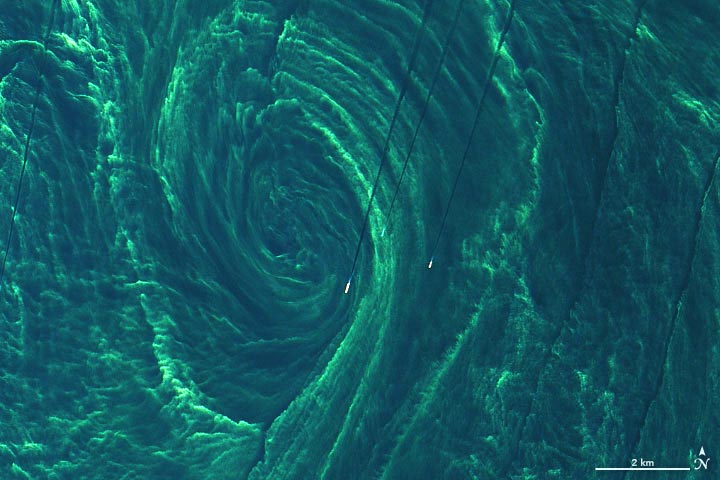
    Baltic Sea Bloom August 2020 Detail
    August 15, 2020

    Confirmation of the type of phytoplankton within this bloom would require the analysis of water samples. But experts familiar with blooms in this region say it is likely to be cyanobacteria—an ancient type of marine bacteria that captures and stores solar energy through photosynthesis. Large, late-summer blooms of cyanobacteria occur almost every year in the Baltic Sea.

    Sediment cores extracted from the seafloor indicate that blooms of cyanobacteria have occurred in the Baltic Sea for thousands of years and they have played an important role in this aquatic ecosystem. And in the world’s oceans, cyanobacteria are important “nitrogen fixers” that can convert atmospheric nitrogen gas into an organic form that other phytoplankton can use as a nutrient to fuel growth.

    Blooms in the Baltic Sea have intensified in recent decades, triggered in part by a rise in nutrient runoff from lands around the sea (particularly agricultural fertilizer and sewage). Excessive phytoplankton and algae growth can deplete the amount of oxygen in the water and cause dead zones.

    The extent of this bloom spanned an area beyond the scope of these images; browse satellite images in Worldview to see it in context with the wider area. In some years, cyanobacteria blooms have covered as much as 200,000 square kilometers of the sea surface—slightly less than half the size of Sweden.

    NASA Earth Observatory images by Joshua Stevens, using Landsat data from the U.S. Geological Survey. Story by Kathryn Hansen, with image interpretation by Norman Kuring/NASA GSFC and Ajit Subramaniam/LDEO/Columbia University.

    Never miss a breakthrough: Join the SciTechDaily newsletter.
    Follow us on Google and Google News.

    NASA NASA Earth Observatory Phytoplankton
    Share. Facebook Twitter Pinterest LinkedIn Email Reddit

    Related Articles

    Toxic Tides: Satellites Capture Lake Erie’s Alarming Transformation

    Stunning Phytoplankton Bloom Stretches for Hundreds of Miles Across the North Atlantic

    Green Menace: Toxic Algae and Environmental Neglect at California’s Clear Lake

    Biological Brilliance: Filaments of Phytoplankton in Australia

    Twists of Nature: Spectacular Swirls in the Sky and Sea Around Norway’s Remote Bear Island

    Blown Away: How Desert Dust Fuels Ocean Life

    Red Tide off Rio – “It Is Very Worrying”

    NASA Satellite Captures Stunning Mid-Atlantic Phytoplankton Bloom

    Spied by Satellite: Phytoplankton Factory in the Argentine Sea

    1 Comment

    1. Eddy Zszcomy on March 28, 2025 1:03 pm

      Yeah we done dance.tunisia sea bad bad

      Reply
    Leave A Reply Cancel Reply

    • Facebook
    • Twitter
    • Pinterest
    • YouTube

    Don't Miss a Discovery

    Subscribe for the Latest in Science & Tech!

    Trending News

    Popular Sugar-Free Sweetener Linked to Liver Disease, Study Warns

    What Is Hantavirus? The Deadly Disease Raising Alarm Worldwide

    Scientists Just Discovered How the Universe Builds Monster Black Holes

    Scientists Unveil New Treatment Strategy That Could Outsmart Cancer

    A Simple Vitamin May Hold the Key to Treating Rare Genetic Diseases

    Scientists Think the Real Fountain of Youth May Be Hiding in Your Gut

    Ravens Don’t Follow Wolves, They Predict Them

    This Common Knee Surgery May Be Doing More Harm Than Good

    Follow SciTechDaily
    • Facebook
    • Twitter
    • YouTube
    • Pinterest
    • Newsletter
    • RSS
    SciTech News
    • Biology News
    • Chemistry News
    • Earth News
    • Health News
    • Physics News
    • Science News
    • Space News
    • Technology News
    Recent Posts
    • Why Are So Many New Fathers Dying? Scientists Say the U.S. Has a Dangerous Blind Spot
    • Scientists Identify Simple Supplement That Greatly Reduces Alzheimer’s Damage
    • You May Have a Dangerous Type of Cholesterol Even if Your Tests Look Normal
    • Study Reveals Dangerous Flaw in AI Symptom Checkers
    • New MRI Breakthrough Captures Stunningly Clear Images of the Eye and Brain
    Copyright © 1998 - 2026 SciTechDaily. All Rights Reserved.
    • Science News
    • About
    • Contact
    • Editorial Board
    • Privacy Policy
    • Terms of Use

    Type above and press Enter to search. Press Esc to cancel.