
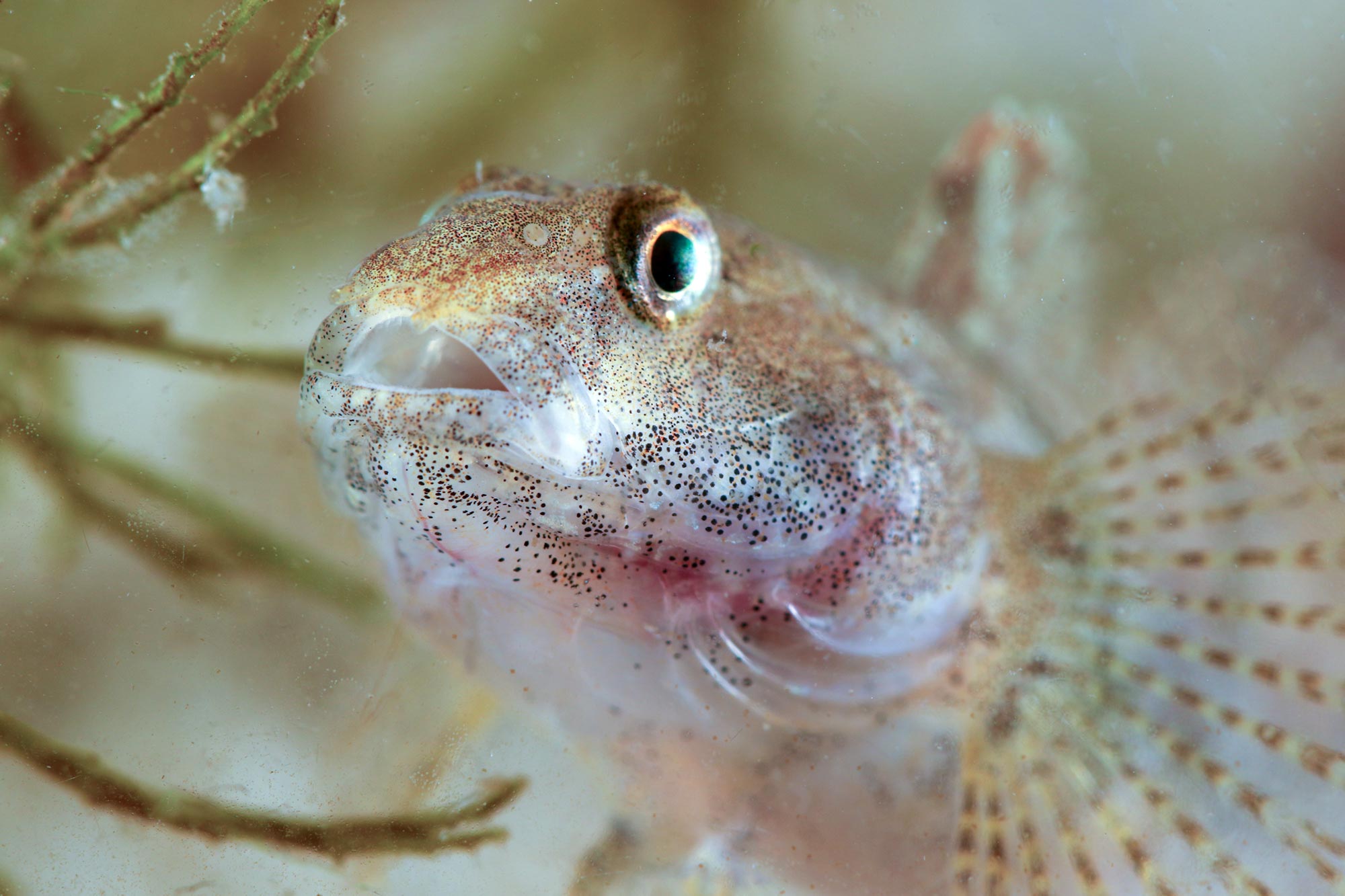
The slow inland spread of round goby may give conservation managers a valuable window to protect rivers and streams before the fish become firmly established.
Round goby are now so deeply established in the Great Lakes that scientists estimate their population in the billions, making complete eradication unrealistic. For decades, the small invasive fish has been among the region’s most damaging introduced species.
Research from U of T Scarborough, however, suggests there is still time to prevent the invasion from reaching the same scale elsewhere.
In a study published in the Journal of Great Lakes Research, postdoc Piatã Marques and Professor Nick Mandrak argue that governments and conservation agencies should shift their strategy as round goby move beyond the Great Lakes and into rivers, streams, lakes, and other inland waters.
“The Great Lakes are essentially lost when it comes to round goby,” says Mandrak, a renowned invasive species expert.
“They’re established throughout the lakes, they number in the billions, and we’re never going to fully remove them from those systems. Now we’re seeing them move into connected and isolated waters where we still have a chance to slow or even stop their spread.”
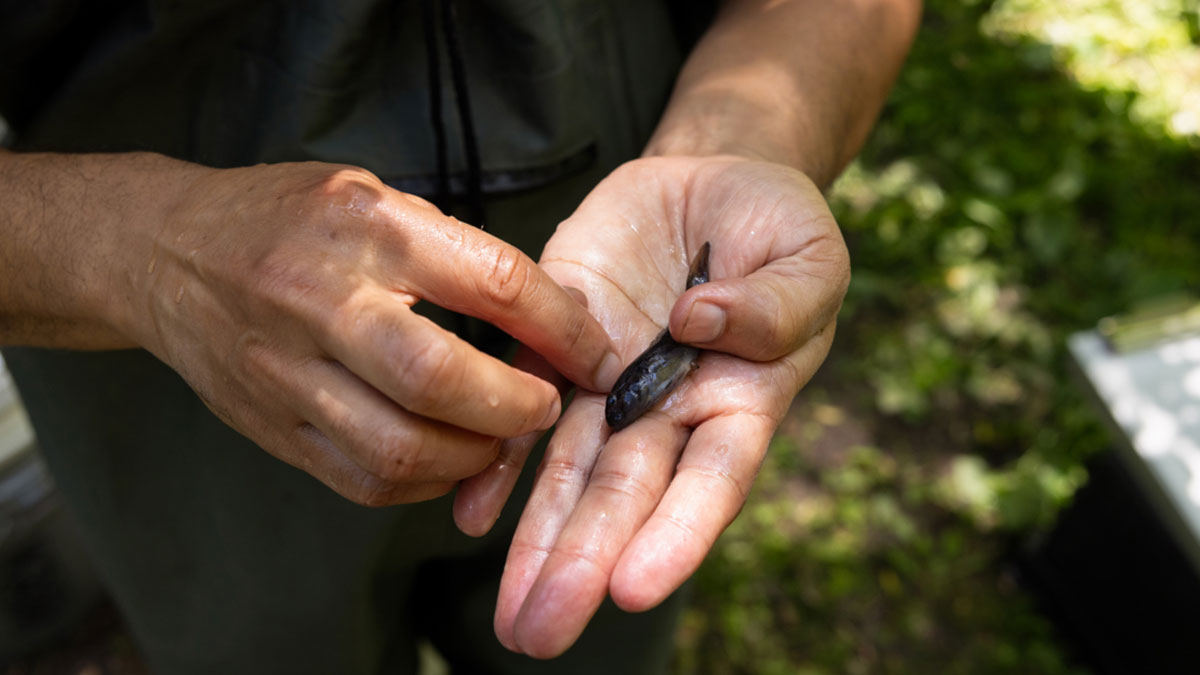
The researchers found that round goby advance much more slowly through smaller waterways, potentially giving managers time to contain or even eliminate local populations before they become firmly established.
Native to the Black and Caspian seas, round goby reached the Great Lakes in the early 1990s through cargo ship ballast. They have since colonized all five Great Lakes, where they compete aggressively with native fish for food and habitat, eat fish eggs and young, and disrupt aquatic food webs.
Although a round goby is only about as long as a smartphone, its ecological impact can be substantial. Aggressive behavior, a voracious appetite, and an ability to tolerate varied environmental conditions have helped the species reach populations numbering in the billions.
The invasion is moving farther inland
Marques says round goby are now entering a different stage of their expansion.
“Over roughly the last 15 years, we’ve started seeing round goby moving upstream into inland waters, including rivers, streams and ponds,” he says. “These freshwater systems contain some of Ontario’s richest biodiversity, including endangered species, so this is an area of concern.”
One potentially threatened species is the redside dace, an endangered fish found in streams across the GTA. Researchers are concerned that round goby could compete with it and other native fish for food while further altering inland freshwater ecosystems.
Slower spread creates time to intervene
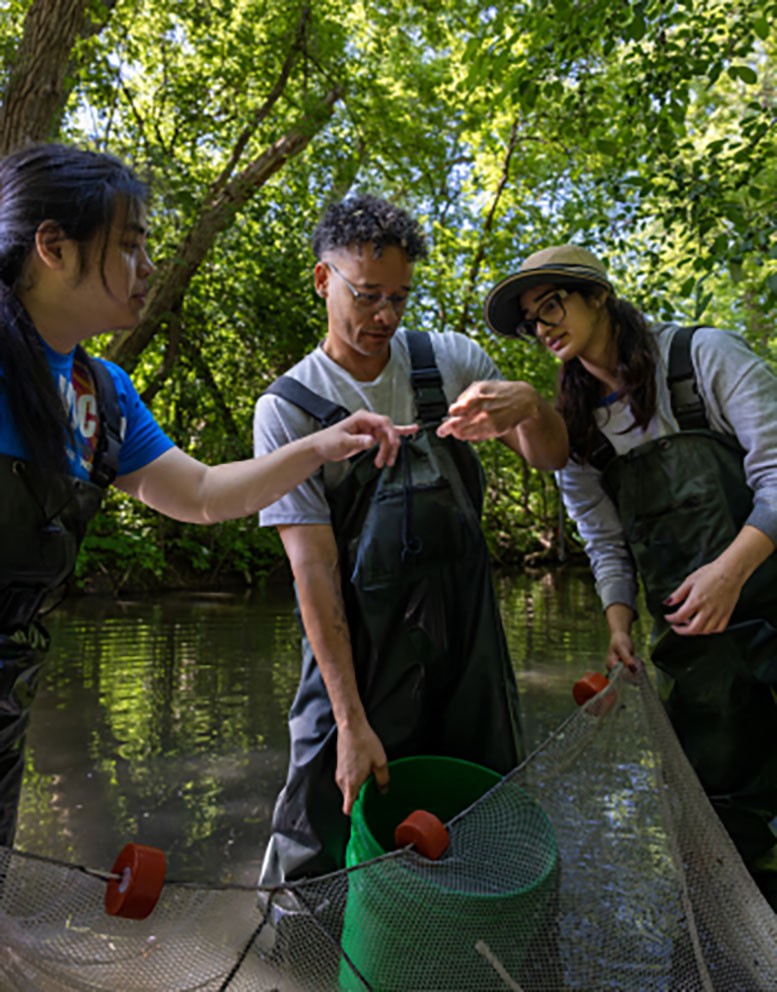
Using more than 20 years of GTA river monitoring records collected by local conservation agencies, Marques and Mandrak found that round goby typically move upstream by only a fraction of a kilometer to about two kilometers each year. That relatively slow pace may provide an important opportunity to intervene before populations expand dramatically.
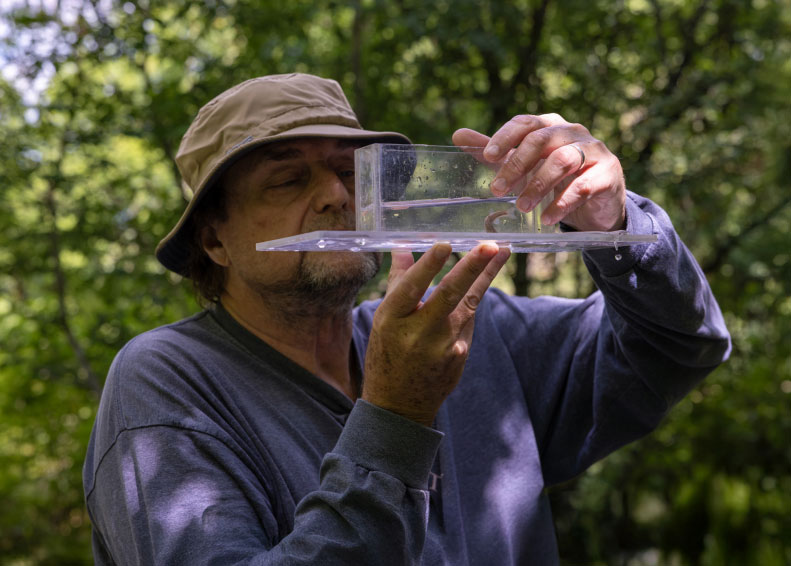
Because rivers and streams are smaller and easier to access than the Great Lakes, targeted control is more practical. The researchers suggest that trapping, electrofishing, physical barriers, and rapid response programs could reduce local numbers and, in some locations, potentially eliminate the fish.
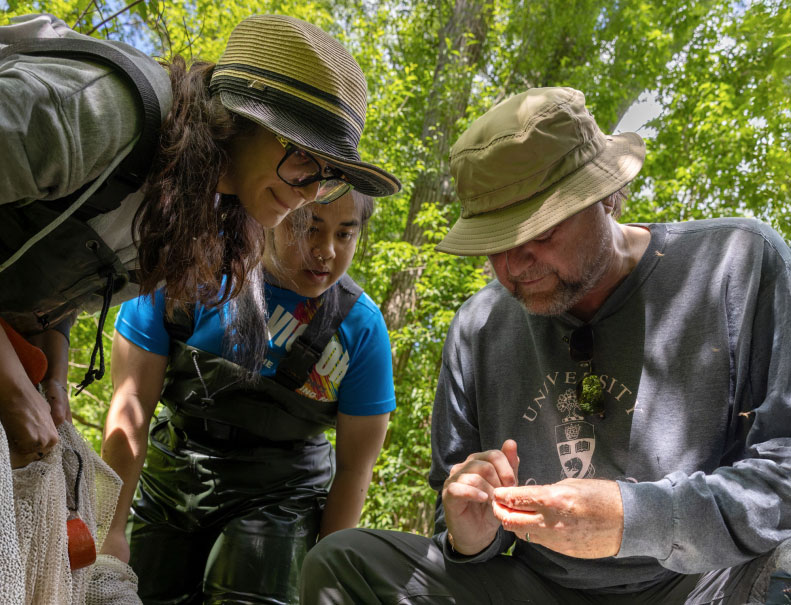
Developing effective control strategies also requires understanding how round goby adjust to these unfamiliar habitats, Marques says. Researchers in the Mandrak lab are examining what the fish eat, how they compete with native species, whether urbanization helps them travel upstream, and what allows them to establish themselves successfully in new freshwater environments.
The researchers are also testing environmental DNA (eDNA), which can identify fish from genetic material left in water samples. This approach could reveal an invasion even when individual fish are difficult to capture.
“They’re very flexible in terms of the conditions they can tolerate,” says Marques. “They can feed on many food sources, and we think they’re changing how they reproduce and survive as they move upstream. We’re trying to understand exactly which characteristics allow them to persist in these new environments.”
Marques says the broader goal is to provide resource managers with practical information about which control methods are most effective and how much effort is required to suppress local populations.
Urban streams may ease their expansion
The researchers are also investigating whether urban development is unintentionally making some waterways easier for round goby to colonize. Road salt and other pollutants raise concentrations of dissolved ions in streams, potentially creating conditions that favor a species originally adapted to brackish waters in Eurasia and helping it move farther inland.
For Mandrak, the findings point to a broader lesson about managing invasive species before they become overwhelmingly abundant.
There is still an opportunity to protect these inland ecosystems,” he says. “If we act before round goby becomes established in rivers and streams, we have a better chance of protecting native biodiversity. If we wait until the invasion reaches the same scale we’re seeing in the Great Lakes, it will be too late.”
Reference: “Urgent need for reassessing mitigation actions as long-term, well-established, invasive species secondarily spread into new habitats” by Piatã Marques and Nicholas E. Mandrak, 6 July 2026, Journal of Great Lakes Research.
DOI: 10.1016/j.jglr.2026.102882
This research was supported by the Natural Sciences and Engineering Research Council of Canada-NSERC Discovery Grant to NEM.
Never miss a breakthrough: Join the SciTechDaily newsletter.
Follow us on Google and Google News.