
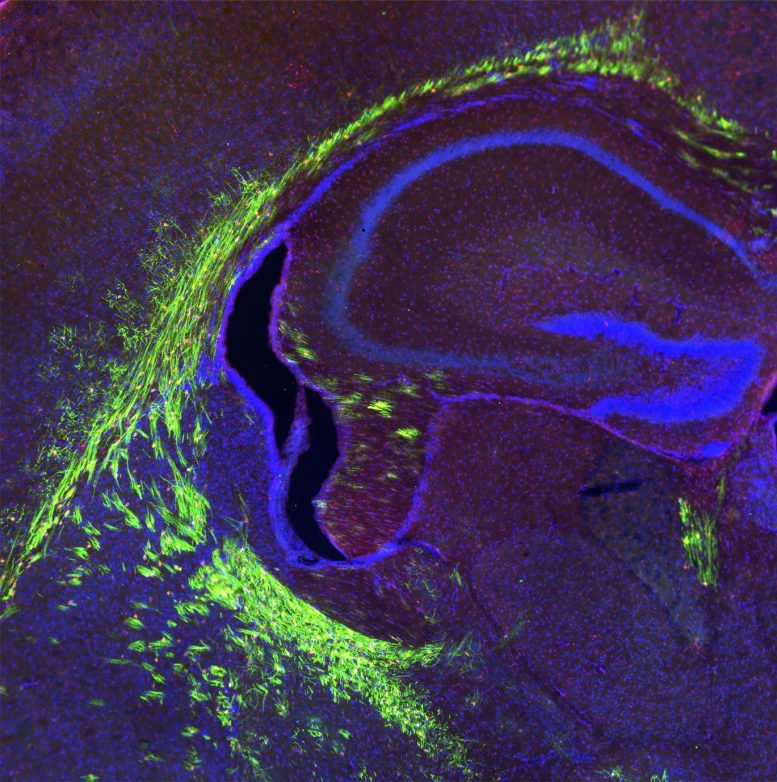
Researchers have discovered that the transporter protein Mfsd2a is critical for regulating brain cells that maintain myelin sheaths, which protect nerves. This discovery could help reduce the effects of aging on the brain and lead to therapies for neurological disorders stemming from reduced myelination.
Scientists from Singapore have demonstrated the critical role played by a special transporter protein in regulating the brain cells that ensure nerves are protected by coverings called myelin sheaths. The findings, reported by researchers at Duke-NUS Medical School and the National University of Singapore in the Journal of Clinical Investigation, could help to reduce the damaging impacts of aging on the brain.
An insulating membrane encasing nerves, myelin sheaths facilitate the quick and effective conduction of electrical signals throughout the body’s nervous system. When the myelin sheath gets damaged, nerves may lose their ability to function and cause neurological disorders. With aging, myelin sheaths may naturally start to degenerate, which is often why the elderly lose their physical and mental abilities.
“Loss of myelin sheaths occurs during the normal aging process and in neurological diseases, such as multiple sclerosis and Alzheimer’s disease,” said Dr. Sengottuvel Vetrivel, Senior Research Fellow with Duke-NUS’ Cardiovascular & Metabolic Disorders (CVMD) Program and lead investigator of the study. “Developing therapies to improve myelination—the formation of the myelin sheath—in aging and disease is of great importance to ease any difficulties caused by declining myelination.”
To pave the way for developing such therapies, the researchers sought to understand the role of Mfsd2a, a protein that transports lysophosphatidylcholine (LPC)—a lipid that contains an omega-3 fatty acid—into the brain as part of the myelination process. From what is known, genetic defects in the Mfsd2a gene leads to significantly reduced myelination and a birth defect called microcephaly, which causes the baby’s head to be much smaller than it should be.

In preclinical models, the team showed that removing Mfsd2a from precursor cells that mature into myelin-producing cells—known as oligodendrocytes—in the brain led to deficient myelination after birth. Further investigations, including single-cell RNA sequencing, demonstrated that Mfsd2a’s absence caused the pool of fatty acid molecules—particularly omega-3 fats—to be reduced in the precursor cells, preventing these cells from maturing into oligodendrocytes that produce myelin.
Therapeutic Potential of LPC Omega-3 Lipids
“Our study indicates that LPC omega-3 lipids act as factors within the brain to direct oligodendrocyte development, a process that is critical for brain myelination,” explained Professor David Silver, the senior author of the study and Deputy Director of the CVMD Program. “This opens up potential avenues to develop therapies and dietary supplements based on LPC omega-3 lipids that might help retain myelin in the aging brain—and possibly to treat patients with neurological disorders stemming from reduced myelination.”
Previously, Prof Silver and his lab discovered Mfsd2a and worked closely with other teams to determine the function of LPC lipids in the brain and other organs. The current research provides further insights into the importance of lipid transport for oligodendrocyte precursor cell development.
“We’re now aiming to conduct preclinical studies to determine if dietary LPC omega-3 can help to re-myelinate damaged axons in the brain,” added Prof Silver. “Our hope is that supplements containing these fats can help to maintain—or even improve—brain myelination and cognitive function during aging.”
“Prof Silver has been relentless in investigating the far-reaching role of Msdf2a ever since he discovered this important lipid transport protein, alluding to the many possible ways of treating not only the aging brain but also other organs in which the protein plays a role,” said Professor Patrick Casey, Senior-Vice Dean for Research. “It’s exciting to watch Prof Silver and his team shape our understanding of the roles that these specialized lipids play through their many discoveries.”
Reference: “Deficiency in the omega-3 lysolipid transporter Mfsd2a leads to aberrant oligodendrocyte lineage development and hypomyelination” by Vetrivel Sengottuvel, Monalisa Hota, Jeongah Oh, Dwight L. Galam, Bernice H. Wong, Markus R. Wenk, Sujoy Ghosh, Federico Torta and David L. Silver, 27 April 2023, The Journal of Clinical Investigation.
DOI: 10.1172/JCI164118
Never miss a breakthrough: Join the SciTechDaily newsletter.
Follow us on Google and Google News.