
Close Menu
    Facebook X (Twitter) Instagram
    SciTechDaily
    • Biology
    • Chemistry
    • Earth
    • Health
    • Physics
    • Science
    • Space
    • Technology
    Facebook X (Twitter) Pinterest YouTube RSS
    SciTechDaily
    Home»Physics»Brain-Inspired Organic Memory Devices for Flexible, Wearable, Personalized Computing
    Physics

    Brain-Inspired Organic Memory Devices for Flexible, Wearable, Personalized Computing

    By American Institute of PhysicsApril 21, 20201 Comment3 Mins Read
    Facebook Twitter Pinterest Telegram LinkedIn WhatsApp Email Reddit
    Share
    Facebook Twitter LinkedIn Pinterest Telegram Email Reddit
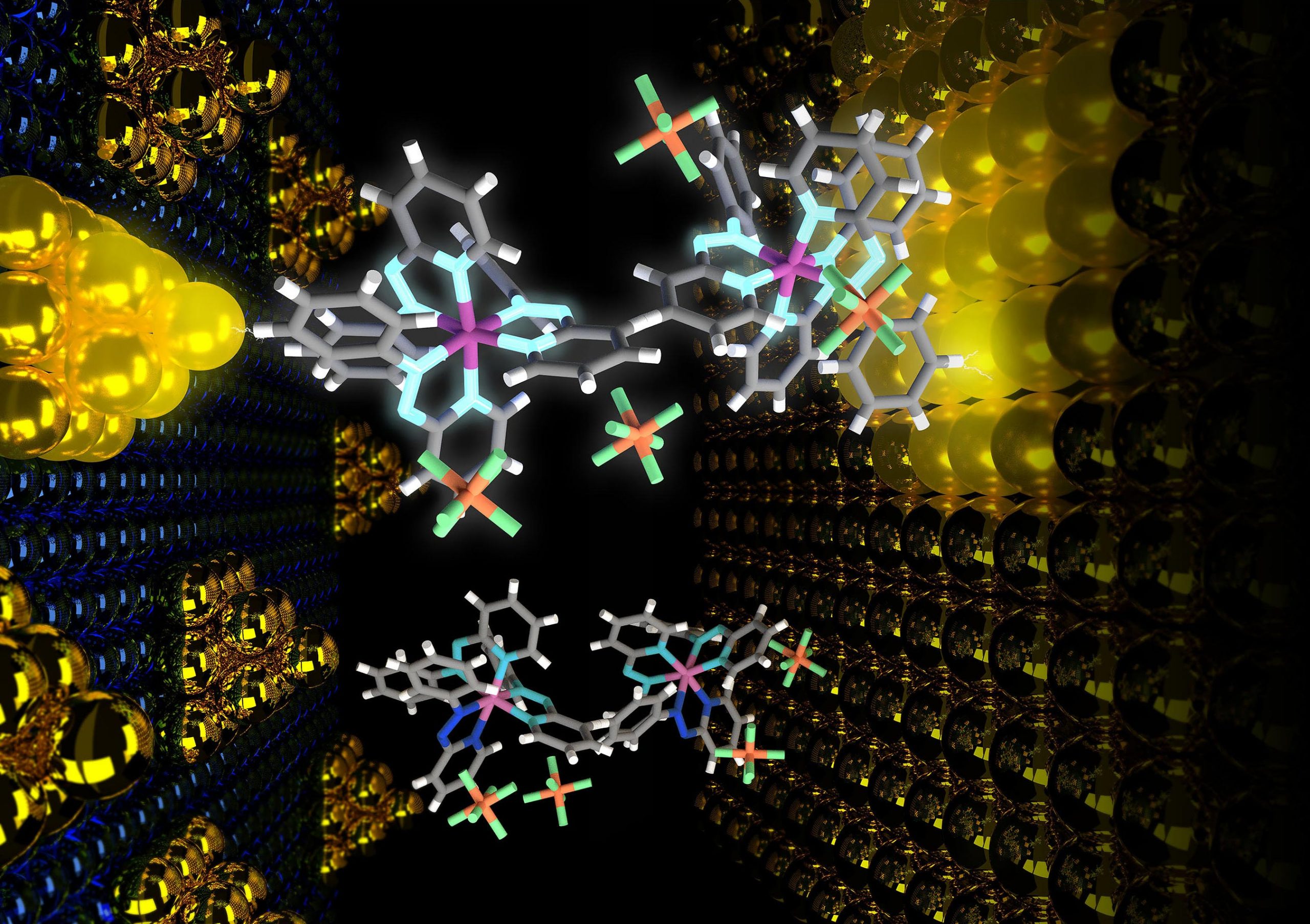
    Brain Inspired Organic Memory Device
    The device structure at a molecular level. The gold nanoparticles on the bottom electrode enhance the field enabling an ultra-low energy operation of the molecular device. Credit: Sreetosh Goswami, Sreebrata Goswami, and Thirumalai Venky Venkatesan

    Brain-inspired electronics with organic memristors offer an energy and cost-efficient platform for various AI and IoT applications.

    The advent of artificial intelligence, machine learning, and the internet of things is expected to change modern electronics and bring forth the Fourth Industrial Revolution. The pressing question for many researchers is how to handle this technological revolution.

    “It is important for us to understand that the computing platforms of today will not be able to sustain at-scale implementations of AI algorithms on massive datasets,” said Thirumalai Venkatesan, one of the authors of a paper published in Applied Physics Reviews today (April 21, 2020), from AIP Publishing.

    “Today’s computing is way too energy-intensive to handle big data. We need to rethink our approaches to computation on all levels: materials, devices, and architecture that can enable ultralow energy computing.”

    Brain-inspired electronics with organic memristors could offer a functionally promising and cost-effective platform, according to Venkatesan. Memristive devices are electronic devices with an inherent memory that are capable of both storing data and performing computation. Since memristors are functionally analogous to the operation of neurons, the computing units in the brain, they are optimal candidates for brain-inspired computing platforms.

    Until now, oxides have been the leading candidate as the optimum material for memristors. Different material systems have been proposed but none have been successful so far.

    “Over the last 20 years, there have been several attempts to come up with organic memristors, but none of those have shown any promise,” said Sreetosh Goswami, lead author on the paper. “The primary reason behind this failure is their lack of stability, reproducibility, and ambiguity in mechanistic understanding. At a device level, we are now able to solve most of these problems,”

    This new generation of organic memristors is developed based on metal azo complex devices, which are the brainchild of Sreebata Goswami, a professor at the Indian Association for the Cultivation of Science in Kolkata and another author on the paper.

    “In thin films, the molecules are so robust and stable that these devices can eventually be the right choice for many wearable and implantable technologies or a body net, because these could be bendable and stretchable,” said Sreebata Goswami. A body net is a series of wireless sensors that stick to the skin and track health.

    The next challenge will be to produce these organic memristors at scale, said Venkatesan.

    “Now we are making individual devices in the laboratory. We need to make circuits for large-scale functional implementation of these devices.”

    Reference: “An organic approach to low energy memory and brain inspired electronics” by Sreetosh Goswami, Sreebrata Goswami and Thirumalai Venky Venkatesan, 21 April 2020, Applied Physics Reviews.
    DOI: 10.1063/1.5124155

    Never miss a breakthrough: Join the SciTechDaily newsletter.
    Follow us on Google and Google News.

    American Institute of Physics Biotechnology Brain Neuroscience
    Share. Facebook Twitter Pinterest LinkedIn Email Reddit

    Related Articles

    Scientists Warn of “Bleak Cyborg Future” From Brain-Computer Interfaces

    Apples May Boost Brain Function, Stimulate the Production of New Brain Cells

    Egg Experiment Reveals Scrambling of the Brain on Impact to Find Answers About Concussions

    Peeking Inside Human “Mini-Brains” to Understand the Brain, Study Disease and Test New Medicines

    Unlocking the Mysteries of Brain Chemistry With New Dopamine Sensors

    New Electronics Devised That Mimic the Human Brain in Efficient Learning

    3D Tissue Models of Brain Tumors Grown in Brain-Mimicking Microenvironment

    Miniaturizing Medical Imaging, Sensing Technology Is a “Big Deal”

    Brain Pacemaker Implanted to Treat Alzheimer’s

    1 Comment

    1. Cynthia Williams on April 21, 2020 8:52 am

      You think maybe in the future it could help people remember things
      and improve the brain?

      Reply
    Leave A Reply Cancel Reply

    • Facebook
    • Twitter
    • Pinterest
    • YouTube

    Don't Miss a Discovery

    Subscribe for the Latest in Science & Tech!

    Trending News

    Scientists Discover How Coffee Impacts Memory, Mood, and Gut Health

    Why Did the Neanderthals Disappear? Scientists Reveal Humans Had a Hidden Advantage

    Physicists Propose Strange Experiment Where Time Goes Quantum

    Magnesium Magic: New Drug Melts Fat Even on a High-Fat, High-Sugar Diet

    Weight-Loss Drugs Like Ozempic May Come With an Unexpected Cost

    Mezcal “Worm” in a Bottle Mystery: DNA Testing Reveals a Surprise

    New Research Reveals That Your Morning Coffee Activates an Ancient Longevity Switch

    This Is What Makes You Irresistible to Mosquitoes

    Follow SciTechDaily
    • Facebook
    • Twitter
    • YouTube
    • Pinterest
    • Newsletter
    • RSS
    SciTech News
    • Biology News
    • Chemistry News
    • Earth News
    • Health News
    • Physics News
    • Science News
    • Space News
    • Technology News
    Recent Posts
    • Harvard Scientists Reveal Secret Structure Behind How You Smell
    • Scientists Just Discovered the Hidden Trick That Keeps Your Cells Alive
    • This Simple Movement Could Be Secretly Cleaning Your Brain
    • Male Birth Control Breakthrough: Scientists Find Way To Turn Sperm Production Off and Back On
    • A Common Vitamin Could Hold the Key to Treating Fatty Liver Disease
    Copyright © 1998 - 2026 SciTechDaily. All Rights Reserved.
    • Science News
    • About
    • Contact
    • Editorial Board
    • Privacy Policy
    • Terms of Use

    Type above and press Enter to search. Press Esc to cancel.