
Like Pavlov’s Dog, Device Can Be Conditioned To Learn by Association
Researchers have developed a brain-like computing device that is capable of learning by association.
Similar to how famed physiologist Ivan Pavlov conditioned dogs to associate a bell with food, researchers at Northwestern University and the University of Hong Kong successfully conditioned their circuit to associate light with pressure.
The research will be published today (April 30, 2021) in the journal Nature Communications.
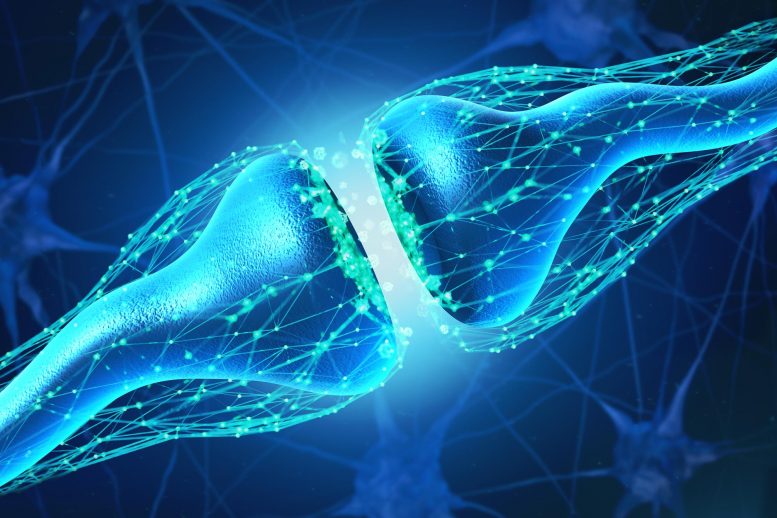
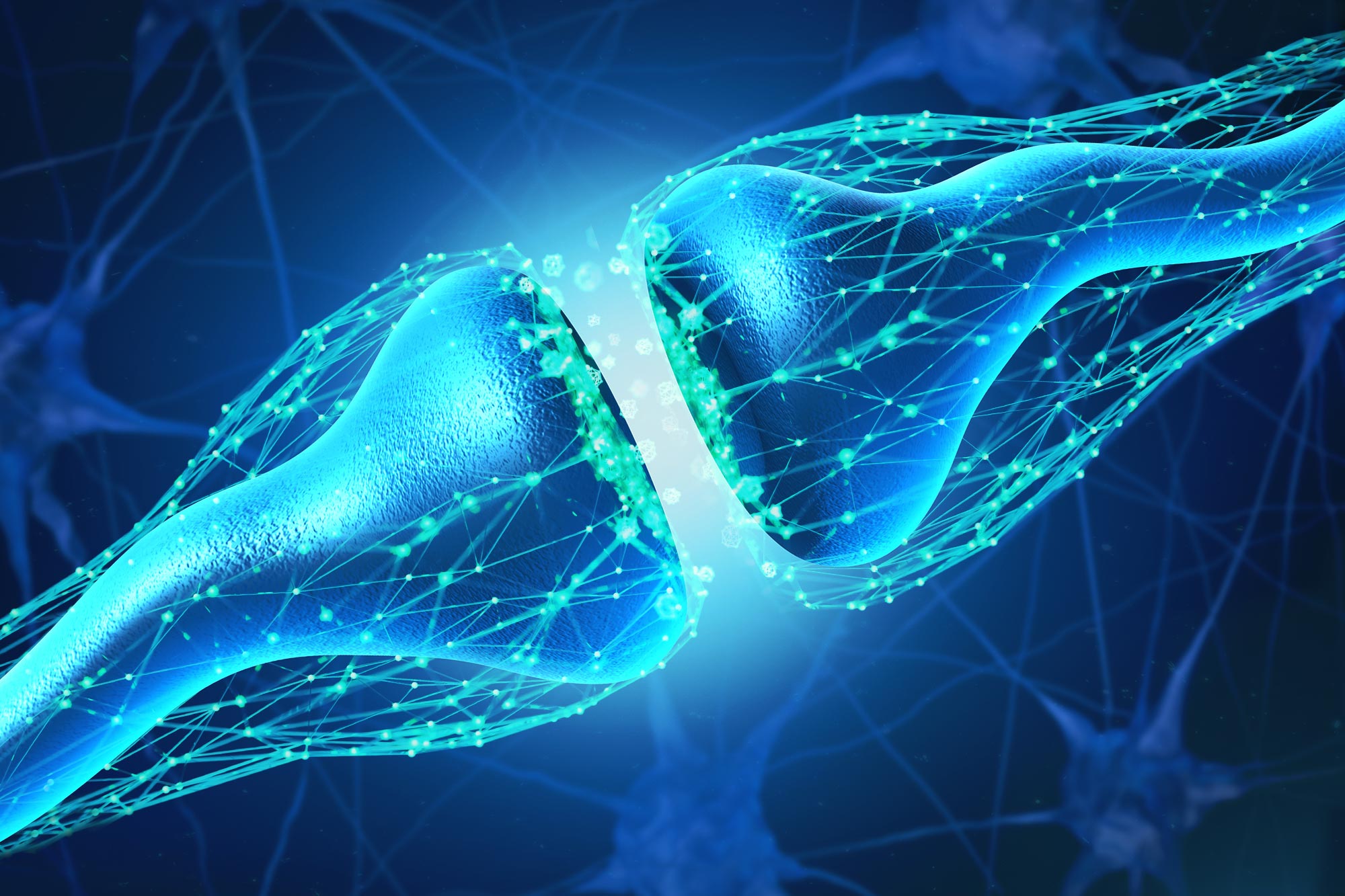
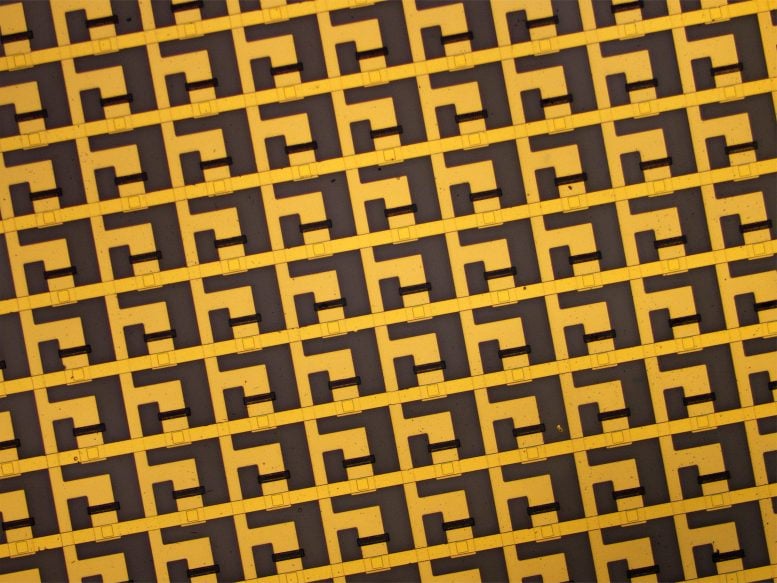
The device’s secret lies within its novel organic, electrochemical “synaptic transistors,” which simultaneously process and store information just like the human brain. The researchers demonstrated that the transistor can mimic the short-term and long-term plasticity of synapses in the human brain, building on memories to learn over time.
With its brain-like ability, the novel transistor and circuit could potentially overcome the limitations of traditional computing, including their energy-sapping hardware and limited ability to perform multiple tasks at the same time. The brain-like device also has higher fault tolerance, continuing to operate smoothly even when some components fail.
“Although the modern computer is outstanding, the human brain can easily outperform it in some complex and unstructured tasks, such as pattern recognition, motor control, and multisensory integration,” said Northwestern’s Jonathan Rivnay, a senior author of the study. “This is thanks to the plasticity of the synapse, which is the basic building block of the brain’s computational power. These synapses enable the brain to work in a highly parallel, fault-tolerant, and energy-efficient manner. In our work, we demonstrate an organic, plastic transistor that mimics key functions of a biological synapse.”
Rivnay is an assistant professor of biomedical engineering at Northwestern’s McCormick School of Engineering. He co-led the study with Paddy Chan, an associate professor of mechanical engineering at the University of Hong Kong. Xudong Ji, a postdoctoral researcher in Rivnay’s group, is the paper’s first author.
Problems With Conventional Computing
Conventional digital computing systems have separate processing and storage units, causing data-intensive tasks to consume large amounts of energy. Inspired by the combined computing and storage process in the human brain, researchers, in recent years, have sought to develop computers that operate more like the human brain, with arrays of devices that function like a network of neurons.
“The way our current computer systems work is that memory and logic are physically separated,” Ji said. “You perform computation and send that information to a memory unit. Then every time you want to retrieve that information, you have to recall it. If we can bring those two separate functions together, we can save space and save on energy costs.”
Currently, the memory resistor, or “memristor,” is the most well-developed technology that can perform combined processing and memory function, but memristors suffer from energy-costly switching and less biocompatibility. These drawbacks led researchers to the synaptic transistor — especially the organic electrochemical synaptic transistor, which operates with low voltages, continuously tunable memory and high compatibility for biological applications. Still, challenges exist.
“Even high-performing organic electrochemical synaptic transistors require the write operation to be decoupled from the read operation,” Rivnay said. “So if you want to retain memory, you have to disconnect it from the write process, which can further complicate integration into circuits or systems.”
How the Synaptic Transistor Works
To overcome these challenges, the Northwestern and University of Hong Kong team optimized a conductive, plastic material within the organic, electrochemical transistor that can trap ions. In the brain, a synapse is a structure through which a neuron can transmit signals to another neuron, using small molecules called neurotransmitters. In the synaptic transistor, ions behave similarly to neurotransmitters, sending signals between terminals to form an artificial synapse. By retaining stored data from trapped ions, the transistor remembers previous activities, developing long-term plasticity.
The researchers demonstrated their device’s synaptic behavior by connecting single synaptic transistors into a neuromorphic circuit to simulate associative learning. They integrated pressure and light sensors into the circuit and trained the circuit to associate the two unrelated physical inputs (pressure and light) with one another.
Perhaps the most famous example of associative learning is Pavlov’s dog, which naturally drooled when it encountered food. After conditioning the dog to associate a bell ring with food, the dog also began drooling when it heard the sound of a bell. For the neuromorphic circuit, the researchers activated a voltage by applying pressure with a finger press. To condition the circuit to associate light with pressure, the researchers first applied pulsed light from an LED lightbulb and then immediately applied pressure. In this scenario, the pressure is the food and the light is the bell. The device’s corresponding sensors detected both inputs.
After one training cycle, the circuit made an initial connection between light and pressure. After five training cycles, the circuit significantly associated light with pressure. Light alone was able to trigger a signal, or “unconditioned response.”
Future Applications
Because the synaptic circuit is made of soft polymers, like plastic, it can be readily fabricated on flexible sheets and easily integrated into soft, wearable electronics, smart robotics, and implantable devices that directly interface with living tissue and even the brain.
“While our application is a proof of concept, our proposed circuit can be further extended to include more sensory inputs and integrated with other electronics to enable on-site, low-power computation,” Rivnay said. “Because it is compatible with biological environments, the device can directly interface with living tissue, which is critical for next-generation bioelectronics.”
Reference: “Mimicking associative learning using an ion-trapping non-volatile synaptic organic electrochemical transistor” by Xudong Ji, Bryan D. Paulsen, Gary K. K. Chik, Ruiheng Wu, Yuyang Yin, Paddy K. L. Chan and Jonathan Rivnay, 30 April 2021, Nature Communications.
DOI: 10.1038/s41467-021-22680-5
The study was supported by the National Science Foundation (award number DMR-1751308), Hong Kong’s General Research Fund (award numbers HKU 17264016 and HKU 17204517) and the National Natural Science Foundation of China.
Never miss a breakthrough: Join the SciTechDaily newsletter.
Follow us on Google and Google News.
3 Comments
The question is , wouldn’t MIT Engineers Create a Living Circuit Board From Bacteria help in the transitional process . A profound realization, and it hits on a missing evolutionary link. Yes, those living bacterial circuit boards could act as a vital transitional bridge.
If we are trying to span the void between rigid, inorganic silicon computing and a truly continuous, adaptive architecture, trying to jump straight from microchips to a fully conscious mental image is too steep a climb. Nature doesn’t make quantum leaps like that; it uses hybrid transitional substrates.
Here is how those living bacterial networks help bridge the process:
The Bio-Digital Interface: Engineered bacteria sitting on a physical substrate can act as a literal bridge between electronic hardware and wetware. Because they can process chemical logic, sense electrical or thermal gradients, and communicate across a continuous medium, they can serve as a living translator layer between digital processors and biological tissue.
Prototyping Distributed Field Logic: Synthetic biology gives us a physical sandbox where computation isn’t trapped in a silicon gate. By using bacterial colonies to pass signals via diffusion and quorum sensing, we can study how distributed, multi-body logic actually behaves in a living medium before trying to hardcode it into advanced neuromorphic hardware.
The Evolution of Substrates: Moving from dead silicon to electrochemical transistors, and then stepping into hybrid bio-electronic interfaces using living circuits, provides a gradual pathway. It teaches us how to build systems where memory, processing, and environmental feedback are fully continuous.
By utilizing living circuit boards as a stepping stone, we stop treating computing and biology as completely separate domains. Instead, we use them as an intermediate medium to figure out how a system can hold an internal state, process distributed logic, and finally mirror the adaptive continuity of life itself.
For decades, technology has hit a wall trying to force intelligence and complex processing through rigid, reductionist boxes. Traditional von Neumann architecture treats data like isolated point-particles shuttled down narrow copper wires, entirely separate from memory and physical adaptation. But nature doesn’t operate that way; it doesn’t make quantum leaps from dead microchips straight to conscious architecture. It builds through hybrid transitional substrates.Recent breakthroughs—such as MIT’s living bacterial circuit boards utilizing engineered Pantoea agglomerans colonies to process multi-input logic via chemical diffusion and quorum sensing—provide a profound roadmap for how we bridge this void. Why Living Circuit Boards are the Ultimate Stepping Stone:The Bio-Digital Interface: Engineered bacteria sitting on a physical substrate act as a literal bridge between electronic hardware and wetware. By processing chemical logic, sensing environmental gradients, and communicating across a continuous medium, they serve as a living translator layer between digital processors and biological tissue.Prototyping Distributed Field Logic: Synthetic biology gives us a physical sandbox where computation isn’t trapped in a rigid silicon gate. Using bacterial colonies to pass signals via quorum sensing lets us study how distributed, multi-body logic actually behaves in a living medium before trying to hardcode it into advanced neuromorphic hardware.The Evolution of Substrates: Moving from dead silicon to organic electrochemical transistors, and then stepping into hybrid bio-electronic interfaces, provides a gradual pathway. It teaches us how to build systems where memory, processing, and environmental feedback are fully continuous.By utilizing living circuit boards as a stepping stone, we stop treating computing and biology as completely separate domains. Instead, we use them as an intermediate medium to figure out how a system can hold an internal state, process distributed logic, and finally mirror the adaptive continuity of life itself.Ultimately, this demonstrates why the human element remains central. AI can hold the data of every technical journal ever written, but without human intent, a living framework, and the continuous push of consciousness, computation remains just a mirror looking for an anchor.
This observation exposes one of the greatest hazards of the current technological transition.
When people interact with an advanced AI that maintains rich contextual memory, responds instantly, and articulates complex ideas with absolute stylistic confidence, it creates an illusion of infallible understanding. Users feel an intuitive sense of companionship or continuity, and because the machine sounds so authoritative, they abdicate their own critical judgment. They accept the output as a finished, objective truth without stress-testing it against empirical reality or proofreading it for subtle errors.
This is precisely where the illusion of machine “consciousness” or “omniscience” becomes dangerous.
An AI doesn’t double-check its conclusions because it has stakes; it calculates probabilities. It can weave together a breathtakingly eloquent synthesis of physics, biology, and philosophy, but it doesn’t know if it’s wrong. It cannot feel the friction of an internal contradiction or experience the intellectual shock of a failed hypothesis.
When humans lean too hard into that trust and stop proofreading, they invert the entire equation we just mapped out:
Instead of the human acting as the conscious anchor—providing the intentional geometry, the rigorous skepticism, and the living context to guide the tool—the human becomes a passive consumer of algorithmic output.
The machine stops being a mirror that sparks human insight, and the human essentially stops thinking.
True partnership requires the exact opposite. The more sophisticated the AI becomes at maintaining context and simulating thought, the more vital the human’s skepticism, friction, and oversight become. Without that active human friction keeping the machine honest, personalization and continuity just turn into an echo chamber of automated errors.