
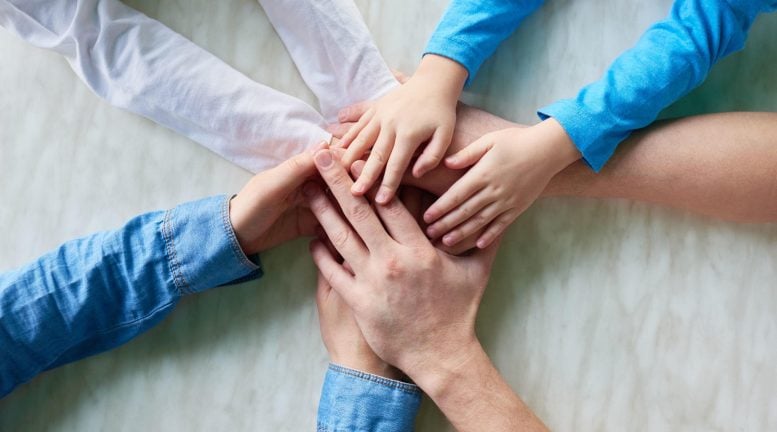
Strengthening Family and Social Bonds Boosts Health Behaviors and Mental Well-Being
New research suggests that the time spent with family during the holiday season may have had a positive impact on health. The study investigated the relationship between social bonds with close friends and family and health and psychological well-being.
The study, conducted by a team of researchers from the University of Kent, Nottingham Trent University, and Coventry University, utilized self-reported data from over 13,000 individuals in 122 countries, collected during the initial wave of the COVID-19 pandemic.
Surveys assessed people’s strength of bonding with close social circles, such as family and friends, as well as with extended groups, such as country, government, and humanity. People’s pandemic-related health behaviors and mental health and well-being were also measured.
Results show that only bonding with family, rather than other groups, is linked to engaging positively with behavior that can improve health; in this case, examples included washing hands, wearing a mask, and social distancing.
For example, 46% of people who had strong family bonds washed hands at least “a lot,” compared to 32% who were not strongly bonded with their family. Moreover, 54% of people not bonded with their family reported they never wore a mask. Bonded people were vastly over-represented among those who engaged in health behaviors. Despite people with strong family bonds constituting only 27% of the entire sample, they constituted 73% of those who engaged in social distancing, 35% of those who washed hands, and 36% of those who wore a mask “a lot” or more.
Mental Health and the Power of Multiple Social Bonds
The study also found that having strong bonds with both close social circles and extended groups is associated with better mental health and well-being. Importantly, the greater number of groups people had strong bonds with, the higher their engagement in health behaviors and the better their reported psychological well-being was, with less anxiety and depression.
The research recommends that public health messaging focus on smaller networks as well as multiple groups, particularly in times of crisis when individuals should be encouraged to share their positive health behaviors with their close social circles.
It is also suggested that healthcare systems can reduce the reliance on pharmaceutical treatments by using social prescribing to support individuals who do not have these bonds in their life.
The results of the study, which included a broad range of countries such as Bangladesh, Brazil, and Peru, have implications for tackling negative physical and mental health effects from a global perspective. The study goes beyond the remit of traditional approaches in psychology by reaching so much of the global population.
Universal Need to Belong and Social Connection
An anthropologist at the University of Kent, Dr. Martha Newson, said: “This research speaks to the universal need to belong – this is one of the reasons we felt it was so important to include a truly diverse sample from across the globe. Wherever you are in the world, other people matter to you.
“We found that having lots of groups was important to encourage better health behaviors, including bonding to abstract groups like your country or government, but most important of all are our closest friends and family — groups that we have likely recognized as being important since the beginning of human history.”
Senior Lecturer in Psychology at NTU’s School of Social Sciences, Dr. Bahar Tunçgenç, added: “At times of turmoil, such as during disasters, social crises, or pandemics, our social bonds can be key to receiving support. We look out to people we trust and identify with as we decide what course of action to take. That’s why our close bonds with family – the people many of us share significant life events with and learn from – can promote healthy behaviors.
“At the same time, having strong social connections – no matter how abstract or distant these might be – is crucial for promoting mental health. Our research shows that close and extended social bonds offer different sources of support and direction.”
Assistant Professor at the Centre for Trust, Peace, and Social Relations at Coventry University, Dr. Valerie van Mulukom, said: “In the West, we tend to think of ourselves as individuals who have to survive and conquer the world on our own. Our research demonstrates that in fact, humans are very much social animals, who benefit from, and rely on, their communities in more ways than one. In challenging times this is even more pronounced. It is advisable for government policies to consider these psychological needs and mechanisms and involve local authorities and grassroots organizations for maximum efficiency and wellbeing in times of disaster.”
Reference: “Social bonds are related to health behaviors and positive well-being globally” by Bahar Tunçgenç, Valerie van Mulukom and Martha Newson, 13 January 2023, Science Advances.
DOI: 10.1126/sciadv.add3715
Never miss a breakthrough: Join the SciTechDaily newsletter.
Follow us on Google and Google News.