
Findings could help scientists develop regenerative therapies for spinal cord injuries and other neurological conditions.
Neurons, the main cells that make up our brain and spinal cord, are among the slowest cells to regenerate after an injury, and many neurons fail to regenerate entirely. While scientists have made progress in understanding neuronal regeneration, it remains unknown why some neurons regenerate and others do not.
Using single-cell RNA sequencing, a method that determines which genes are activated in individual cells, researchers from University of California San Diego School of Medicine have identified a new biomarker that can be used to predict whether or not neurons will regenerate after an injury. Testing their discovery in mice, they found that the biomarker was consistently reliable in neurons across the nervous system and at different developmental stages. The study was published on October 16, 2023, in the journal Neuron.
The Power of Single-Cell Sequencing
“Single-cell sequencing technology is helping us look at the biology of neurons in much more detail than has ever been possible, and this study really demonstrates that capability,” said senior author Binhai Zheng, PhD, professor in the Department of Neurosciences at UC San Diego School of Medicine. “What we’ve discovered here could be just the beginning of a new generation of sophisticated biomarkers based on single-cell data.”
The researchers focused on neurons of the corticospinal tract, a critical part of the central nervous system that helps control movement. After injury, these neurons are among the least likely to regenerate axons—the long, thin structures that neurons use to communicate with one another. This is why injuries to the brain and spinal cord are so devastating.
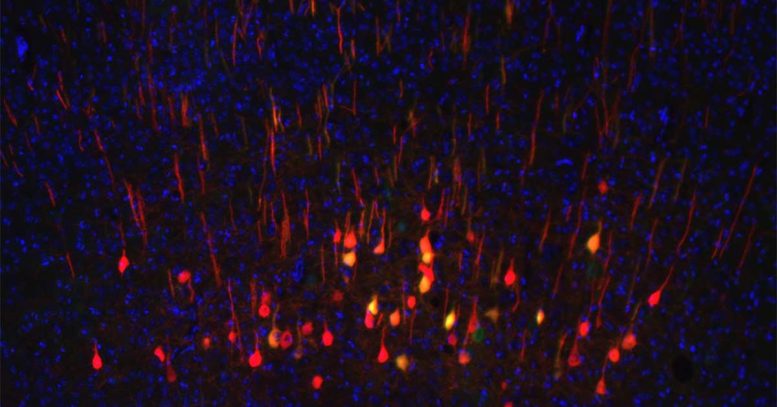
“If you get an injury in your arm or your leg, those nerves can regenerate and it’s often possible to make a full functional recovery, but this isn’t the case for the central nervous system,” said first author Hugo Kim, PhD, a postdoctoral fellow in the Zheng lab. “It’s extremely difficult to recover from most brain and spinal cord injuries because those cells have very limited regenerative capacity. Once they’re gone, they’re gone.”
Identifying the Biomarker
The researchers used single-cell RNA sequencing to analyze gene expression in neurons from mice with spinal cord injuries. They encouraged these neurons to regenerate using established molecular techniques, but ultimately, this only worked for a portion of the cells. This experimental setup allowed the researchers to compare sequencing data from regenerating and non-regenerating neurons.
Further, by focusing on a relatively small number of cells — just over 300 — the researchers were able to look extremely closely at each individual cell.
“Just like how every person is different, every cell has its own unique biology,” said Zheng. “Exploring minute differences between cells can tell us a lot about how those cells work.”
Using a computer algorithm to analyze their sequencing data, the researchers identified a unique pattern of gene expression that can predict whether or not an individual neuron will ultimately regenerate after an injury. The pattern also included some genes that had never been previously implicated in neuronal regeneration.
“It’s like a molecular fingerprint for regenerating neurons,” added Zheng.
Validating the Regeneration Classifier
To validate their findings, the researchers tested this molecular fingerprint, which they named the Regeneration Classifier, on 26 published single-cell RNA sequencing datasets. These datasets included neurons from various parts of the nervous system and at different developmental stages.
The team found that with few exceptions, the Regeneration Classifier successfully predicted the regeneration potential of individual neurons and was able to reproduce known trends from previous research, such as a sharp decrease in neuronal regeneration just after birth.
“Validating the results against many sets of data from completely different lines of research tells us that we’ve uncovered something fundamental about the underlying biology of neuronal regeneration,” said Zheng. “We need to do more work to refine our approach, but I think we’ve come across a pattern that could be universal to all regenerating neurons.”
While the results in mice are promising, the researchers caution that at present, the Regeneration Classifier is a tool to help neuroscience researchers in the lab rather than a diagnostic test for patients in the clinic.
“There are still a lot of barriers to using single-cell sequencing in clinical contexts, such as high cost, difficulty analyzing large amounts of data and, most importantly, accessibility to tissues of interest,” said Zheng. “For now, we’re interested in exploring how we can use the Regeneration Classifier in preclinical contexts to predict the effectiveness of new regenerative therapies and help move those treatments closer to clinical trials.”
Reference: “Deep scRNA sequencing reveals a broadly applicable Regeneration Classifier and implicates antioxidant response in corticospinal axon regeneration” by Hugo J. Kim, Junmi M. Saikia, Katlyn Marie A. Monte, Eunmi Ha, Daniel Romaus-Sanjurjo, Joshua J. Sanchez, Andrea X. Moore, Marc Hernaiz-Llorens, Carmine L. Chavez-Martinez, Chimuanya K. Agba, Haoyue Li, Joseph Zhang, Daniel T. Lusk, Kayla M. Cervantes and Binhai Zheng, 16 October 2023, Neuron.
DOI: 10.1016/j.neuron.2023.09.019
Co-authors of the study include: Junmi M. Saikia, Katlyn Marie A. Monte, Eunmi Ha, Daniel Romaus-Sanjurjo, Joshua J. Sanchez, Andrea X. Moore, Marc Hernaiz-Llorens, Carmine L. Chavez-Martinez, Chimuanya K. Agba, Haoyue Li, Joseph Zhang, Daniel T. Lusk and Kayla M. Cervantes, all at UC San Diego.
Never miss a breakthrough: Join the SciTechDaily newsletter.
Follow us on Google and Google News.