
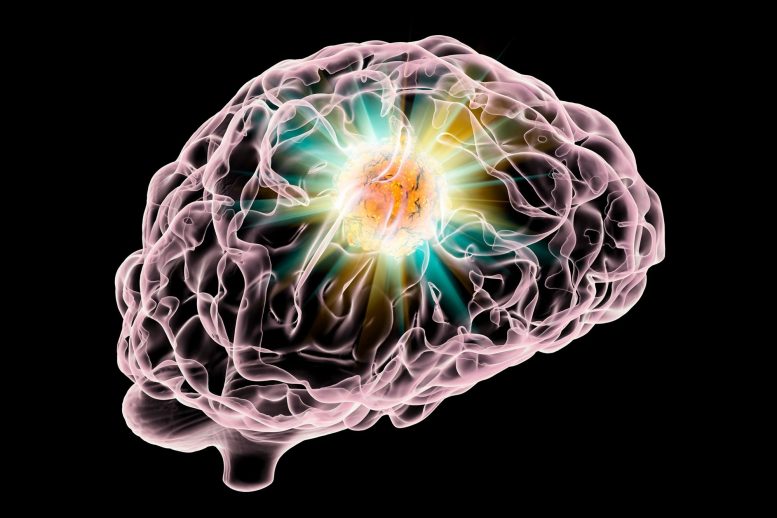
LDL Receptors as a Therapeutic Target in Brain Tumors
New findings suggest that the blood vessels supplying aggressive brain tumors contain receptors that can be targeted by a novel type of drug-delivery nanoparticle. These particles can effectively cut off the tumor’s energy supply, hinder its growth and spread, and also cause other disruptions to its adapted existence, even killing itself.
Researchers from the University of Nottingham and Duke University have uncovered high levels of Low-Density Lipoprotein (LDL) receptors (LDLR) on the blood vessels supplying high-grade glioma brain tumors. This discovery opens up the possibility of utilizing drugs that are already being developed at both institutions to target these receptors, thereby allowing the drugs to be taken up by the tumors.
The findings have recently been published in the journal Pharmaceutics.
Gliomas are the most common primary brain tumors and originate from the glial cells of the brain. They are a heterogeneous spectrum, from slow-growing to highly aggressive infiltrating tumors. Nearly half of all Glioma’s are classed as high-grade gliomas (HGG) and, due to their highly aggressive nature, have a dismal prognosis with an average survival of only 4.6 months without treatment and approximately 14 months with today’s optimal multimodal treatments.
The Role of LDL Receptors in Tumor Energy Supply
The researchers examined tissue microarrays from intra- and inter-tumor regions of 36 adults and 133 pediatric patients to confirm LDLR as a therapeutic target. Expression levels in three representative cell line models were also tested to confirm their future utility to test LDLR-targeted nanoparticle uptake, retention, and cytotoxicity. They showed widespread LDLR expression in adult and pediatric cohorts, and, importantly, also categorized the intra-tumor variation observed between the core and either rim or invasive regions of adult High-Grade Gliomas.
Dr. Ruman Rahman from the University of Nottingham’s School of Medicine led the study and said: “Brain tumors can be very hard to treat with the current techniques available, this is because many of the drugs or nanoparticles that have been shown to work in cells, when used in tests of clinical treatments cannot penetrate the blood-brain barrier that many tumors sit behind. So, it’s vital we look for new ways to treat them. These findings are a significant step in understanding the biology of tumors and how they gather energy to grow and spread from the body’s own fat and protein-containing lipoprotein particles. The key now is to use drug and prodrug nanoparticles to target these receptors and cut off the energy supply of the cancer cells.”
David Needham, Professor of Translational Therapeutics in the School of Pharmacy at the University of Nottingham and Professor of Mechanical Engineering and Materials Science at Duke University has been working on developing new, more clinically-effective, formulations of a common metabolic inhibitor (niclosamide) that cuts off the energy of cells and could be modified as a treatment for a number of diseases – including cancer.
Transforming Niclosamide for Effective Delivery
In its original anti-parasitic application, niclosamide has been used for over 60 years, taken as oral tablets, killing tapeworms on contact in the gut by inhibiting their crucial metabolic pathway and shutting down their energy supply. This same ability to lower the energy supply in a cell, has shown that niclosamide can also reduce the energy a virus needs to replicate (another formulation Needham has recently been developing as a nasal spray and early treatment throat spray for COVID-19 and other respiratory virus infections. For the sprays, Needham figured out how to increase the solubility of niclosamide in simple pH-buffered solutions (Needham 2022, Needham 2023). However, niclosamide’s poor solubility in water makes it very difficult to use elsewhere, such as in an intravenous (i.v.) injection or infusion.
Professor Needham, who has been investigating this drug as a possible treatment for cancer for a number of years and has been driving research in this area and is a co-author on this study, said: “We know that niclosamide works by turning down the dimmer switch on host cells in the body, like in the nose as a preventative for COVID19 and other infections. Cancers’ though have developed additional strategies to survive and so have very different metabolic processes than normal cells. Niclosamide targets not only the energy production in the cells but also triggers other processes that result in what is called, Apoptosis, (self-killing) in the cells.”
He continues, “And now we know that brain tumors have LDL receptors that we think are used to feed their growth and metastatic spread we can work to modify the drug to target these and starve the cancer cells of their energy. Given that cancers feed on LDLS our strategy is to make the drug look like the cancer’s food.”
Innovative Nanoparticle Technology for Drug Delivery
Professor Needham and the team at Duke have developed the “Bricks to Rocks Technology” (B2RT) that makes this common low solubility drug (commonly called “brick dust”) into even less soluble “rocks” for the expressed purpose of making pure prodrug nanoparticles. They converted niclosamide into a new less soluble (niclosamide stearate) prodrug that allows the formation of the injectable or implantable nanoparticles.
With data already obtained showing that the, so-called “niclosamide stearate prodrug therapeutic” (NSPT) can stop the formation of lung metastases in a mouse model of Osteosarcoma (Reddy, Kerr et al. 2020), and also actually cure some dogs in a small canine feasibility study (Eward, Needham et al. 2023).
Professor Needham continues: “This technology is now ready to be applied in other cancers, and Nottingham is ideally placed to develop this with the expertise at the Children’s Brain Tumour Research Centre. The next step will be to test the B2RT with Ruman and colleagues specifically in brain tumor cells, animal models and, if it shows promise, move it into patients as fast as feasibly and safely as possible. We want to determine if and to what extent LDLR-targeted anti-cancer drug and prodrug nanoparticles can have activity in brain cancer, both injected intravenously and/or as post-surgical deposits.”
Such LDLR-targeted nanoparticles have already been developed as a feasible formulation by another School of Pharmacy researcher, Jonathan Burley, and his recent Ph.D. graduate George Bebawy who showed that they improved tumor cell uptake.
Professor Needham adds: “We are now actively seeking industry and also government and infectious disease institute partners to help pursue preclinical and eventually clinical trials. We’re keen to hear from anyone who thinks they can help to further the testing and development of this new technology.”
Reference: “Low-Density Lipoprotein Pathway Is a Ubiquitous Metabolic Vulnerability in High Grade Glioma Amenable for Nanotherapeutic Delivery” by Adenike O. Adekeye, David Needham and Ruman Rahman, 10 February 2023, Pharmaceutics.
DOI: 10.3390/pharmaceutics15020599
Never miss a breakthrough: Join the SciTechDaily newsletter.
Follow us on Google and Google News.
1 Comment
Are “Bricks to Rocks” the best path? It is unfortunate niclosamide
has such inadequate bioavailability. The fact is the drug undergoes
a troublesome and unappreciated metabolic degradation,
on first-pass through the gut, by enzymes CYP1A2 and UGT1A1.
Approaching this dilemma from a new direction, might
the deleterious effects of UGT/CYP enzymes be evaded
by delivering niclosamide – finely powdered – in a rectal
suppository, thus eliminating its exposure to enteric/
first-pass hepatic metabolism ? Dozens of other insoluble
drugs are currently delivered via rectal suppository,
achieving very therapeutic blood levels. Their molecular
weights and water insolubility are very similar to niclosamide.
The rectal mucosa is richly vascularized by the inferior
and middle veins, connecting directly to the systemic
circulation. Its more proximal superior rectal vein,
however, connects to the portal system. Thus the distal
two-thirds of rectal mucosa are the optimal surface
area for uptake while bypassing UGT/CYP enzymes.