
Close Menu
    Facebook X (Twitter) Instagram
    SciTechDaily
    • Biology
    • Chemistry
    • Earth
    • Health
    • Physics
    • Science
    • Space
    • Technology
    Facebook X (Twitter) Pinterest YouTube RSS
    SciTechDaily
    Home»Science»Bushy-Tailed Fossilized Theropod Could Mean that Most Dinosaurs Had Feathers
    Science

    Bushy-Tailed Fossilized Theropod Could Mean that Most Dinosaurs Had Feathers

    By SciTechDailyJuly 4, 2012No Comments2 Mins Read
    Facebook Twitter Pinterest Telegram LinkedIn WhatsApp Email Reddit
    Share
    Facebook Twitter LinkedIn Pinterest Telegram Email Reddit
    S-albersdoerferi-feathers
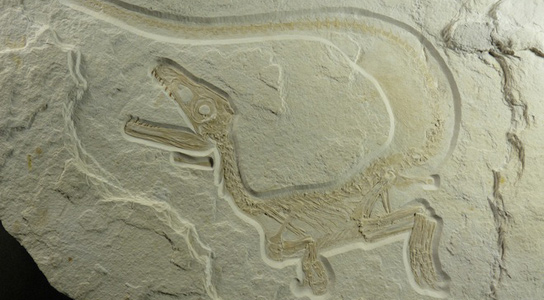
    The skeleton of Sciurumimus albersdoerferi

    A particularly well-preserved bushy-tailed fossilized theropod could imply that most of the dinosaurs actually had feathers. The dinosaur, named Sciurumimus albersdoerferi lived 150 million years ago, during the Jurassic period of the Mesozoic era, in what is now Germany.

    S. albersdoerferi died in fine-grained sediments, allowing for an almost photographic impression of the filaments that covered its body. There have been other feathered therapods discovered before, inspiring the speculation that most dinosaurs had feathers instead of scales.
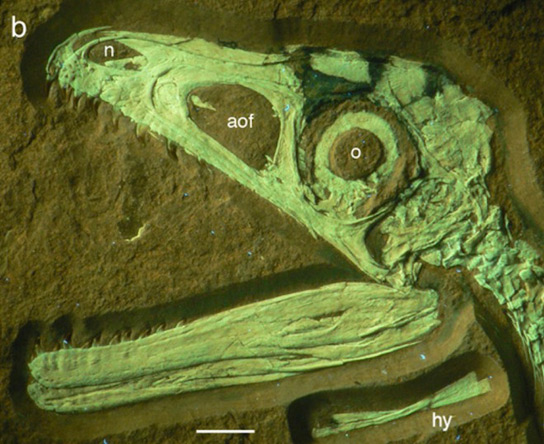
    s-albersdoerferi-head

    The previous fossils belonged to a group known as coelurosaurs, a relative latecomer. It was still an open question whether most theropods were feathers. The new fossil is described in the journal PNAS by lead author and paleontologist Oliver Rauhut, of Germany’s Ludwig Maximilian University.

    S. albersdoerferi was significantly more basal in the evolutionary tree of theropods, implying that if it had feathers, so did the rest of the theropods. Thanks to S. albersdoerferi‘s taxonomic significance, and other quadrupedal, beaked dinosaurs, it’s possible that most dinosaurs had a filamentous body covering representing the plesiomorphic state for dinosaurs in general.
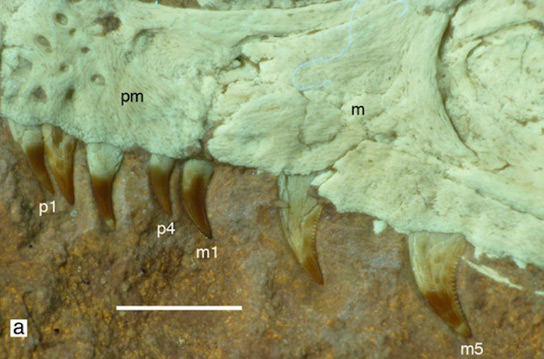
    s-albersdoerferi-teeth

    The feathers of S. albersdoerferi are strikingly beautiful, under different lights. Although S. albersdoerferi is named after a squirrel, it was large and carnivorous. The specimen was a juvenile, at just 28″ inches (71 centimeters) in length. As an adult, it would have been 20 feet (6 meters) from nose to tail. There are long filaments at the base of its tail, and unlike modern birds, whose feathers are optimized for flight, these feathers were most probably used for insulation.
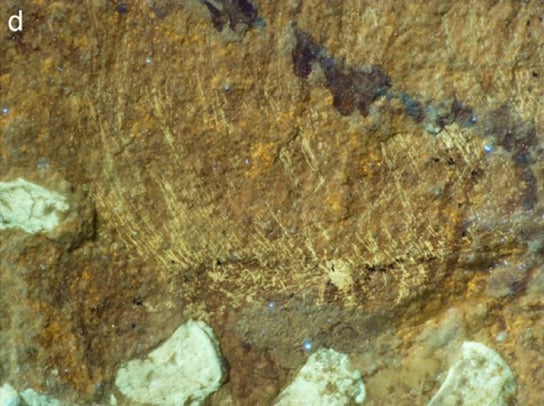
    s-albersdoerferi-tailbase

    Reference: “Exceptionally preserved juvenile megalosauroid theropod dinosaur with filamentous integument from the Late Jurassic of Germany” by Oliver W. M. Rauhut, Christian Foth, Helmut Tischlinger and Mark A. Norell, 2 July 2012, Proceedings of the National Academy of Sciences.
    DOI: 10.1073/pnas.1203238109

    Never miss a breakthrough: Join the SciTechDaily newsletter.
    Follow us on Google and Google News.

    Dinosaurs Feathers Paleontology Theropod
    Share. Facebook Twitter Pinterest LinkedIn Email Reddit

    Related Articles

    Unlocking the Secrets of the Past: New Study Reveals Shocking Similarities Between Dinosaur and Bird Feathers

    Bridging the Evolutionary Gap: Paleontologists Discover Bizarre New Species of Bird-Like Dinosaur

    Jurassic Makeover: Revealing the True Faces of Predatory Dinosaurs Like T. rex

    Deadly Teeth of T. rex Were Hidden Behind Scaly Lips, Shattering Prehistoric Perceptions

    Unearthing Prehistoric Predators: Giant Megaraptors Among Diverse Dinosaurs in Patagonia

    “Baby Yingliang” – Exquisitely Preserved Dinosaur Embryo Discovered Inside Oviraptorosaur Egg

    Exquisitely Preserved Dinosaur Embryo Found Inside Fossilized Oviraptorosaur Egg

    Dinosaur Feather Study Debunked: Overwhelming Evidence Supports Jurassic Fossil Belongs to Archaeopteryx

    Feathered Yutyrannus Huali Specimen Found in China, Closely Related to Tyrannosaurus Rex

    Leave A Reply Cancel Reply

    • Facebook
    • Twitter
    • Pinterest
    • YouTube

    Don't Miss a Discovery

    Subscribe for the Latest in Science & Tech!

    Trending News

    The Universe Is Expanding Too Fast and Scientists Can’t Explain Why

    “Like Liquid Metal”: Scientists Create Strange Shape-Shifting Material

    Early Warning Signals of Esophageal Cancer May Be Hiding in Plain Sight

    Common Blood Pressure Drug Shows Surprising Power Against Deadly Antibiotic-Resistant Superbug

    Scientists Uncover Dangerous Connection Between Serotonin and Heart Valve Disease

    Scientists Discover a “Protector” Protein That Could Help Reverse Hair Loss

    Bone-Strengthening Discovery Could Reverse Osteoporosis

    Scientists Uncover Hidden Trigger Behind Stem Cell Aging

    Follow SciTechDaily
    • Facebook
    • Twitter
    • YouTube
    • Pinterest
    • Newsletter
    • RSS
    SciTech News
    • Biology News
    • Chemistry News
    • Earth News
    • Health News
    • Physics News
    • Science News
    • Space News
    • Technology News
    Recent Posts
    • Scientists Overcome Major Quantum Bottleneck, Potentially Transforming Teleportation and Computing
    • Quantum Physics’ Strangest Problem May Hold the Key to Time Itself
    • Scientists Create “Liquid Gears” That Spin Without Touching
    • The Simple Habit That Could Help Prevent Cancer
    • Forgotten Medicinal Plant Shows Promise in Fighting Dangerous Superbugs
    Copyright © 1998 - 2026 SciTechDaily. All Rights Reserved.
    • Science News
    • About
    • Contact
    • Editorial Board
    • Privacy Policy
    • Terms of Use

    Type above and press Enter to search. Press Esc to cancel.