
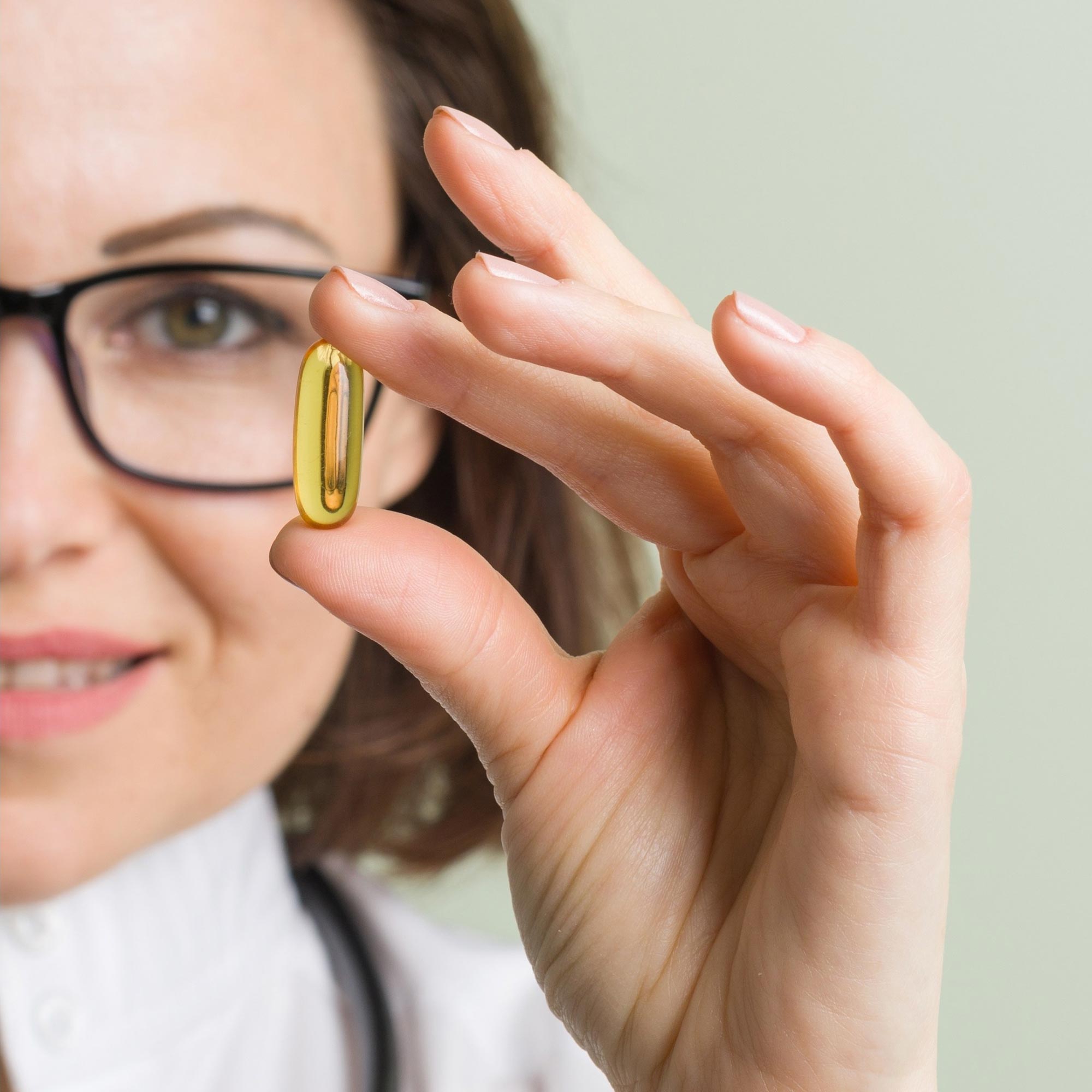
Vitamins support immunity, but supplements aren’t a guaranteed defense against infection.
Our bodies rely on a full spectrum of vitamins to grow, repair, and keep our cells working properly — especially the ones that power our immune system. When we don’t get enough of these essential nutrients, our ability to fight off infections can take a serious hit.
So, can taking vitamin supplements give our immune defenses a real boost? It’s a great question, but the answer isn’t so clear-cut. Research shows mixed results when it comes to vitamins and their role in fighting infections. What we do know is that good nutrition matters, but even the healthiest people still get sick. Vitamins help, but they’re only one piece of the puzzle when it comes to staying well.
Vitamins support immune system function
There’s a reason why the word “vitamin” evokes images of crunchy greens and ripe fruits. Fresh and “whole” foods are vitamin powerhouses and where people (ideally) get most of their supply. Bacteria also produce vitamins, thus contributing to the body’s micronutrient repository.
But vitamins don’t just come from bacteria; they also support the immune system’s ability to respond to these and other microbes. This includes strengthening the body’s physical and biochemical barriers, as well as promoting the differentiation, proliferation, and function of innate and adaptive immune cells.
Vitamins A and D, for example, are involved in the formation of epithelial tissue lining the skin, gut, and respiratory tract and ensure a tight seal between cells. Vitamin E enhances antibody production, whereas vitamin C modulates the production of cytokines by immune cells.
Vitamins also aid in T cell development and responses, augment the ability of macrophages to gobble up (phagocytose) microbial invaders and shape the gut microbiota, which, depending on its composition, can prevent colonization by pathogens.
Vitamins and infection: Contextualizing the connection
The contribution of vitamins to immune system function has implications for infection susceptibility and outcome. People with vitamin insufficiencies or deficiencies—which occur for many reasons, including limited access to nutritious food—may be more at risk of severe infections.
For instance, there is some evidence supporting a relationship between serum vitamin D levels and COVID-19, with lower concentrations associated with greater disease severity and mortality.
Other research indicates that children with vitamin A deficiency (which is prevalent in low- and middle-income countries, but not in high-income nations like the U.S.) have a higher risk of severe, and potentially fatal, measles and diarrhea.
The trajectory of infections by HIV, human papillomavirus, and Clostridioides difficile, among other pathogens, also have ties to vitamin levels. Heightened immune activity during infection can exacerbate vitamin deficiencies, which may further hinder immune responses.
The data are not all in agreement, however. Variability between study design, quality, population, and outcomes means that one study may find a link between a given vitamin and infection, while another will find no association.
As a result, while it is apparent that vitamins are critical for immune function and, at some level, are involved in infection, the nuances of that involvement for different vitamins, pathogens, and people are unclear.
What constitutes “low” or “suboptimal” levels of vitamins, particularly as they relate to immune function, is also a bit hazy. Many people do not meet the recommended dietary allowance (RDA) for one or more vitamins. However, having a slightly lower than recommended vitamin level is not the same as having severely reduced levels (i.e., true clinical deficiency), the latter of which is more robustly connected to negative health outcomes.
How low must someone’s levels be before their immune system is impacted? Do RDA values promote optimized immune responses in addition to preventing other health problems? The answers, which may vary depending on the person and situation, require additional investigation.
Do vitamin supplements work against infection?
There are cases when using supplements to boost someone’s vitamin levels is beneficial for reducing infection severity, particularly in individuals with overt deficiency. Yet, this practice must also be viewed through a nuanced lens. Take measles and vitamin A as an example.
The World Health Organization (WHO) recommends that children with measles receive two doses of vitamin A supplements, 24 hours apart, to restore levels that may be depleted during infection. There is evidence that this dosing regimen reduces morbidity and mortality in high-risk children (< 2 years of age) in low- or middle-income countries where vitamin A deficiency is common. While the WHO recommendations span the world, vitamin A supplementation may not confer the same benefit in all regions.
For instance, a study in over 100 hospitalized children in Italy found that vitamin A did not reduce the duration of fever, length of hospitalization, or organ/hematologic complications. The authors concluded that vitamin A administration “does not change the clinical course of measles infection or the rate of complications in children hospitalized in a high-income country.”
The mixed efficacy of vitamin supplementation extends to other infections, too. Despite data indicating that low vitamin D is associated with worse infection outcomes, there is insufficient evidence to suggest that supplementation helps combat COVID-19 or other viral respiratory infections. Some research indicates that vitamin C supplementation is associated with a reduced risk of developing a cold.
However, depending on the study, the association is linked to exposure to extreme physical stress (e.g., running marathons), sex, or having inadequate starting vitamin C levels; its broad efficacy is less clear.
Ultimately, evidence supporting supplements as tools in infection care is contextual and often conflicting. Experts in the field note that larger, randomly controlled trials in diverse populations are needed to better understand if, when, and how supplements can and should be administered.
Too much of a good thing
What is known is that when supplements are used improperly, they can do more harm than good. Some vitamins, like vitamin A, are fat-soluble (they are stored in the liver, fatty tissue, and muscle) while others, such as B vitamins, are water-soluble (they are not stored in the body and excess is eliminated as waste). Consuming too much of either type leads to negative consequences.
Overdosing on vitamin A, for instance, can result in organ damage, vertigo, bone thinnin,g and more. Vitamin A toxicity has been an issue in recent measles outbreaks, as some children were given the vitamin at home in an effort to prevent infection (note: vitamin A cannot prevent measles; only the MMR vaccine can).
Water-soluble vitamins are generally less toxic, but excessive intake can still cause side effects such as diarrhea, stomach cramps, and potentially kidney stones, as seen with vitamin C. It is a good idea to consult with a health care professional before taking supplements to avoid these and other unpleasant or dangerous effects.
Getting enough vitamins through diet or, in certain circumstances, supplements, is important for all facets of health, including giving the immune system a boost and ensuring it runs smoothly.
But while vitamins and general nutrition are necessary, they represent a small piece of the puzzle that determines infection susceptibility and severity. Many internal and external factors, ranging from age to environmental conditions, come into play. Because of this, promoting individual and collective health relies on more than the ABCs of vitamins.
Indeed, vitamin A can’t prevent measles—but a vaccine can. Vitamins can’t prevent the spread of airborne pathogens, though creating spaces with adequate air filtration and ventilation is a step in the right direction. Vitamins can’t tell us which pathogens are circulating and at what levels; thankfully, wastewater surveillance systems are great at that.
The point is that vitamins have a place in infection mitigation and management, but they are not the whole toolbox. Using and ensuring the continued availability of other tools with strong track records in infection control, like vaccines, is essential for combating disease.
Never miss a breakthrough: Join the SciTechDaily newsletter.
Follow us on Google and Google News.
1 Comment
There is no such thing as “COVID 19”.