

Neuroscientists at Virginia Tech’s Fralin Biomedical Research Institute at VTC will investigate how obesity influences brain circuits related to reward, motivation, and emotional processing.
Obesity rates are increasing in the United States. According to the most recent National Health and Nutrition Examination Survey, approximately 40% of U.S. adults aged 20 and older meet the criteria for obesity, up from about 30% two decades ago.
Obesity is a major risk factor for Type 2 diabetes and other serious health conditions. Despite medical advancements, poor diet is still estimated to contribute to over 300,000 deaths each year in the U.S.
“Decision-making surrounding food drives these health conditions,” said Alexandra DiFeliceantonio, assistant professor at the Fralin Biomedical Research Institute at VTC and interim co-director of its Center for Health Behaviors Research. “And decisions about what foods to eat is a leading, modifiable driver of disease burden.”
DiFeliceantonio is part of an interdisciplinary research team investigating how obesity influences brain circuits related to reward, motivation, and emotion. The project is supported by a four-year, $2.75 million grant from the National Institute of Diabetes and Digestive and Kidney Diseases, a branch of the National Institutes of Health.
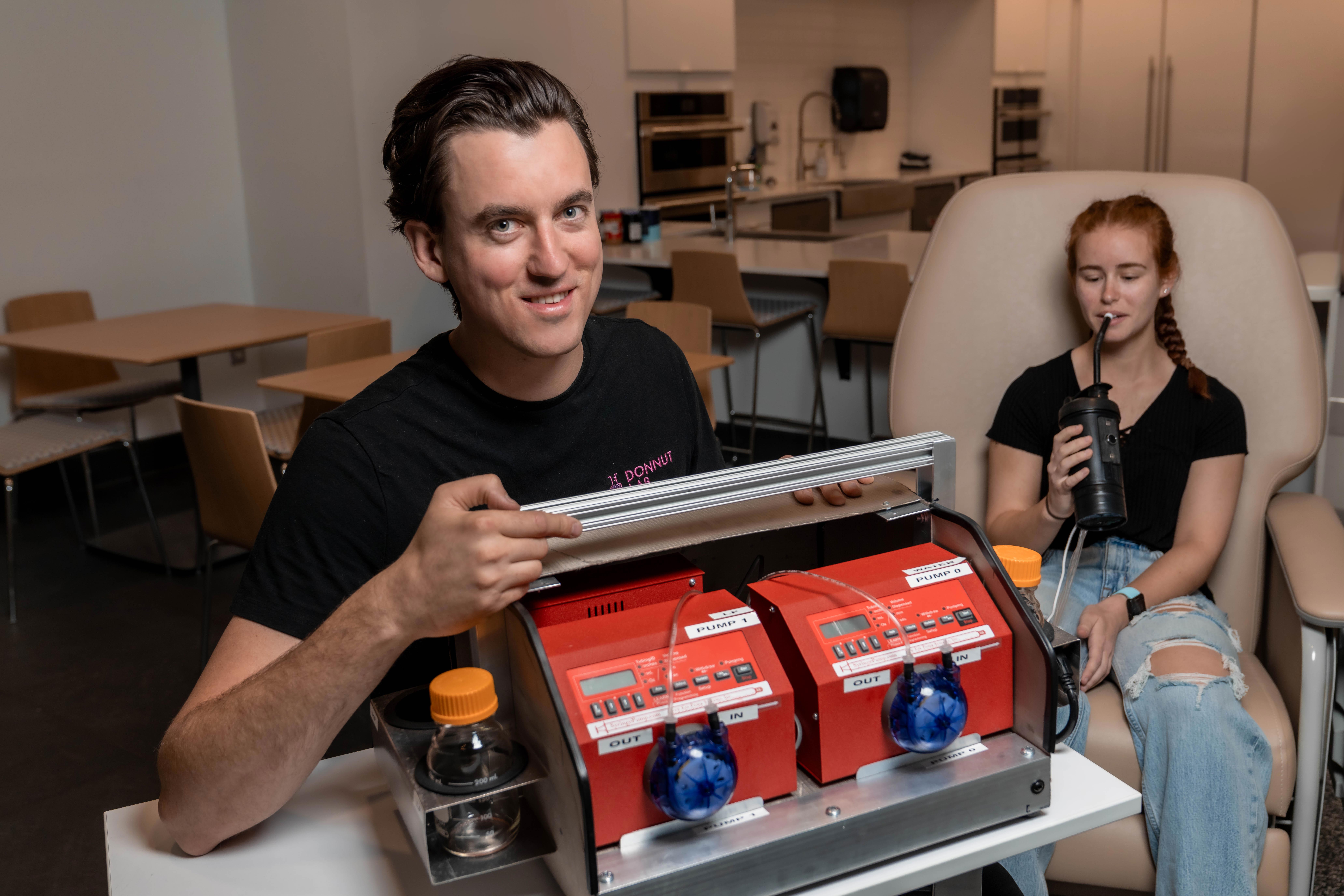
The study aims to bridge the gap between animal and human research and lay the groundwork for examining how the brain’s food-reward systems are linked to markers of metabolic health and disease.
The other lead investigators are Matt Howe, assistant professor of neuroscience with Virginia Tech’s College of Science, and Professor Read Montague, director of the Center for Human Neuroscience Research at the Fralin Biomedical Research Institute.
Cutting-Edge Techniques in Human Neuroscience
While animal studies in bees, rodents, and non-human primates have shown the role certain brain chemicals play in food and reward, scientists only recently have been able to track these chemicals in real time in people.
“Until the advances made by Dr. Montague, we had no way of measuring these signals at sub-second timescales for food reward tasks,” DiFeliceantonio said. “It’s important because there are findings that are foundational in neuroscience that might be different in human beings.”
The Virginia Tech study will use groundbreaking electrochemistry techniques developed by Montague, a computational neuroscientist, and his team. The research, which involves neurochemical measurements taken using surgically implanted leads to monitor seizures in epilepsy patients, is being conducted in collaboration with Robert Bina, a neurosurgeon with the University of Arizona’s Banner Health.
Understanding Brain Chemistry and Reward
Scientists will measure brain chemical activity important for motivation and reward in people while they are drinking sugary drinks through a custom pump system and completing tasks related to emotion and food words to better understand how metabolic markers of health and disease influence decision-making.
“It’s important to measure different types of rewards to understand if these brain chemicals encode something as basic as a sweet taste the same way as something complex like language,” said Matt Howe, assistant professor of neuroscience in the College of Science.
“All the drugs used to treat overweight and obesity target these reward areas in the brain,” DiFeliceantonio said. “Most of the evidence that we have is that even after weight loss, the brain doesn’t just return to where it was before the weight gain.” It’s important to understand what’s taking place as a foundation for next-generation interventions, she said.
The research is funded by the National Institute of Diabetes and Digestive and Kidney Diseases.
Never miss a breakthrough: Join the SciTechDaily newsletter.
Follow us on Google and Google News.