
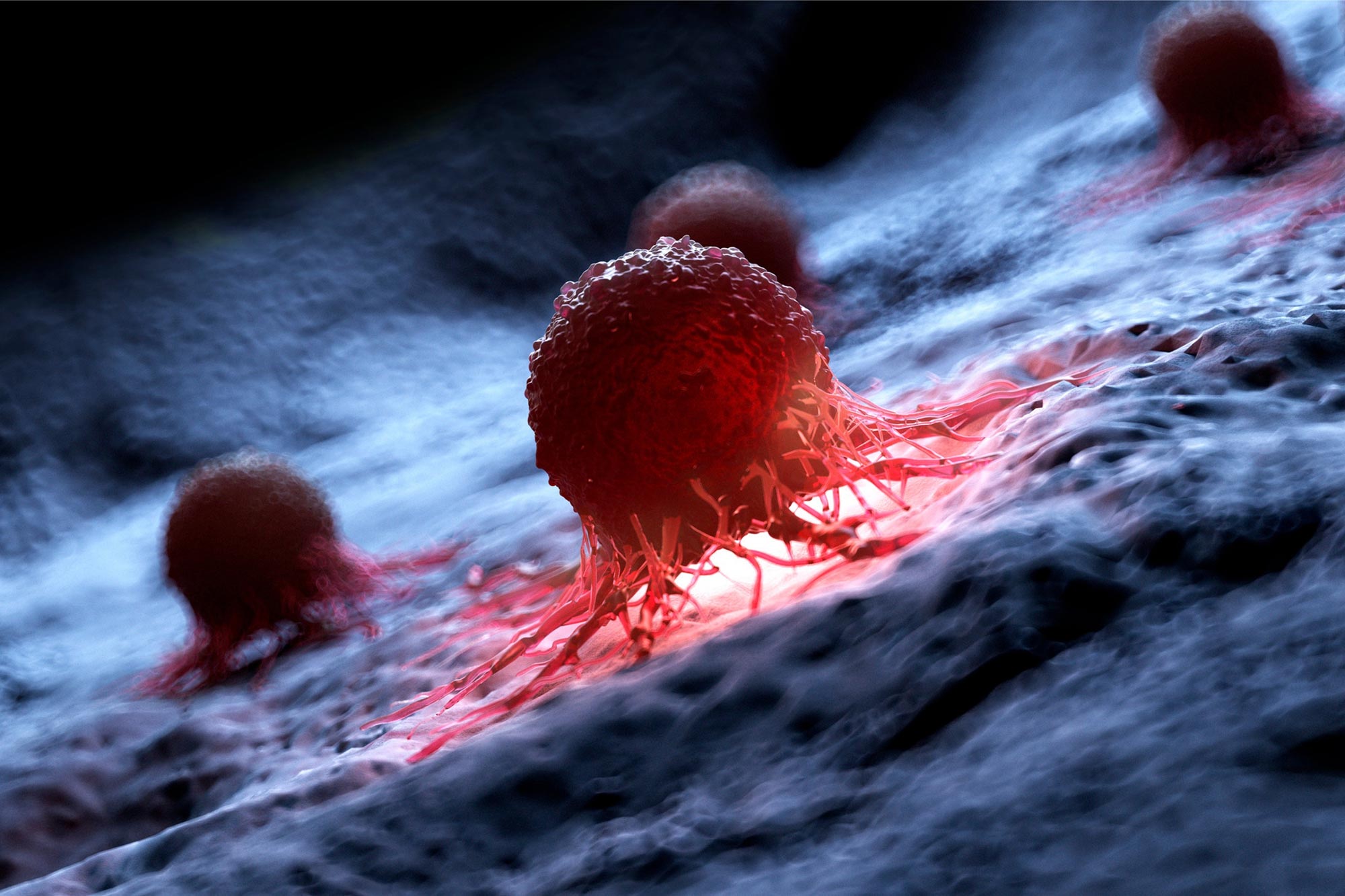
Researchers discovered peptides that permanently block a key cancer protein once thought untreatable, using a new screening method to test their effectiveness inside cells.
For the first time, scientists have identified promising drug candidates that irreversibly bind to a notoriously “undruggable” cancer protein, effectively and permanently disabling it.
Transcription factors, proteins that act as master regulators of gene expression, play a critical role in cancer development. Despite years of effort, designing small-molecule drugs to block these proteins has proven largely ineffective. As a result, researchers have recently turned their attention to peptides, short chains of amino acids, as a potential solution for targeting these elusive proteins.
Now, a team from the University of Bath has developed a breakthrough method to discover peptides that can selectively and irreversibly bind to transcription factors inside cells. Using this approach, they have successfully blocked a key cancer-driving transcription factor known as cJun, marking a significant step forward in targeting previously untreatable cancer mechanisms.
The team, publishing in the journal Advanced Science, used a new drug discovery screening platform technology, called the Transcription Block Survival (TBS) assay, which tests a huge number of peptides to “switch off” transcription factors that drive cancer.
Their previous work identified reversible inhibitors of cJun, but this latest work builds on that by discovering peptides that bind selectively and irreversibly within cells, permanently blocking cJun action.
How the Inhibitor Works
The transcription factor cJun has two identical halves, which bind on either side of the DNA strand to alter gene expression.
It can become overactive in cancer, driving uncontrolled cell growth, so the researchers designed a peptide inhibitor that binds to one-half of cJun, stopping it from forming pairs and attaching to the DNA.
Once they had made a peptide that bound to the transcription factor, the researchers modified it to bind irreversibly.
Dr Andy Brennan, first author of the study and Research Fellow in the University of Bath’s Department of Life Sciences, said: “The inhibitor works a bit like a harpoon that fires across to the target and won’t let go – it grips the cJun tightly and stops it from binding to the DNA.
“We’d previously identified reversible inhibitors but this is the first time we’ve managed to block a transcription factor irreversibly with a peptide inhibitor.”
Testing and Screening with the TBS Assay
For the Transcription Block Survival assay, researchers inserted binding sites for cJun, into an essential gene in cells grown in the lab. As cJun binds to the gene, it prevents it from working and the cell dies. In contrast, if cJun is blocked by the peptide inhibitor, the gene activity is restored and the cell survives.
Jody Mason, CSO of Revolver Therapeutics and Professor of Biochemistry in the University of Bath’s Department of Life Sciences, said: “Many drug candidates that are effective in vitro turn out to be toxic or don’t penetrate cancer cells at all.
“However our platform screens for peptide activity directly in the cell, overcoming many common challenges faced by drugs based on small molecules or antibodies.
“The screen checks the activity of the inhibitor in a real cell environment which includes proteases and other proteins that can sometimes interfere with peptide activity, whilst also checking toxicity.
“We hope this technology can in the future uncover other promising drug candidates for previously ‘undruggable’ targets.”
Having proven cell permeability and activity in cancer cells, as well as target selectivity, the researchers now need to show the inhibitors work in preclinical cancer models.
Reference: “An Intracellular Peptide Library Screening Platform Identifies Irreversible Covalent Transcription Factor Inhibitors” by Andrew Brennan, Scott Lovell, Keith W Vance and Jody M Mason, 17 March 2025, Advanced Science.
DOI: 10.1002/advs.202416963
The research was partly funded by the Medical Research Council and Biotechnology and Biological Sciences Research Council.
Never miss a breakthrough: Join the SciTechDaily newsletter.
Follow us on Google and Google News.
4 Comments
Sounds like the work of Dr Bryzynski in Texas. Only this time by big pharma
so all cancers or specific types? what stage? pre-development or stage 4? is this a preventative measure or a treatment for existing cancer? what are the applications and how is it applied… ?? maybe include salient information… we for the most part don’t care about the science… as much as the application… and where we are on the development of a useful treatment or prevention of cancer….
I’m not sure they’re saying that they are at that stage yet. From my (very) layman eyes, I found the article engaging and informative. It also seemed very clear to me what stage they were at. I follow these stories keenly and have done for a while. I lost my dad to cancer last month. I have nothing but admiration for Dr Brennan and his team at Bath. Truly exciting but we have to wait to see if it’s viable in the field. I don’t understand the science but I am thankful for it.
My first thought is that it could lead to unexpected organ failure since the peptide would affect healthy cells as well as cancerous. Those healthy cells would fail to divide which could put substantial stress on their organs.