

After using zanubrutinib, 80% of patients with a specific type of lymphoma had their tumors shrink in a clinical trial.
Lymphoma cancer is one of the most common cancers in the US, accounting for around 4% of all cancer cases. Lymphoma cancer may occur at any age. It is, in fact, one of the most frequent cancers in children, teenagers, and young adults. Nonetheless, the chance of acquiring Lymphoma cancer increases with age, and more than half of patients are 65 or older when they are diagnosed.
Lymphoma is a kind of cancer that involves the lymphatic system, which is a component of the body’s germ-fighting mechanism. There are many different types of lymphoma, but the two most common are Hodgkin’s lymphoma and Non-Hodgkin’s lymphoma.
Zanubrutinib Shows Promise in Treating Marginal Zone Lymphoma
The oral medication zanubrutinib was shown to help most patients with a slow-growing kind of cancer called marginal zone lymphoma in early research conducted by the University of Michigan Health Rogel Cancer Center.
Cancers shrank in 80% of the 20 patients with marginal zone lymphoma who took part in the clinical study, with one-fifth of them going into complete remission.
The medicine had a substantially lower response rate in the 33 people who had follicular lymphoma, a similar type of cancer. Nevertheless, 18% of individuals who underwent imaging showed no signs of cancer.
The most frequent side effects were diarrhea, bruises, and rashes, as well as colds, fevers, and lower levels of white blood cells, which are important for combating infections and are part of the immune system.
Based on the results of this research as well as a secondary study named MAGNOLIA, the Food and Drug Administration approved zanubrutinib on a contingent basis for adults with marginal zone lymphoma that has returned or proven resistant to other treatments.
“Treatment options with improved tolerability and better disease control were much needed for marginal zone lymphoma and follicular lymphoma,” said Tycel Phillips, M.D., a hematologist at the Rogel Cancer Center, a clinical associate professor at the University of Michigan Medical School and the lead author of the study. “While the small size of this study limits broad conclusions, the safety and efficacy results highlight the potential for zanubrutinib as an addition to available therapies for these cancers.”
How Zanubrutinib Works
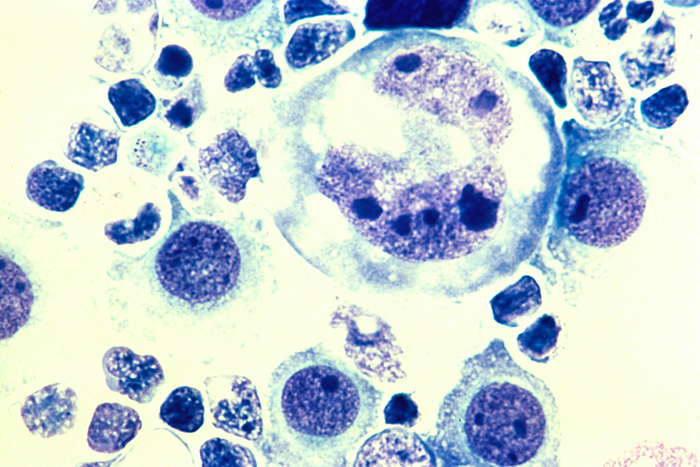
Lymphoma is a type of cancer that begins in the lymphatic system, the tissues, and organs that produce and store white blood cells. The marginal zone and follicular lymphomas develop when white blood cells called B cells become damaged and start to grow uncontrollably.
Thus far, physicians have not been able to cure patients of their marginal zone or follicular lymphomas with chemotherapy, so researchers have been eager to find other, more tolerable, and successful treatments for the diseases.
Novel Approach with BTK Inhibitors
Zanubrutinib is a novel type of drug called a Bruton Tyrosine Kinase inhibitor, which blocks an enzyme known as BTK that plays a crucial role in a signaling pathway that lymphomas are often dependent on in order to survive and grow. The medication is only the third BTK inhibitor to be approved for cancers that begin in B cells.
Reference: “Zanubrutinib monotherapy in relapsed/refractory indolent non-Hodgkin lymphoma” by Tycel Phillips, Henry Chan, Constantine S. Tam, Alessandra Tedeschi, Patrick Johnston, Sung Yong Oh, Stephen Opat, Hyeon-Seok Eom, Heather Allewelt, Jennifer C. Stern, Ziwen Tan, William Novotny, Jane Huang and Judith Trotman, 9 June 2022, Blood Advances.
DOI: 10.1182/bloodadvances.2021006083
Never miss a breakthrough: Join the SciTechDaily newsletter.
Follow us on Google and Google News.
6 Comments
Lymphoma cancer is one of the most common cancers in the US, accounting for around 4% of all cancer cases. Lymphoma cancer may occur at any age. It is, in fact, one of the most frequent cancers in children, teenagers, and
I had porstate cancer and it got in my lymph nose is there any medication that can treat it?
Sample size wasn’t disclosed. Seems like it was under 50, if less than 300, ethically article should have disclaimer about generalizing.
I hope it will change the world
Is there a mailing list as l have NHL and he had 3 relapses?
Thankyou
Robert
[email protected]
Never received a response?
Is there a mailing list as l have NHL and he had 3 relapses?
Thankyou
Robert
[email protected]