
Close Menu
    Facebook X (Twitter) Instagram
    SciTechDaily
    • Biology
    • Chemistry
    • Earth
    • Health
    • Physics
    • Science
    • Space
    • Technology
    Facebook X (Twitter) Pinterest YouTube RSS
    SciTechDaily
    Home»Health»CDC Failure: Internal Investigation Finds Design Errors and Contamination in First Batch of COVID-19 Tests
    Health

    CDC Failure: Internal Investigation Finds Design Errors and Contamination in First Batch of COVID-19 Tests

    By PLOSDecember 16, 2021No Comments3 Mins Read
    Facebook Twitter Pinterest Telegram LinkedIn WhatsApp Email Reddit
    Share
    Facebook Twitter LinkedIn Pinterest Telegram Email Reddit
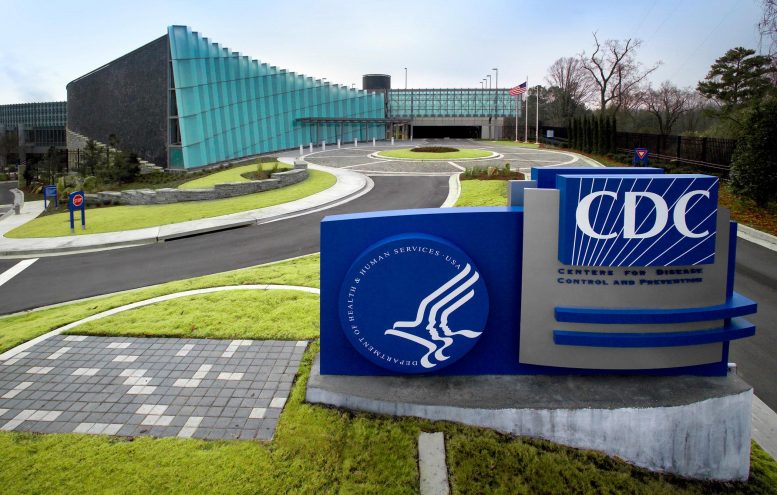
    CDC Tom Harkin Global Communications Center
    This image depicts the exterior of CDC′s “Tom Harkin Global Communications Center” located on the organization′s Roybal Campus in Atlanta, Georgia. Credit: James Gathany, Centers for Disease Control and Prevention

    False positive reactivity in earliest RT-PCR tests due to contamination and design errors.

    The earliest batch of COVID-19 tests distributed by the US Centers for Disease Control and Prevention (CDC) exhibited false positive reactivity of negative controls due to flaws in assay design and contamination in one of the assay components, according to a CDC internal investigation published this week in the open-access journal PLOS ONE.

    The complete SARS-CoV-2 genome sequence from a patient in Wuhan, China was published on January 12, 2020, and CDC scientists began rapid development of a Real-Time RT-PCR Diagnostic Panel to detect the novel coronavirus. The first RT-PCR panel, distributed to US state public health laboratories beginning February 5, 2020, was designed to recognize three unique spots, or “loci” on the SARS-CoV-2 genome. Within several days of distribution, CDC received reports from multiple laboratories of false positive reactivity in the negative controls generated by two of the three probes, known as N1 and N3. This led to changes to the panel, including the removal of the N3 probes.
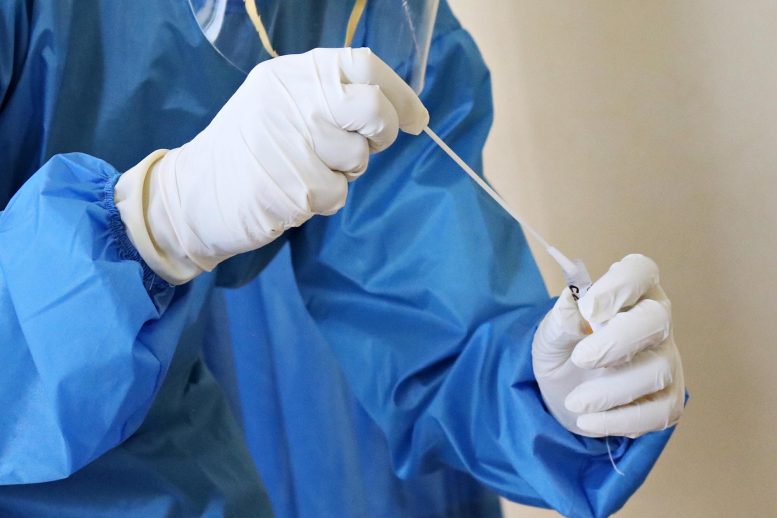
    Laboratory Worker Swab Test
    A laboratory worker takes a COVID-19 swab test.

    In the new study, CDC researchers reviewed the design, validation, manufacturing, and distribution of the diagnostic panel. The team concluded that one source of the false positive reactivity of the negative control was contamination of the N1 component of the RT-PCR kits by a synthetic piece of genetic material. The N1 contamination was detected in the initial production lot of distributed kits, resulting in approximately 2% false positives, but the pre-validation material was not contaminated (0% false positives). The researchers therefore determined that the N1 contamination—which has since been resolved—occurred during the post-production quality control process or packaging of the kits.

    Meanwhile, false positive reactivity of the negative control from the N3 probe was due to a design flaw, the scientists report. Two molecules in the N3 probe frequently bound to each other in the absence of any virus, triggering the fluorescence that signals a positive reaction. This false positive reactivity of the negative control increased with the age of the RT-PCR test kits, which could explain why early evaluation runs, using newly produced materials, did not see high levels of false positives.

    The team says that this issue with false positive reactivity of the negative control has since led to improvements in quality control, quality assurance, and assay validation for RT-PCR and other diagnostic tests at the CDC. These changes include additional steps of review and approval by experts independent of the diagnostic panel design team, as well as piloting the diagnostic panels with public health laboratories to confirm functionality and usability.

    Reference: “Analysis of the initial lot of the CDC 2019-Novel Coronavirus (2019-nCoV) real-time RT-PCR diagnostic panel” by Justin S. Lee, Jason M. Goldstein, Jonathan L. Moon, Owen Herzegh, Dennis A. Bagarozzi Jr., M. Steven Oberste, Heather Hughes, Kanwar Bedi, Dorothie Gerard, Brenique Cameron, Christopher Benton, Asiya Chida, Ausaf Ahmad, David J. Petway Jr., Xiaoling Tang, Nicky Sulaiman, Dawit Teklu, Dhwani Batra, Dakota Howard, Mili Sheth, Wendi Kuhnert, Stephanie R. Bialek, Christina L. Hutson, Jan Pohl and Darin S. Carroll, 15 December 2021, PLoS ONE.
    DOI: 10.1371/journal.pone.0260487

    Never miss a breakthrough: Join the SciTechDaily newsletter.
    Follow us on Google and Google News.

    CDC COVID-19 Infectious Diseases PLOS Popular Public Health Virology
    Share. Facebook Twitter Pinterest LinkedIn Email Reddit

    Related Articles

    Testing Shows COVID-19 Lingered Longer Than Reported in Wuhan, China

    New Strategy Identifies Existing Drug That Inhibits COVID-19 Virus – Outperforms Remdesivir

    Warning: More Cats Might Have COVID-19 Than First Believed

    Small Neutralizing Antibody Identified That May Prevent COVID-19 Infection

    New Research Explains Multipronged SARS-CoV-2 Attack and Widepread COVID-19 Infection

    Common Molecular Feature of Antibodies That Neutralize SARS-CoV-2 Discovered, Boosting COVID-19 Vaccine Prospects

    Far-UVC Light Safely Kills 99.9% of Airborne Coronaviruses

    How COVID-19 Kills: New Study Explains the Mechanisms of the New Coronavirus

    Vitamin D Linked to Low Coronavirus Death Rate

    Leave A Reply Cancel Reply

    • Facebook
    • Twitter
    • Pinterest
    • YouTube

    Don't Miss a Discovery

    Subscribe for the Latest in Science & Tech!

    Trending News

    Your Blood Pressure Reading Could Be Wrong Because of One Simple Mistake

    Astronomers Stunned by Ancient Galaxy With No Spin

    Physicists May Be on the Verge of Discovering “New Physics” at CERN

    Scientists Solve 320-Million-Year Mystery of Reptile Skin Armor

    Scientists Say This Daily Walking Habit May Be the Secret to Keeping Weight Off After Dieting

    New Therapy Rewires the Brain To Restore Joy in Depression Patients

    Giant Squid Detected off Western Australia in Stunning Deep-Sea Discovery

    Popular Sugar-Free Sweetener Linked to Liver Disease, Study Warns

    Follow SciTechDaily
    • Facebook
    • Twitter
    • YouTube
    • Pinterest
    • Newsletter
    • RSS
    SciTech News
    • Biology News
    • Chemistry News
    • Earth News
    • Health News
    • Physics News
    • Science News
    • Space News
    • Technology News
    Recent Posts
    • Scientists Revive Ancient Chemistry Trick To Engineer Next-Generation Glass
    • Scientists Use AI To Supercharge Ultrafast Laser Simulations by More Than 250x
    • Scientists Just Found a Surprising Way To Destroy “Forever Chemicals”
    • Popular Supplement Ingredient Linked to Shorter Lifespan in Men
    • Scientists May Have Found a Way To Repair Nerve Damage in Multiple Sclerosis
    Copyright © 1998 - 2026 SciTechDaily. All Rights Reserved.
    • Science News
    • About
    • Contact
    • Editorial Board
    • Privacy Policy
    • Terms of Use

    Type above and press Enter to search. Press Esc to cancel.