
Behavior that is “surprisingly strategic” enhances our understanding of animal cognition.
Are mice clever enough to be strategic?
Kishore Kuchibhotla, a Johns Hopkins University neuroscientist who studies learning in humans and animals, and who has long worked with mice, wondered why rodents often performed poorly in tests when they knew how to perform well. With a simple experiment, and by acting as “a little bit of a mouse psychologist,” he and his team figured it out.
“It appears that a big part of this gap between knowledge and performance is that the animal is engaging in a form of exploration—what the animal is doing is very clever,” he said. “It’s hard to say animals are making hypotheses, but our view is that animals, like humans, can make hypotheses and they can test them and may use higher cognitive processes to do it.”
The work, which deepens our understanding of animal cognition, and could lead to identifying the neural basis for strategizing, was published in Current Biology.
Kuchibhotla’s lab previously found that animals know a lot more about tasks than they demonstrate in tests. The team had two theories about what could be behind this gap. Either the mice were making mistakes because they were stressed, or they were doing something more purposeful: exploring and testing their knowledge.
Experiment Insights
To figure it out Kuchibhotla and Ziyi Zhu, a graduate student studying neuroscience, came up with a new experiment.
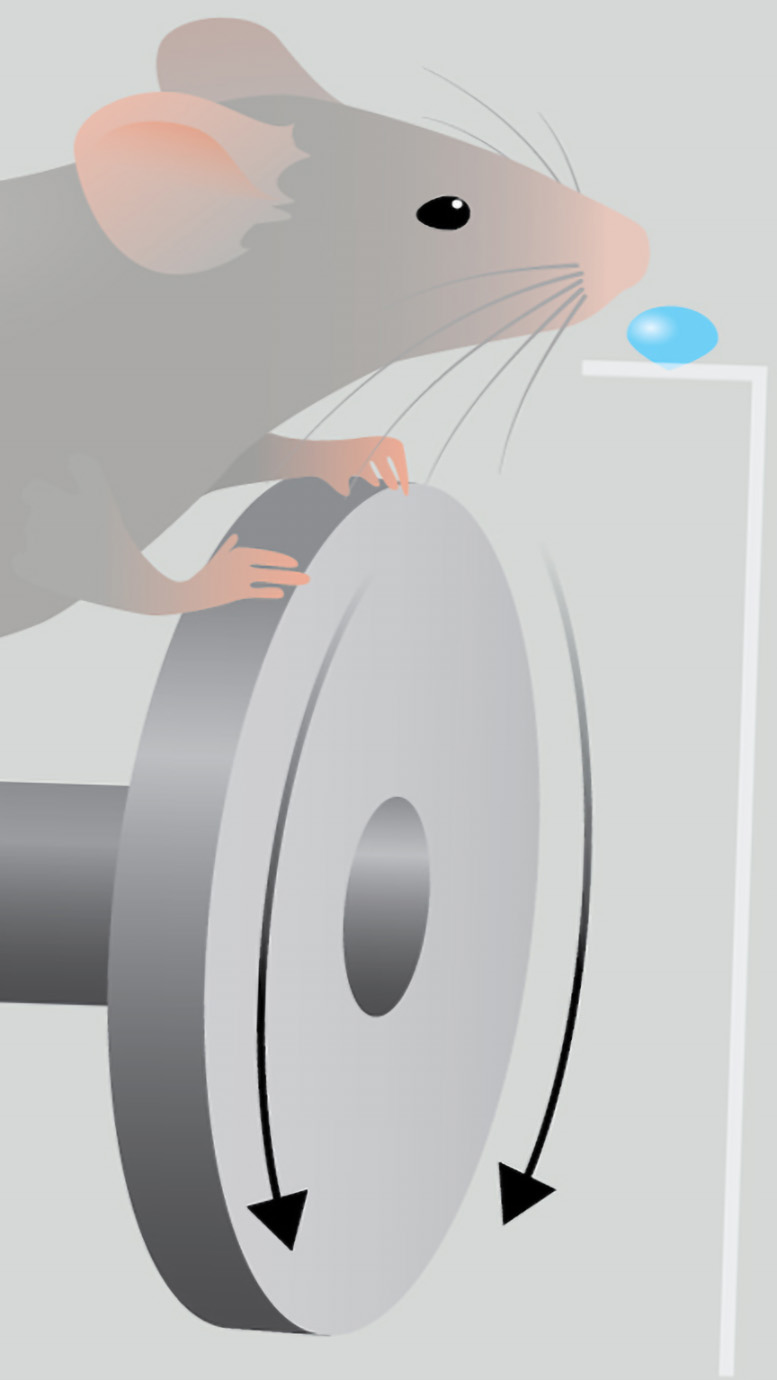
Mice heard two sounds. For one sound they were supposed to turn a wheel to the left. For the other sound, they’d turn the wheel to the right. When the mice performed correctly they were rewarded.
The researchers observed how upon hearing either sound over consecutive trials, the mice would turn the wheel left for a bit, then switch to turning it right, seemingly making mistakes but actually being purposeful.
Strategic Behavior in Mice
“We find that when the animal is exploring, they engage in a really simple strategy, which is, ‘I’m going to go left for a while, figure things out, and then I’m going to switch and go right for a while,’” Kuchibhotla said. “Mice are more strategic than some might believe.”
Zhu added, “Errors during animal learning are often considered as mistakes. Our work brings new insight that not all errors are the same.”
The team learned even more about the rodents’ actions by taking the reward out of the equation.
When a mouse performed correctly and wasn’t rewarded, it immediately doubled down on the correct response when retested.
“If the animal has an internal model of the task, the lack of reward should violate its expectation. And if that’s the case, it should affect the behavior on subsequent trials. And that’s exactly what we found. On subsequent trials the animal just does a lot better,” Kuchibhotla said. “The animal is like, ‘Hey, I was expecting to be rewarded, I wasn’t, so let me test my knowledge, let me use the knowledge I have and see if it’s correct.’”
If the animal didn’t have an internal model of the task, there would be no expectations to violate and the mice would keep performing poorly.
“At a very early time in learning the animal has an expectation and when we violate it, it changes its strategy,” Kuchibhotla said. “It was surprisingly strategic.”
This mouse strategizing is comparable to how nonverbal human babies learn. Both are highly exploratory and both may test hypotheses in various ways, Kuchibhotla said.
During the experiments Kuchibhotla said he became “a little bit of a mouse psychologist” to interpret their behavior. Like working with a nonverbal infant, he and Zhu had to infer the underlying mental processes from the behavior alone.
“That’s what was really fun in this project, trying to figure out what the mouse is thinking,” he said. “You have to think about it from the perspective of the animal.”
Next the team hopes to determine the neural basis for strategic thinking, and how those strategies might compare across different animals.
Reference: “Performance errors during rodent learning reflect a dynamic choice strategy” by Ziyi Zhu and Kishore V. Kuchibhotla, 26 April 2024, Current Biology.
DOI: 10.1016/j.cub.2024.04.017
The study was funded by the National Institutes of Health.
Never miss a breakthrough: Join the SciTechDaily newsletter.
Follow us on Google and Google News.
1 Comment
well, I’ll be damn if Douglas Adams turns out to have been right all along.