
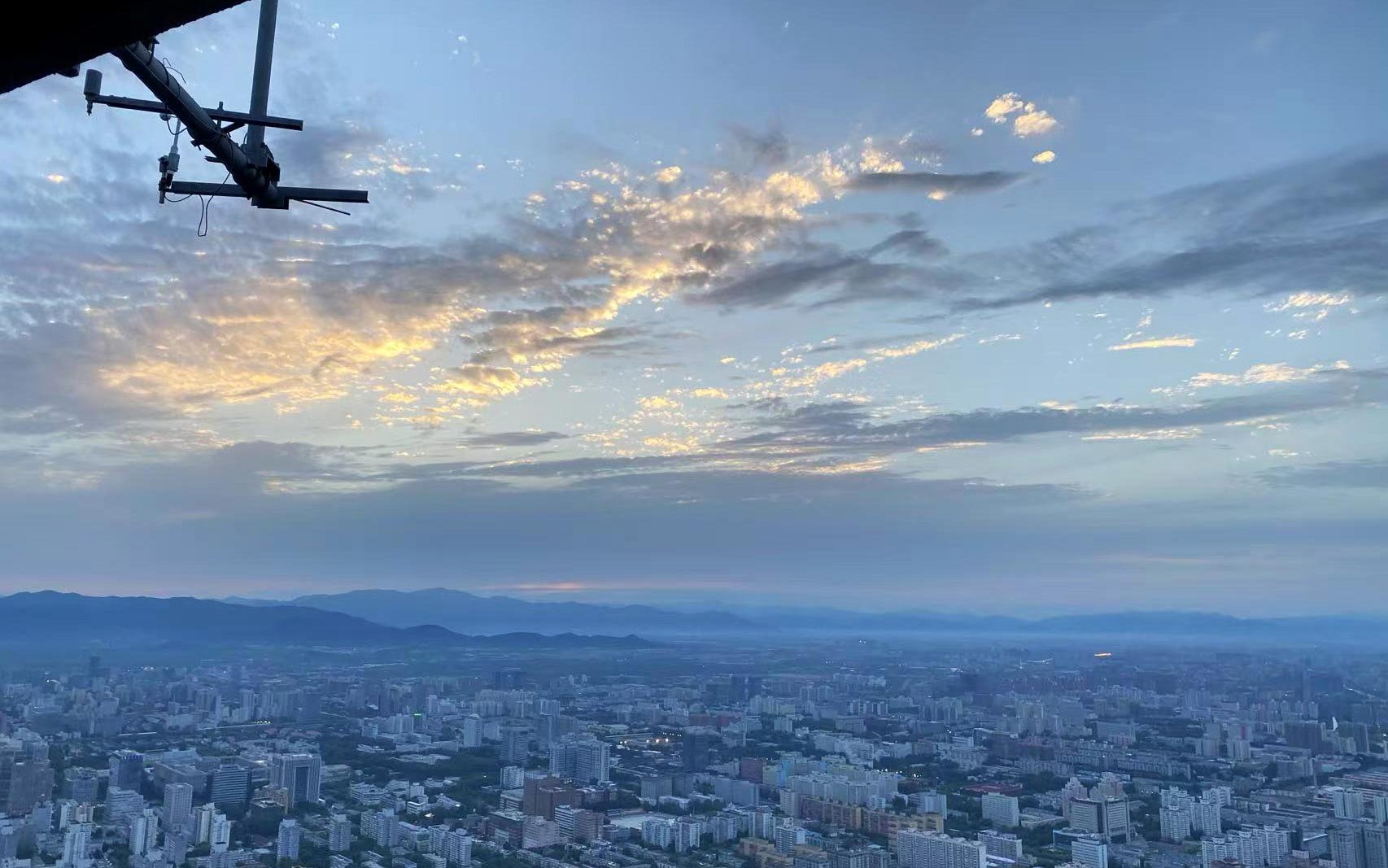
A recent study published in One Earth presents strong evidence indicating that the climate impact of newly formed particles in urban areas has been significantly underestimated.
Particles are essential to climate regulation, affecting processes like cloud formation and the Earth’s radiation balance. Traditionally, research in urban environments has focused primarily on primary particles—those directly released from sources such as vehicle emissions and industrial activities. In contrast, new particles, which form through atmospheric chemical reactions, have received less attention in discussions about their climatic impact.
However, a recent study published in One Earth provides strong evidence that the influence of these newly formed particles in urban areas has been significantly underestimated.
“To accurately assess the climate effects of particles, we need comprehensive long-term vertical observations,” says Academician Markku Kulmala from the Institute for Atmospheric and Earth System Research INAR at the University of Helsinki. This call for enhanced observational strategies underscores the complexity of atmospheric processes and the importance of capturing data from different heights to better understand urban aerosol behavior.
Enhanced particle formation aloft in urban areas
Utilizing advanced measurement techniques based on a 325-meter meteorological tower in Beijing, the research team analyzed particle formation at various heights above the urban landscape. This study revealed that particle formation is more pronounced at higher altitudes, where factors such as greater concentrations of sulfuric acid and increased relative humidity promote particle growth. This is particularly pertinent in urban environments, where pollution levels and atmospheric dynamics can vary dramatically, leading to different growth mechanisms for new particles compared to rural areas.
“The enhanced particle formation aloft suggests that while ground-level measurements provide valuable insights, they may not capture the full picture of particle dynamics, particularly in densely populated urban areas,” says Wei Du, a key researcher in the study. This insight highlights the importance of examining the atmosphere above the skyline to understand atmospheric processes in urban environments more comprehensively.
The climate effects of new particles
When gaseous precursors related to anthropogenic emissions are transported to elevated layers of the atmosphere, they enhance the growth of particles, enabling them to become effective cloud condensation nuclei (CCN), which are essential for cloud formation and local climate regulation. The study asserts that the influence of new particles on CCN has been underestimated by approximately 20%. Therefore, understanding the vertical component of urban atmospheric processes is critical for fully grasping the impact of particulate matter on climate.
The implications of this research extend beyond academic discourse and hold significant relevance for policy-making and urban planning.
“As cities continue to grapple with air pollution and climate challenges, understanding the vertical profiles of the atmopsheric processes can help develop more effective strategies to mitigate their impacts on both climate and public health,” Wei says.
The study represents a collaborative effort from researchers at the University of Helsinki, the Chinese Academy of Sciences, and various additional partners.
“The Beijing 325 m Meteorological Tower is a unique research platform for atmospheric and climate science in megacities. We are pleased to collaborate with international partners to address climate change together,” says Yele Sun, Professor at the Chinese Academy of Sciences.
Reference: “Impacts of enhanced new-particle growth events above urban roughness sublayer on cloud condensation nuclei” by Wei Du, Jian Zhao, Lubna Dada, Weiqi Xu, Yuying Wang, Yu Shi, Xueshun Chen, Tom V. Kokkonen, Jing Cai, Yingjie Zhang, Qingqing Wang, Runlong Cai, Qiaozhi Zha, Libo Zhou, Zhanqing Li, Fangqun Yu, Pingqing Fu, Fei Hu, Zifa Wang, Douglas R. Worsnop, Federico Bianchi, Veli-Matti Kerminen, Markku Kulmala and Yele Sun, 31 December 2024, One Earth.
DOI: 10.1016/j.oneear.2024.12.005
Never miss a breakthrough: Join the SciTechDaily newsletter.
Follow us on Google and Google News.
3 Comments
So, basically, they don’t know jack but the “science is settled”.
Every day something new is discovered and the supposed experts have to realign their thinking. So when someone in science says ‘this definitively is it’ I automatically disbelieve them because they will change their minds with new and more data. Science will never have all the answers, and therefore all things are still a mystery, no matter whether a scientist claims ‘he knows’ or not.
Uh, that is how science works