
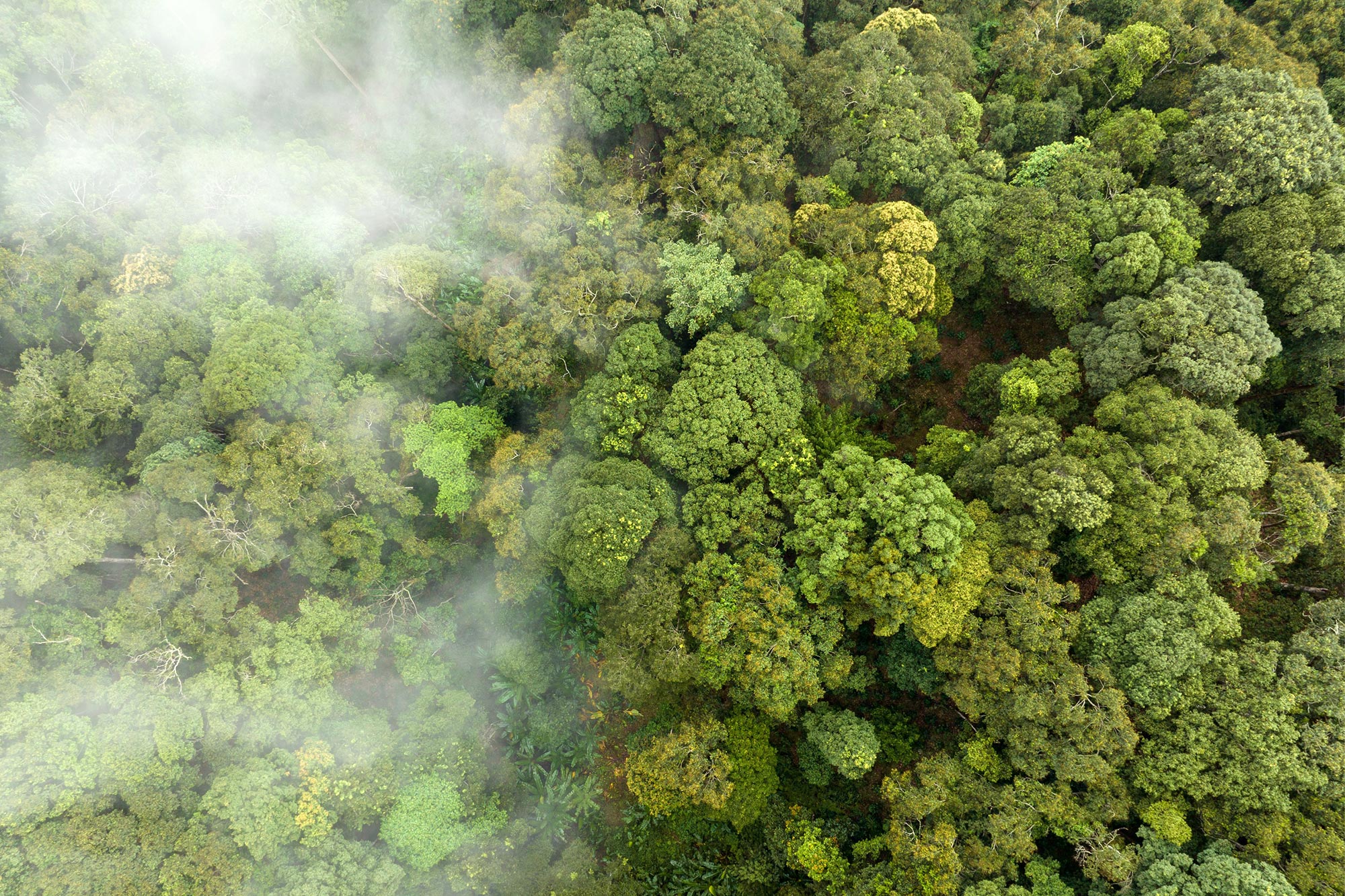
Tropical regions like the Amazon exhibit high concentrations of aerosol particles in the upper troposphere, puzzling scientists for decades.
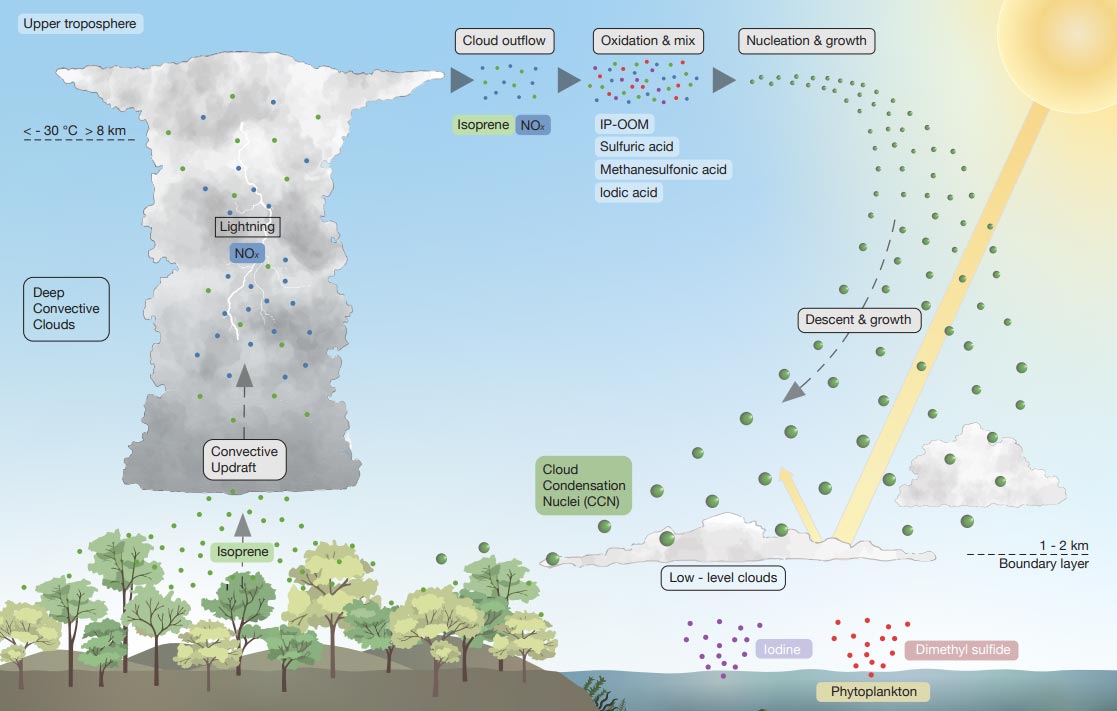
Scientists have discovered that isoprene, a plant-emitted hydrocarbon, drives aerosol particle formation in the cold upper troposphere of tropical regions. Trace acids amplify this process, linking tropical emissions to cloud formation and climate dynamics. These findings may enhance climate models.
The Mystery of Tropical Aerosol Particles
Why are there so many newly formed aerosol particles in the upper troposphere over tropical regions like the Amazon? Tropical forests are vital for global climate regulation, yet the unusually high concentrations of these particles in the upper atmosphere have puzzled scientists for the past 20 years.
New research led by the University of Helsinki suggests that isoprene may hold the answer. Isoprene, the most abundant non-methane hydrocarbon emitted by vegetation, plays a significant role in atmospheric processes.
Published today (December 4) in Nature, the study explored how isoprene contributes to particle formation in the upper troposphere. This atmospheric layer extends from ground level to approximately 18 kilometers at the equator. Using the CLOUD chamber at CERN, researchers investigated whether isoprene oxygenated organic molecules (IP-OOM) — compounds formed when isoprene oxidizes in the atmosphere — could generate new particles in the extremely cold conditions of the upper troposphere, with temperatures below -30°C.
The study also examined how additional factors, including temperature, trace acids, and nitrogen oxides, influence the particle formation process.
Isoprene’s Surprising Role in Rapid Particle Formation
The researchers found that isoprene-oxygenated organic molecules can rapidly form new particles under upper-tropospheric conditions. Previously, isoprene was thought to have negligible ability to form particles; however, this study showed that isoprene can drive rapid particle formation under certain conditions.
“Our key finding is that the presence of extremely low concentrations of sulphuric acid or iodine oxoacids dramatically enhances particle formation, accelerating it up to 100 times faster compared to when only isoprene oxygenated organics are present. These findings can explain the high particle number concentrations observed at high altitudes over tropical regions such as the Amazon,” explains Jiali Shen, a postdoctoral researcher at the Institute for Atmospheric and Earth System Research (INAR), University of Helsinki.
Linking Particle Formation to Climate Understanding
Aerosol particles are important for the climate because they scatter and absorb incoming solar radiation and seed cloud droplets by acting as cloud condensation nuclei. These newly published findings could have significant implications for our understanding of cloud formation and climate.
“This research connects the abundant isoprene emissions from tropical rainforests to particle formation in the upper troposphere, highlighting a new aspect of the interaction between forests and the atmosphere. These results may lead to improvements in atmospheric chemistry and climate models, potentially enhancing our ability to predict climate change and its impacts,” says Xu-Cheng He, one of the lead investigators in the study.
“This study underscores the complex interactions between forests, the atmosphere, and climate. This demonstrates how emissions from trees can have far-reaching effects on cloud formation and potentially on the global climate. This type of fundamental research is crucial for improving our understanding of climate processes and our ability to predict and mitigate climate change,” says Professor Katrianne Lehtipalo from the University of Helsinki.
Reference: “New particle formation from isoprene under upper-tropospheric conditions” by Jiali Shen, Douglas M. Russell, Jenna DeVivo, Felix Kunkler, Rima Baalbaki, Bernhard Mentler, Wiebke Scholz, Wenjuan Yu, Lucía Caudillo-Plath, Eva Sommer, Emelda Ahongshangbam, Dina Alfaouri, João Almeida, Antonio Amorim, Lisa J. Beck, Hannah Beckmann, Moritz Berntheusel, Nirvan Bhattacharyya, Manjula R. Canagaratna, Anouck Chassaing, Romulo Cruz-Simbron, Lubna Dada, Jonathan Duplissy, Hamish Gordon, Manuel Granzin, Lena Große Schute, Martin Heinritzi, Siddharth Iyer, Hannah Klebach, Timm Krüger, Andreas Kürten, Markus Lampimäki, Lu Liu, Brandon Lopez, Monica Martinez, Aleksandra Morawiec, Antti Onnela, Maija Peltola, Pedro Rato, Mago Reza, Sarah Richter, Birte Rörup, Milin Kaniyodical Sebastian, Mario Simon, Mihnea Surdu, Kalju Tamme, Roseline C. Thakur, António Tomé, Yandong Tong, Jens Top, Nsikanabasi Silas Umo, Gabriela Unfer, Lejish Vettikkat, Jakob Weissbacher, Christos Xenofontos, Boxing Yang, Marcel Zauner-Wieczorek, Jiangyi Zhang, Zhensen Zheng, Urs Baltensperger, Theodoros Christoudias, Richard C. Flagan, Imad El Haddad, Heikki Junninen, Ottmar Möhler, Ilona Riipinen, Urs Rohner, Siegfried Schobesberger, Rainer Volkamer, Paul M. Winkler, Armin Hansel, Katrianne Lehtipalo, Neil M. Donahue, Jos Lelieveld, Hartwig Harder, Markku Kulmala, Doug R. Worsnop, Jasper Kirkby, Joachim Curtius and Xu-Cheng He, 4 December 2024, Nature.
DOI: 10.1038/s41586-024-08196-0
Never miss a breakthrough: Join the SciTechDaily newsletter.
Follow us on Google and Google News.