

Close Menu
    Facebook X (Twitter) Instagram
    SciTechDaily
    • Biology
    • Chemistry
    • Earth
    • Health
    • Physics
    • Science
    • Space
    • Technology
    Facebook X (Twitter) Pinterest YouTube RSS
    SciTechDaily
    Home»Earth»NASA’s PolSIR: New Mission To Unveil the Mysteries of High-Altitude Ice Clouds
    Earth

    NASA’s PolSIR: New Mission To Unveil the Mysteries of High-Altitude Ice Clouds

    By NASAMay 23, 2023No Comments4 Mins Read
    Facebook Twitter Pinterest Telegram LinkedIn WhatsApp Email Reddit
    Share
    Facebook Twitter LinkedIn Pinterest Telegram Email Reddit
    Ice Clouds Illustration
    NASA has announced a new mission to examine ice clouds in Earth’s dynamic atmosphere, especially those forming at high altitudes in tropical and subtropical regions. The mission, using the Polarized Submillimeter Ice-cloud Radiometer (PolSIR), involves two identical CubeSats that will monitor these clouds’ daily ice content cycle. The primary aim is to improve the simulation of these clouds in global climate models and boost climate forecast accuracy.

    NASA is launching a mission to study high-altitude ice clouds using two CubeSats equipped with the Polarized Submillimeter Ice-cloud Radiometer (PolSIR). The objective is to enhance climate forecasts and improve global climate models. Part of the cost-effective Earth Venture program, the mission aims to understand the climate’s response to such clouds. It’s jointly led by Vanderbilt University and NASA’s Goddard Space Flight Center, with CubeSats manufactured by Blue Canyon Technologies.

    NASA has selected a new mission to help humanity better understand Earth’s dynamic atmosphere – specifically, ice clouds that form at high altitudes throughout tropical and subtropical regions. The PolSIR instrument – short for Polarized Submillimeter Ice-cloud Radiometer – will study such ice clouds to determine how and why they change throughout the day. This will provide crucial information about how to accurately simulate these high-altitude clouds in global climate models.

    The investigation consists of two identical CubeSats – each small satellite is just a little over a foot tall – flying in orbits separated by three to nine hours. Over time, these two instruments will observe the clouds’ daily cycle of ice content.

    “Studying ice clouds is crucial for improving climate forecasts – and this will be the first time we can study ice clouds in this level of detail,” said Nicola Fox, associate administrator for the Science Mission Directorate at NASA Headquarters in Washington. “Every NASA mission is carefully chosen to better understand our home planet.”
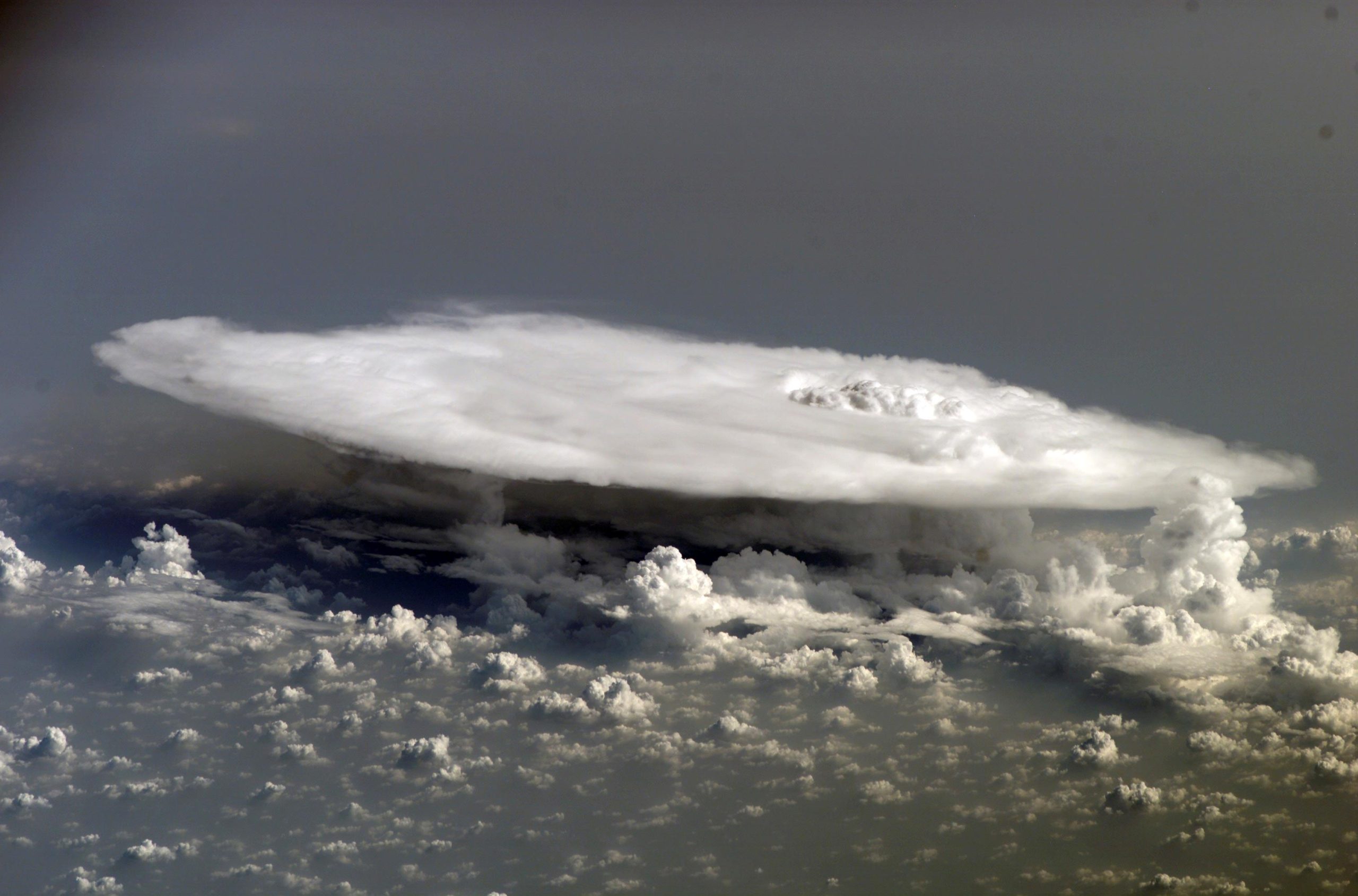
    High-Altitude Ice Clouds
    A new NASA mission, PolSIR, short for Polarized Submillimeter Ice-cloud Radiometer, will study high-altitude ice clouds, such as this cloud as seen from the International Space Station in 2008. Understanding how such clouds change throughout the day is crucial for improving global climate models. Credit: NASA

    The award is for for lifecycle costs no more than $37 million, which does not include launch costs. The radiometer is an Earth Venture instrument – lower-cost instruments with a targeted research goal, which typically catch a ride along with another mission or commercial satellite in order to minimize launch costs. The Earth Venture class also focuses on providing frequent flight opportunities, so innovative science investigations can be flown relatively quickly, generally within five years or less. Missions like this provide key targeted research opportunities, which help us improve our understanding of what’s driving change in the entire Earth system.

    “Understanding how these ice clouds respond to a changing climate – and then, in turn, contribute to further changes – remains one of the great challenges to predicting what the atmosphere will do in the future,” said Karen St. Germain, who leads NASA’s Earth Sciences Division. “The radiometers, which measure the radiant energy emitted by clouds, will significantly improve our understanding of how ice clouds change and respond throughout the day.”

    The mission is led by Ralf Bennartz, principal investigator at Vanderbilt University in Nashville, Tennessee, and by Dong Wu, deputy principal investigator at NASA’s Goddard Space Flight Center in Greenbelt, Maryland.

    NASA Goddard will provide the project management team that builds the two instruments, while science operations will be conducted by the Space Science and Engineering Center at the University of Wisconsin – Madison. The two spacecraft will be built by Blue Canyon Technologies in Lafayette, Colorado.

    Never miss a breakthrough: Join the SciTechDaily newsletter.
    Follow us on Google and Google News.

    Atmospheric Science Climate Science Clouds NASA Weather
    Share. Facebook Twitter Pinterest LinkedIn Email Reddit

    Related Articles

    Unlocking the Amazon’s Hidden Power to Shape Global Weather

    Satellites Reveal How Forests Increase Clouds and Cool the Climate

    Total and Spectral Solar Irradiance Sensor Measures Solar Energy Input to Earth

    AIM Spacecraft Observes Early Noctilucent Ice Clouds Over Antarctica

    2015 El Niño Appears Likely to Equal the Event of 1997-98

    “Grey Swan” Cyclones Will Become More Frequent and Intense

    California Valley Land Continues to Sink

    Surfer-Shaped Waves Discovered at the Boundaries of Near-Earth Space

    New NASA/NOAA Animations Reveal Water Vapor Over Oceans

    Leave A Reply Cancel Reply

    • Facebook
    • Twitter
    • Pinterest
    • YouTube

    Don't Miss a Discovery

    Subscribe for the Latest in Science & Tech!

    Trending News

    Scientists Uncover Potential Brain Risks of Popular Fish Oil Supplements

    Scientists Discover a Surprising Way To Make Bread Healthier and More Nutritious

    After 60 Years, Scientists Uncover Unexpected Brain Effects of Popular Diabetes Drug Metformin

    New Research Uncovers Hidden Side Effects of Popular Weight-Loss Drugs

    Scientists Rethink Extreme Warming After Surprising Ocean Discovery

    Landmark Study Links Never Marrying to Significantly Higher Cancer Risk

    Researchers Discover Unknown Beetle Species Just Steps From Their Lab

    Largest-Ever Study Finds Medicinal Cannabis Ineffective for Anxiety, Depression, PTSD

    Follow SciTechDaily
    • Facebook
    • Twitter
    • YouTube
    • Pinterest
    • Newsletter
    • RSS
    SciTech News
    • Biology News
    • Chemistry News
    • Earth News
    • Health News
    • Physics News
    • Science News
    • Space News
    • Technology News
    Recent Posts
    • Early Warning Signals of Esophageal Cancer May Be Hiding in Plain Sight
    • Researchers Have Discovered a THC-Free Cannabis Compound That May Replace Opioids
    • Common Blood Pressure Drug Shows Surprising Power Against Deadly Antibiotic-Resistant Superbug
    • Students Build Dark Matter Detector and Set New Experimental Limits
    • Scientists Discover Caffeine Can Repair Key Memory Circuits After Sleep Loss
    Copyright © 1998 - 2026 SciTechDaily. All Rights Reserved.
    • Science News
    • About
    • Contact
    • Editorial Board
    • Privacy Policy
    • Terms of Use

    Type above and press Enter to search. Press Esc to cancel.