
Close Menu
    Facebook X (Twitter) Instagram
    SciTechDaily
    • Biology
    • Chemistry
    • Earth
    • Health
    • Physics
    • Science
    • Space
    • Technology
    Facebook X (Twitter) Pinterest YouTube RSS
    SciTechDaily
    Home»Chemistry»Coconut Oil and Soap: New Chemistry Method Could Cut Drug Costs and Support Sustainability
    Chemistry

    Coconut Oil and Soap: New Chemistry Method Could Cut Drug Costs and Support Sustainability

    By University of MissouriMarch 28, 2025No Comments3 Mins Read
    Facebook Twitter Pinterest Telegram LinkedIn WhatsApp Email Reddit
    Share
    Facebook Twitter LinkedIn Pinterest Telegram Email Reddit
    Electrocatalytic Micelle Driven Hydrodefluorination Graphical Abstract
    Mizzou researchers created a green electrochemistry method using micelles and electricity, enabling cleaner drug production and energy tech, including hydrogen fuel and PFAS cleanup. Credit: Angewandte Chemie International Edition (2025). DOI: 10.1002/anie.202416132

    Researchers at the University of Missouri have developed an innovative electrochemistry method to create new molecules using micelles derived from natural amino acids and coconut oil.

    Researchers at the University of Missouri, in collaboration with Novartis Pharmaceuticals, have developed a groundbreaking and environmentally friendly electrochemistry technique. This new method uses engineered “soapy” water, micelles made from natural amino acids and coconut oil, combined with electricity to drive chemical reactions in a safer, more sustainable way.

    Unlike traditional electrochemical processes that rely on toxic solvents and electrolytes, this approach offers a non-toxic alternative. Led by Associate Professor Sachin Handa and graduate student Karanjeet Kaur, the team’s innovation could significantly reduce the cost of pharmaceutical manufacturing and advance clean energy technologies. It also shows promise in tackling environmental challenges, such as removing persistent “forever chemicals” like per- and polyfluoroalkyl substances (PFAS) from water.

    These ball-shaped structures have two sides: one that mixes with water and the other that repels it. Their unique design allowed researchers to make electrochemical reactions more efficient by combining the traditional roles of solvents, electrolytes, and reaction boosters into one simple tool. Bonus: The reactions are highly efficient and selective.
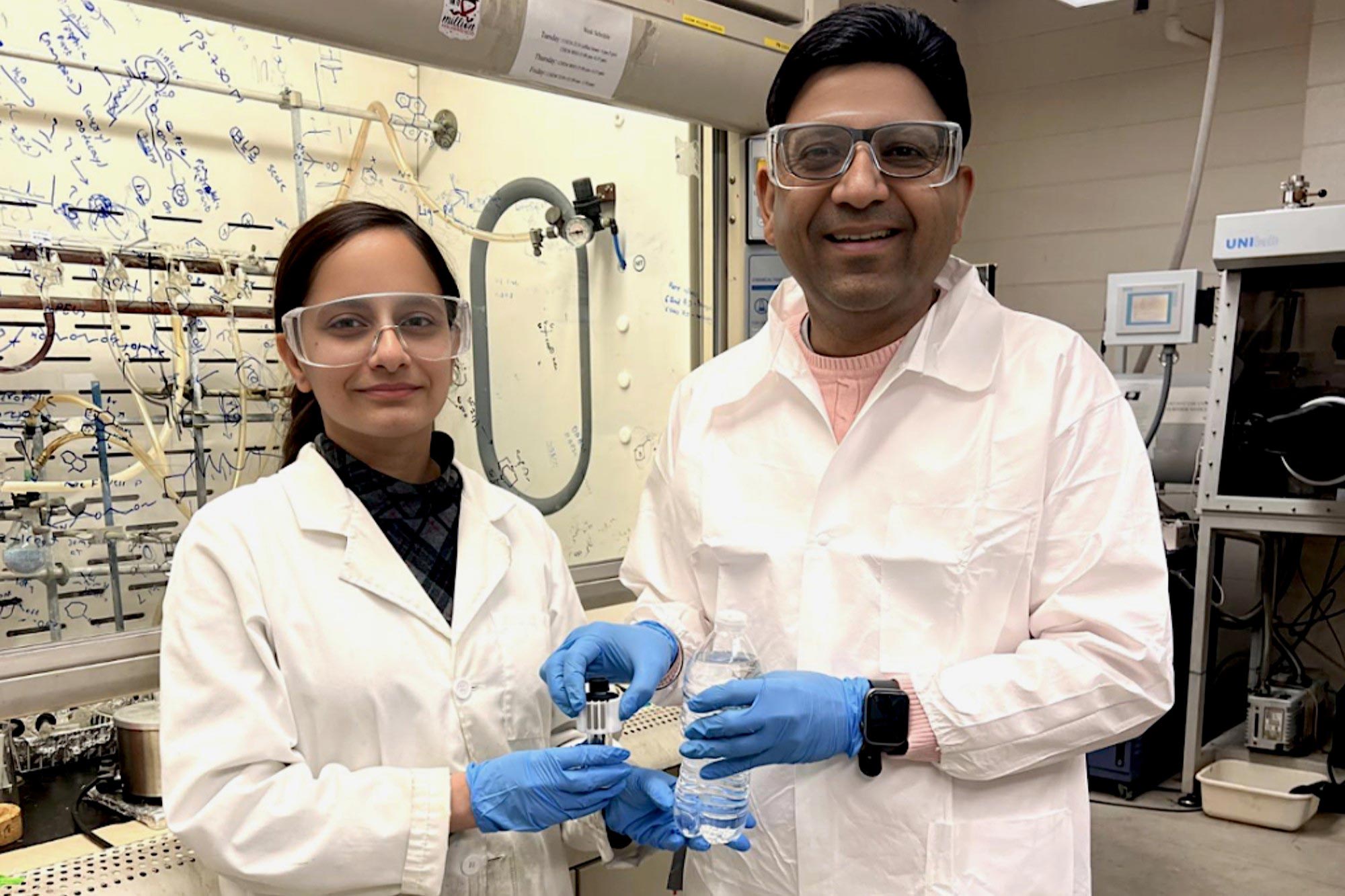
    Sachin Handa and Karanjeet Kaur
    Sachin Handa and Karanjeet Kaur show an example of their new chemical tool in Handa’s lab at the University of Missouri. Credit: Photo courtesy Sachin Handa

    A New Process: Micellar Electrochemistry

    Handa and Kaur discovered the technique while trying to find a way to use micellar water and electricity as a green source to drive chemical reactions, a process known as micellar electrochemistry.

    “Notably, these micelles drive desired reactions forward, but they don’t react with anything and remain stable, making them unique from ionic micelles,” Handa, whose appointment is in Mizzou’s College of Arts and Science, said. “By making the process more effective, this advancement could help improve the development of medicines — including inhibitors targeting proteins, such as the NS5A of the Hepatitis C virus — and may be used to treat hyperproliferative, inflammatory and immunoregulatory diseases.”

    Micelles can be used to develop clean energy technologies by helping split water into hydrogen and oxygen.

    “This process, known as electrocatalysis, also plays a key role in clean energy production,” Handa, who was hired through the university’s MizzouForward initiative in 2023, said. “With the same approach, hydrogen — in situ generated from water — can be potentially used as a clean fuel. Plus, we can use hydrogen to break down harmful PFAS chemicals, transforming them into useful hydrocarbons while simultaneously releasing oxygen into the air.”

    By focusing on sustainability and efficiency, this new chemical tool can reduce the environmental impact of traditional chemical processes and offer sustainable solutions for clean energy production and storage.

    Reference: “Electrocatalytic Micelle-Driven Hydrodefluorination for Accessing Unprotected Monofluorinated Indoles” by Karanjeet Kaur, Raki Mandal, Justin R. Walensky, Fabrice Gallou and Sachin Handa, 4 January 2025, Angewandte Chemie International Edition.
    DOI: 10.1002/anie.202416132

    Never miss a breakthrough: Join the SciTechDaily newsletter.
    Follow us on Google and Google News.

    Chemical Engineering Environment Sustainability University of Missouri
    Share. Facebook Twitter Pinterest LinkedIn Email Reddit

    Related Articles

    New Wood-Based Technology Can Easily Purify Contaminated Water

    New Technology Creates Carbon-Neutral Chemicals Out of Thin Air

    A New Method Causes Plastics To Break Down When Exposed to UV Light

    Plastic-Eating Enzyme Could Supercharge Recycling and Eliminate Billions of Tons of Landfill Waste

    Sustainable Materials: Creating Valuable Plastics and Chemicals From Waste

    Selective Separation Could Help Alleviate Critical Shortage of Rare-Earth and Other Key Metals

    Transforming the Plastic Lifecycle Into a Circle

    Turning Wood Into Recyclable, Biodegradable Plastic

    Industrial-Strength Adhesive Debonds in Magnetic Field – Could Reduce Landfill Waste

    Leave A Reply Cancel Reply

    • Facebook
    • Twitter
    • Pinterest
    • YouTube

    Don't Miss a Discovery

    Subscribe for the Latest in Science & Tech!

    Trending News

    Scientists Uncover Potential Brain Risks of Popular Fish Oil Supplements

    Scientists Discover a Surprising Way To Make Bread Healthier and More Nutritious

    After 60 Years, Scientists Uncover Unexpected Brain Effects of Popular Diabetes Drug Metformin

    New Research Uncovers Hidden Side Effects of Popular Weight-Loss Drugs

    Scientists Rethink Extreme Warming After Surprising Ocean Discovery

    Landmark Study Links Never Marrying to Significantly Higher Cancer Risk

    Researchers Discover Unknown Beetle Species Just Steps From Their Lab

    Largest-Ever Study Finds Medicinal Cannabis Ineffective for Anxiety, Depression, PTSD

    Follow SciTechDaily
    • Facebook
    • Twitter
    • YouTube
    • Pinterest
    • Newsletter
    • RSS
    SciTech News
    • Biology News
    • Chemistry News
    • Earth News
    • Health News
    • Physics News
    • Science News
    • Space News
    • Technology News
    Recent Posts
    • Not Just Alzheimer’s: Scientists Uncover Clues to a Second, Overlooked Disorder
    • Scientists Uncover Dangerous Connection Between Serotonin and Heart Valve Disease
    • Scientists Discover a “Protector” Protein That Could Help Reverse Hair Loss
    • Powerful Lasers Reveal How Matter Becomes Plasma in Trillionths of a Second
    • A Simpler Path to Super-Resolution: Scientists Reinvent Microscopy
    Copyright © 1998 - 2026 SciTechDaily. All Rights Reserved.
    • Science News
    • About
    • Contact
    • Editorial Board
    • Privacy Policy
    • Terms of Use

    Type above and press Enter to search. Press Esc to cancel.