
On two separate occasions, 50 years apart, there were mass deaths of caribou in Arctic Canada and reindeer in the Bering Sea islands. Through the use of remotely sensed data, scientists were able to understand the mysterious deaths.
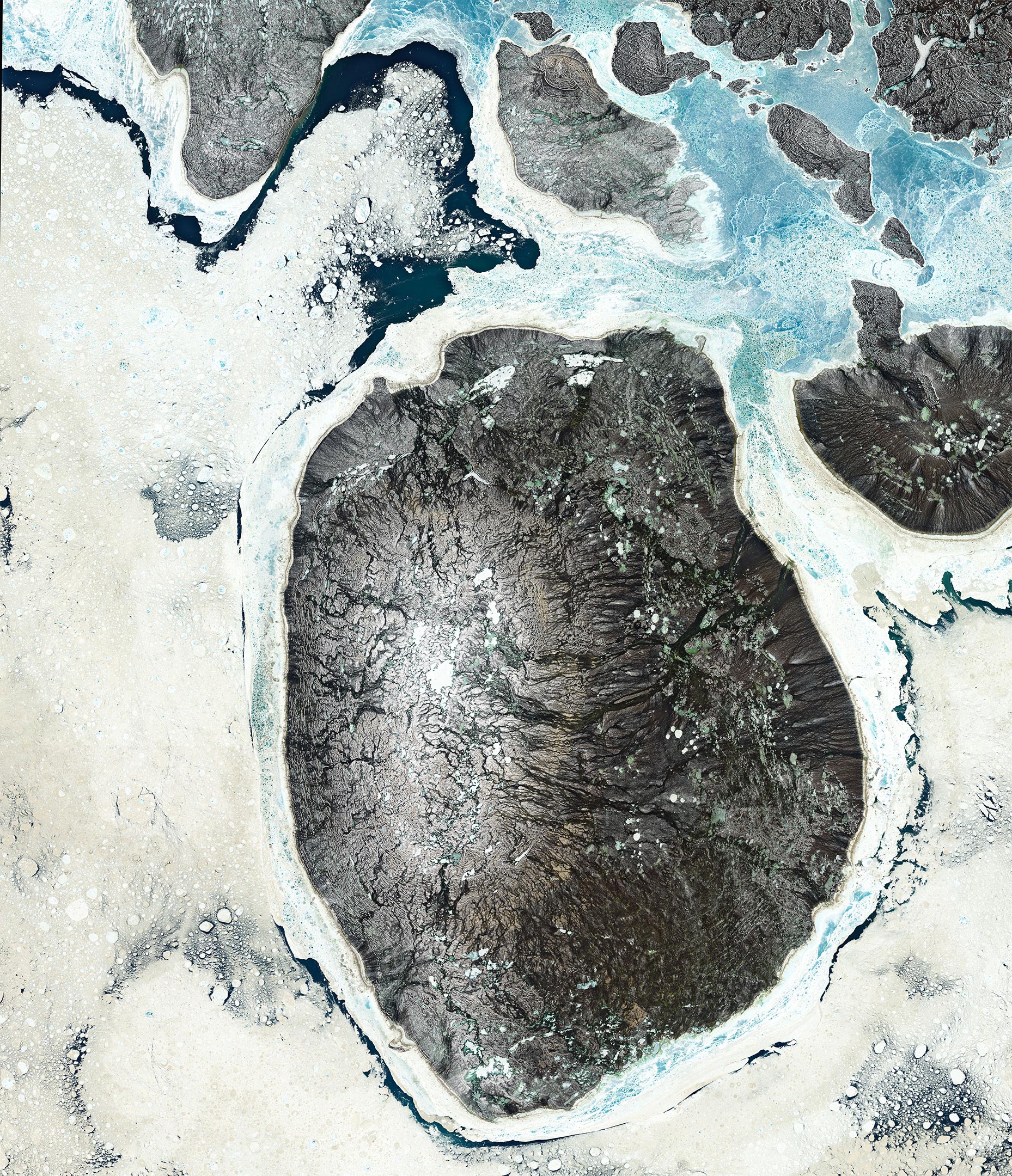
A survey team on a remote island in Arctic Canada came across a grisly sight in the summer of 2016. Caribou carcasses, dozens of them, lay strewn across the tundra of Prince Charles Island, just north of the Arctic Circle in Nunavut. Based on the condition of the carcasses and the decomposition of internal organs, death was estimated to have occurred at least several weeks prior to the team’s arrival, perhaps in late winter. While some animals died lying down, others appeared to have simply collapsed.
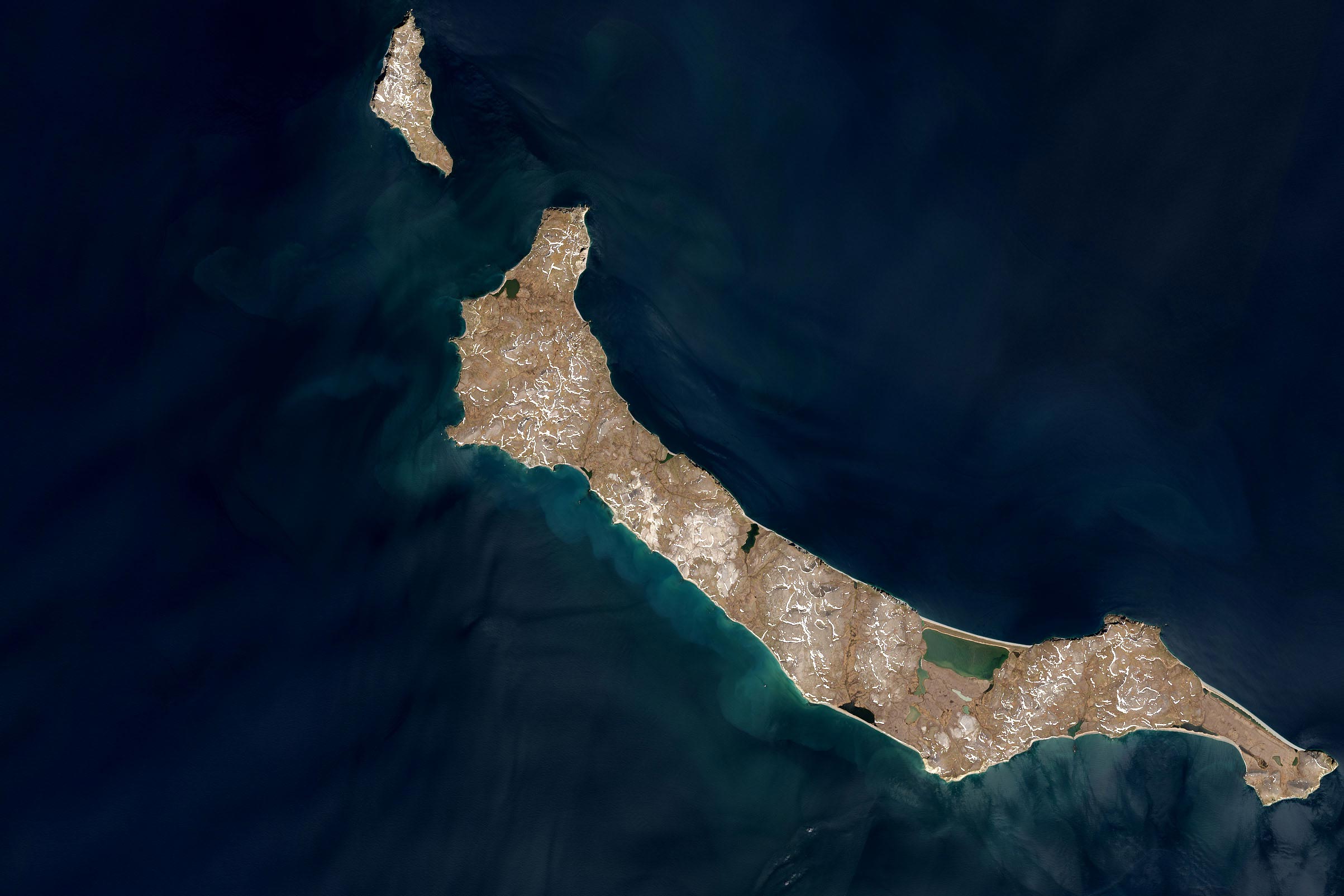
A half-century earlier and more than 4,200 miles (6,800 kilometers) west, a similar scene confronted biologists on a remote speck of land in the Bering Sea. Forty-two reindeer were found foraging among the skeletal remains of a reindeer herd on St. Matthew Island that only three years earlier had numbered 6,000 animals.
Using a combination of remotely sensed data from satellites and sensors on the ground, scientists found the unmistakable fingerprints of the same killer in 2016 and 1966. Both Arctic islands are shown on this page as observed in 2015 and 2016 by the Operational Land Imager (OLI) on Landsat 8.
While caribou and reindeer are the same species (Rangifer tarandus), they are not the same animal. Caribou, which live in North America, are migratory and travel in large herds between breeding grounds. Reindeer inhabit Europe and Asia and have adapted to domestication. They can be used for pulling sleighs and can be milked like cows and goats. (Reindeer cheese is reported to be mild and creamy.)
The Role of Harsh Winters in the Die-Offs
One key attribute caribou and reindeer share is that they are herbivores that feed on lichens and plants. In late fall and early spring, they use their sharp hooves to break through the icy crust on northern lands to reach this food source. While the animals are adapted to efficiently managing their energy reserves over the long Arctic winter, timing is everything. And at both Prince Charles Island and St. Matthew Island, time ran out for the herds.
Using Satellite Data to Unravel the Cause of Deaths
Meteorological data from Prince Charles Island in the winter of 2015–2016 indicate that major storms occurred in April 2016, a time when caribou energy reserves are generally at their lowest. Wind and snow from these storms created an unusually dense snowpack, which was detected through brightness temperature data acquired by the Special Sensor Microwave Imager/Sounder (SSMI/S) aboard the Defense Meteorological Satellite Program (DMSP) series of satellites. Scientists determined from the data that the caribou, already weakened at the end of a long winter, starved to death when they were unable to break through the dense snow and ice layer to reach the food they needed.
Unusually harsh winter weather also was the culprit on St. Matthew Island. Scientists reanalyzing meteorological data found that the winter of 1963–1964 was one of the harshest ever recorded in the Bering Sea islands. The reindeer endured storms with hurricane-force gusts, wind chills as low as -71.5° Fahrenheit (-57.5° Celsius), and a record amount of snow. As at Prince Charles Island, the hard crust on the snowpack made it difficult, if not impossible, for the huge reindeer herd to access vital nutrients. For the 6,000 reindeer, there simply was not enough food available when it was most needed. By 1966, only 42 survivors remained.
Through the use of remotely sensed data, scientists were able to close the cold case of the mysterious deaths of caribou in Canada and reindeer in the Bering Sea islands occurring a half-century apart. The data told the tale.
NASA Earth Observatory images by Joshua Stevens, using Landsat data from the U.S. Geological Survey. Story by Josh Blumenfeld, NASA ESDS Program.
Never miss a breakthrough: Join the SciTechDaily newsletter.
Follow us on Google and Google News.
1 Comment
I’d really like to look at this article with a degree of respect but with stories abounding on this website of climate change nonsense, how can I? I’m referring to one today about kidney stones being a direct result of global warming. Editors! Where are you?