
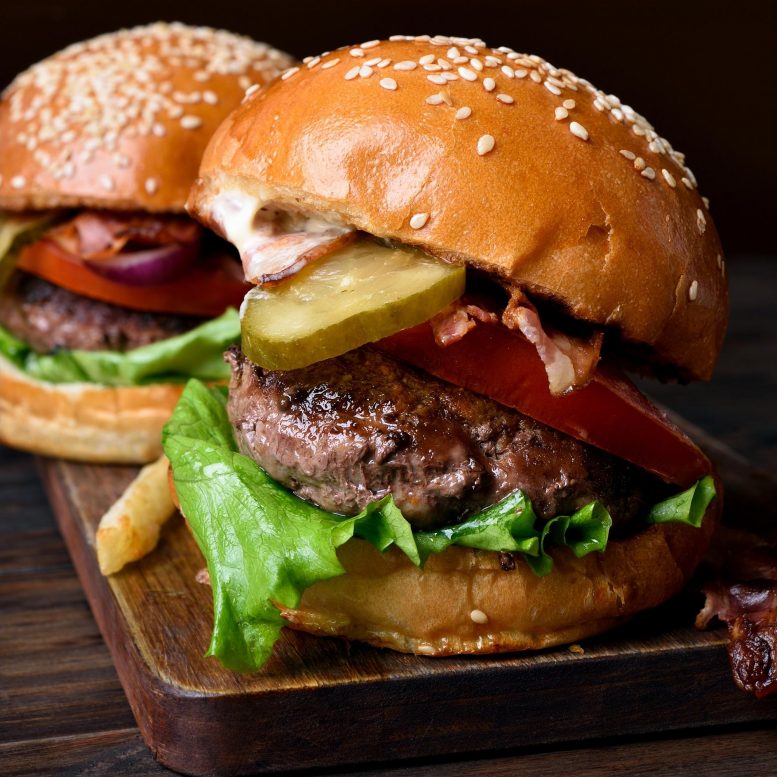
Science sniffs out the secrets behind plant-based burger aromas—and why they still don’t quite match the sizzle of real beef.
For many meat eaters, summer barbecues wouldn’t be the same without the mouthwatering aroma of burgers cooking on the grill. But many people are now open to trying plant-based alternatives, as long as they closely resemble the taste, odor, appearance, and texture of real beef. Now, researchers report that the aromas of a couple of plant-based burgers come close to the real deal when they are cooking, though other products still have a long way to go.
The researchers will present their results today at the fall meeting of the American Chemical Society (ACS). ACS Fall 2021 is a hybrid meeting being held virtually and in-person August 22-26, and on-demand content will be available August 30-September 30. The meeting features more than 7,000 presentations on a wide range of science topics.
“During the last several years, increasing awareness of the impact of meat production on climate change, as well as meat shortages during the pandemic, have made people more accepting of plant-based alternatives,” says LiLi Zyzak, Ph.D., the project’s principal investigator. “There are a lot of products out there, and food companies are doing interesting research, but nobody ever publishes anything because it’s a trade secret.”
Although plant-based meat products have been available for more than 20 years, early versions were very different from traditional meat. In recent years, many food companies have done extensive research on how to make proteins from plants such as soy and pea taste more like beef. Newer companies, such as Impossible Foods and Beyond Meat, are competing with industry giants, such as Kellogg’s, Tyson Foods and Nestlé in this market.
What Makes Beef Smell Like Beef?
Raw hamburger has very little odor, but cooking it releases hundreds of volatile compounds that contribute to taste and aroma. “The problem with plant-based burgers is that the plant protein itself contributes a strong odor,” says Zyzak, who is at Eastern Kentucky University. “For example, pea protein smells like green, cut grass, so companies have to find a way to mask that aroma. Some use heavy seasonings.” Another challenge is determining the correct blend of vegetable oils to mimic the fatty meat smell.
Although Zyzak admits she is a “through-and-through meat and potatoes person,” she was curious how plant-based burgers stack up. “We wanted to give consumers an idea of what’s out there so that they can make informed decisions at the grocery store,” she says.
Breaking Down the Burger’s Scent Profile
The researchers analyzed the aroma compounds produced by cooking real hamburger and eight popular brands of plant-based burgers. As a first step, they cooked the burgers and evaluated the aromas using five descriptors: meaty, fatty, buttery, sweet, and roasted. Then, they used gas chromatography – mass spectrometry (GC/MS) combined with olfactometry to correlate the aromas with specific odor compounds. To do this, the team injected volatiles from the cooking burgers into the GC/MS instrument, which separated the compounds. Some of the sample was diverted to a sniffing port, where a person clicked a button when they smelled an individual odor. Using a microphone, the person said which of the five descriptors it smelled like (for example, “buttery”). The remaining sample was analyzed by MS, and the researchers correlated specific compounds with the aroma smelled by the person at a certain time.
The team then identified the compounds that caused the plant-based burgers to differ from traditional hamburger. Of the alternatives tested so far, the Beyond Burger from Beyond Meat most closely resembled the odor profile of actual hamburger, with meaty, fatty, and grilled meat characteristics from the compounds 1-octen-3-ol, octanal and nonanal; however, it was still significantly different from the real thing. Another brand had the closest appearance to real raw hamburger, but upon cooking, it had a yeast- or bread-like odor, with higher levels of methyl butanals and propionic acid. A number of the other brands had heavy seasonings that released strong garlicky or barbecue-sauce-like aromas.
Ultimately, Zyzak would like to use what she’s learned to produce a mixture of odor compounds that closely mimic hamburger aroma. She’s also working with a startup company to obtain samples of cell-based meat (lab-grown meat that is produced by animal cells in fermentation tanks), which she plans to compare with plant-based and regular burgers.
The researchers acknowledge support and funding from the Eastern Kentucky University-Funded Scholarship Grant program and Eastern Kentucky University’s New Science Building equipment funds.
Never miss a breakthrough: Join the SciTechDaily newsletter.
Follow us on Google and Google News.