
Close Menu
    Facebook X (Twitter) Instagram
    SciTechDaily
    • Biology
    • Chemistry
    • Earth
    • Health
    • Physics
    • Science
    • Space
    • Technology
    Facebook X (Twitter) Pinterest YouTube RSS
    SciTechDaily
    Home»Chemistry»Copper Mining Bacteria: A More Efficient, Safer Alternative to Sourcing Copper
    Chemistry

    Copper Mining Bacteria: A More Efficient, Safer Alternative to Sourcing Copper

    By University of HoustonApril 26, 2021No Comments4 Mins Read
    Facebook Twitter Pinterest Telegram LinkedIn WhatsApp Email Reddit
    Share
    Facebook Twitter LinkedIn Pinterest Telegram Email Reddit
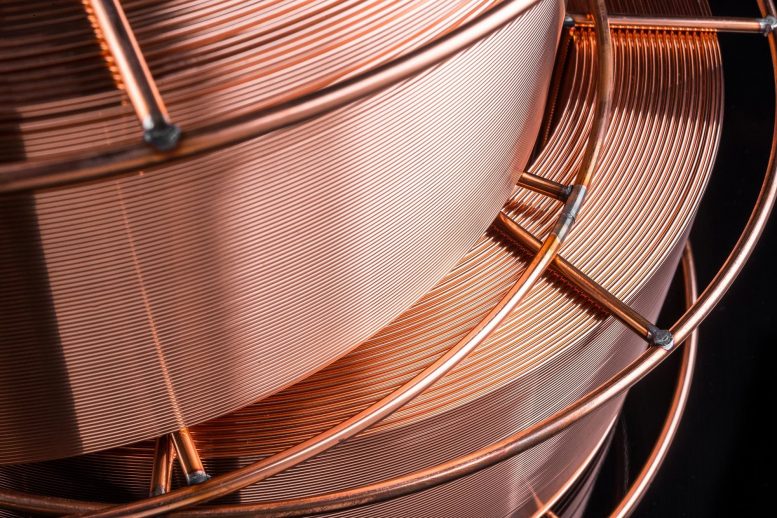
    Copper Cable Factory
    Copper is a prevalent metal used in everyday life. As a conductor of heat and electricity, it is commonly used in wires.

    Scientists discovered bacteria that convert copper sulfate into elemental copper, presenting an eco-friendly alternative to synthetic extraction.

    Copper remains one of the single most ubiquitous metals in everyday life. As a conductor of heat and electricity, it is utilized in wires, roofing, and plumbing, as well as a catalyst for petrochemical plants, solar and electrical conductors, and for a wide range of energy-related applications. Subsequently, any method to harvest more of the valuable commodity proves a useful endeavor.

    Debora Rodrigues, Ezekiel Cullen Professor of Engineering at the University of Houston Cullen College of Engineering, in collaboration with Francisco C. Robles Hernandez, professor at the UH College of Technology, and Ellen Aquino Perpetuo, professor at the University of Sao Paulo, Brazil offered conclusive research for understanding how bacteria found in copper mines convert toxic copper ions to stable single-atom copper.
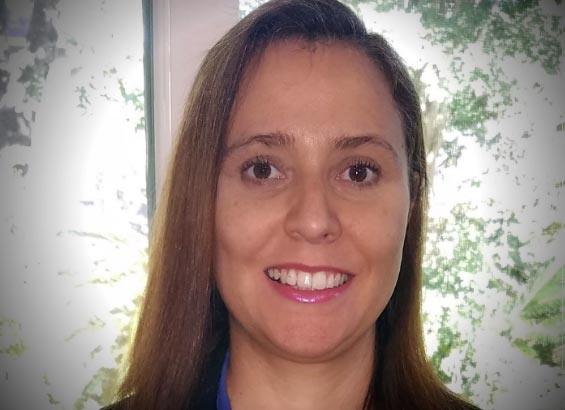
    Debora Rodrigues
    Ezekiel Cullen Professor of Engineering at the University of Houston Cullen College of Engineering. Credit: University of Houston

    In their co-authored paper, “Copper Mining Bacteria: Converting toxic copper ions into a stable single atom copper,” their research demonstrates how copper-resistant bacterium from a copper mine in Brazil convert CuSO4 (copper sulfate) ions into zero-valent Cu (metallic copper).

    “The idea of having bacteria in mines is not new, but the unanswered question was: what are they doing in the mines?” Robles said. “By putting the bacteria inside an electronic microscope, we were able to figure out the physics and analyze it. We found out the bacteria were isolating single-atom copper. In terms of chemistry, this is extremely difficult to derive. Typically, harsh chemicals are used in order to produce single atoms of any element. This bacterium is creating it naturally that is very impressive.”

    The Environmental Cost of Conventional Copper Mining

    As useful as copper is, the process of mining the metal often leads to toxic exposures and challenges on drawing out substantial volume for commercial use. Approximately one billion tons of copper are estimated in global reserves, according to the Copper Development Association Inc., with roughly 12.5 million metric tons per year mined. This aggregates to roughly 65 years of remaining reserves. Part of the supply challenge comes from limited available copper in high concentration in the earth’s crust, but the other challenge is the exposure to sulfur dioxide and nitrogen dioxide in the copper smelting and production process to concentrate the metal into useful quantities.
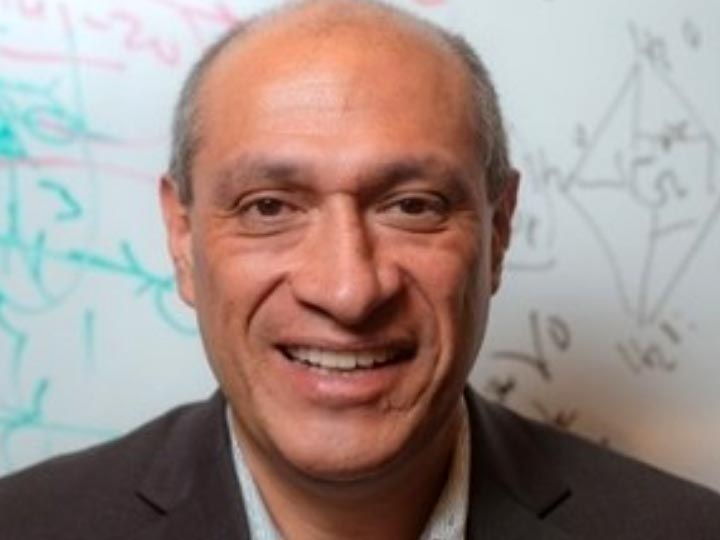
    Francisco Robles
    Francisco C. Robles, professor at the UH College of Technology. Credit: University of Houston

    “The novelty of this discovery is that microbes in the environment can easily transform copper sulfate into zero valent single atom copper. This is a breakthrough because the current synthetic process of single-atom zerovalent copper is typically not clean, it is labor intensive and expensive,” Rodrigues said.

    A Unique Biological Pathway to Clean Copper Production

    “The microbes utilize a unique biological pathway with an array of proteins that can extract copper (II) (Cu2+) and convert it into single-atom zero-valent copper (Cu0). The aim of the microbes is to create a less toxic environment for themselves by converting the ionic copper into single-atom copper, but at the same time they make something that is beneficial for us too.”

    With a focus in electronic microscopy, Robles examined samples from Rodrigues’ findings in Brazilian copper mines and he determined the single-atom nature of the copper. Rodrigues and Aquino’s groups further identified the bacterial process for converting copper sulfate to elemental copper – a rare find.

    Research results demonstrate this new conversion process as an alternative to produce single atoms of metallic copper is safer, and more efficient versus current methods (i.e. chemical vapor deposition, sputtering, and femtosecond laser ablation).

    “We have only worked with one bacterium, but that may not be the only one out there that performs a similar function,” Rodrigues concluded. “The next step for this particular research is harvesting the copper from these cells and using it for practical applications.”

    Reference: “Copper mining bacteria: Converting toxic copper ions into a stable single-atom copper” by Louise Hase Gracioso, Janire Peña-Bahamonde, Bruno Karolski, Bruna Bacaro Borrego, Elen Aquino Perpetuo, Claudio Augusto Oller do Nascimento, Hiroki Hashiguchi, Maria Aparecida Juliano, Francisco C. Robles Hernandez and Debora Frigi Rodrigues, 23 April 2021, Science Advances.
    DOI: 10.1126/sciadv.abd9210

    Never miss a breakthrough: Join the SciTechDaily newsletter.
    Follow us on Google and Google News.

    Bacteria Chemical Engineering Energy Molecular Physics University of Houston
    Share. Facebook Twitter Pinterest LinkedIn Email Reddit

    Related Articles

    MIT Developed a Controllable Membrane to Pull Carbon Dioxide Out of Exhaust Streams

    New Molecule Developed to Store Solar Energy in Chemical Bonds

    Metal-Free Catalyst Discovery May Revolutionize Bio and Fossil Fuel Production

    Solar Flow Battery: Single Device Generates, Stores and Redelivers Renewable Electricity From the Sun

    Clean Energy Breakthrough: Scientists Improve Light-Driven Water-Splitting to Produce Hydrogen

    More Efficient, Environmentally Friendly Ethylene Production With New Catalyst

    New Re-Attachable & Flexible “Sticker-Type” Rechargeable Batteries

    Transforming Carbon Dioxide to Into Fuel More Efficiently With a Water-Conducting Membrane

    The Prospects for the Development of Clean Fuels Are Improving

    Leave A Reply Cancel Reply

    • Facebook
    • Twitter
    • Pinterest
    • YouTube

    Don't Miss a Discovery

    Subscribe for the Latest in Science & Tech!

    Trending News

    Scientists Warn That This Common Pet Fish Can Wreck Entire Ecosystems

    Scientists Make Breakthrough in Turning Plastic Trash Into Clean Fuel Using Sunlight

    This Popular Supplement May Interfere With Cancer Treatment, Scientists Warn

    Scientists Finally Solved One of Water’s Biggest Mysteries

    Could This New Weight-Loss Pill Disrupt the Entire Market? Here’s What You Should Know About Orforglipron

    Earth’s Crust Is Tearing Open in Africa, and It Could Form a New Ocean

    Breakthrough Bowel Cancer Trial Leaves Patients Cancer-Free for Nearly 3 Years

    Natural Compound Shows Powerful Potential Against Rheumatoid Arthritis

    Follow SciTechDaily
    • Facebook
    • Twitter
    • YouTube
    • Pinterest
    • Newsletter
    • RSS
    SciTech News
    • Biology News
    • Chemistry News
    • Earth News
    • Health News
    • Physics News
    • Science News
    • Space News
    • Technology News
    Recent Posts
    • Kratom Use Explodes in the US, With Life-Changing Consequences
    • Scientists Uncover Fatal Weakness in “Zombie Cells” Linked to Cancer
    • World-First Study Reveals Human Hearts Can Regenerate After a Heart Attack
    • Why Your Dreams Feel So Real Sometimes and So Strange Other Times
    • Scientists Debunk 100-Year-Old Belief About Brain Cells, Rewriting Textbooks
    Copyright © 1998 - 2026 SciTechDaily. All Rights Reserved.
    • Science News
    • About
    • Contact
    • Editorial Board
    • Privacy Policy
    • Terms of Use

    Type above and press Enter to search. Press Esc to cancel.