
Research questions long-standing beliefs about the possible locations of life in the solar system.
A recent investigation by researchers at NYU Abu Dhabi suggests that cosmic rays—high-energy particles that travel through space—might generate enough energy to sustain life beneath the surface of planets and moons in our solar system.
The findings indicate that, in specific underground environments, cosmic rays could play a beneficial role by enabling microscopic life to persist. This perspective challenges long-standing assumptions that life can only exist in regions warmed by sunlight or geothermal activity. The study, published in the International Journal of Astrobiology, was led by Dimitra Atri, Principal Investigator of the Space Exploration Laboratory at NYUAD’s Center for Astrophysics and Space Science (CASS).
“Life might be able to survive in more places than we ever imagined.”
Principal Investigator of the Space Exploration Laboratory at NYUAD, Professor Dimitra Atri
How cosmic rays could power life
The researchers examined how cosmic rays interact with subsurface water or ice. When these high-energy particles strike water molecules, the collision causes the molecules to split and release electrons. Certain types of bacteria on Earth are able to harness these free electrons as an energy source, in a way comparable to how plants rely on sunlight. This reaction, known as radiolysis, can provide the energy necessary for life to exist in cold, dark environments without access to sunlight.
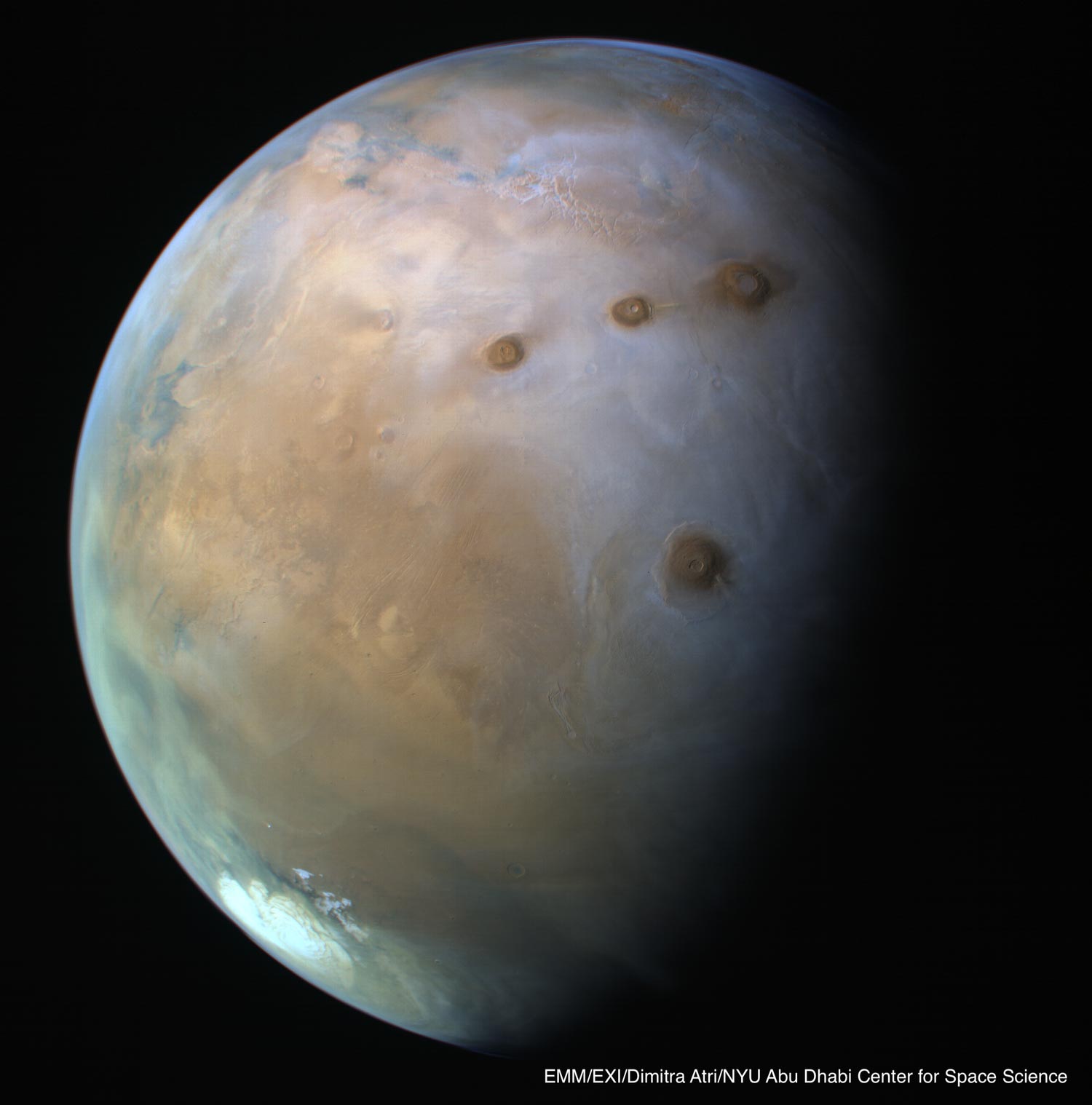
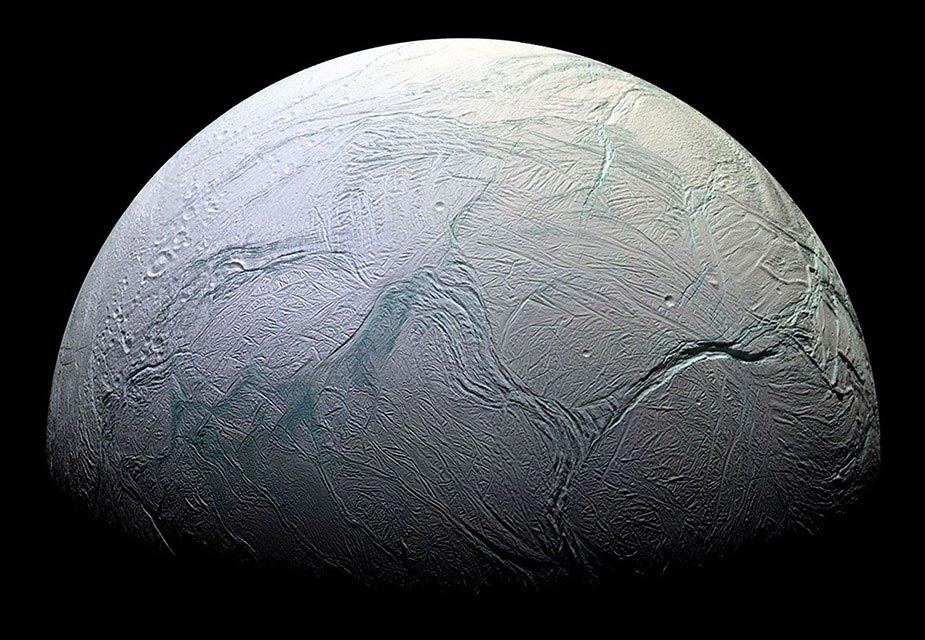
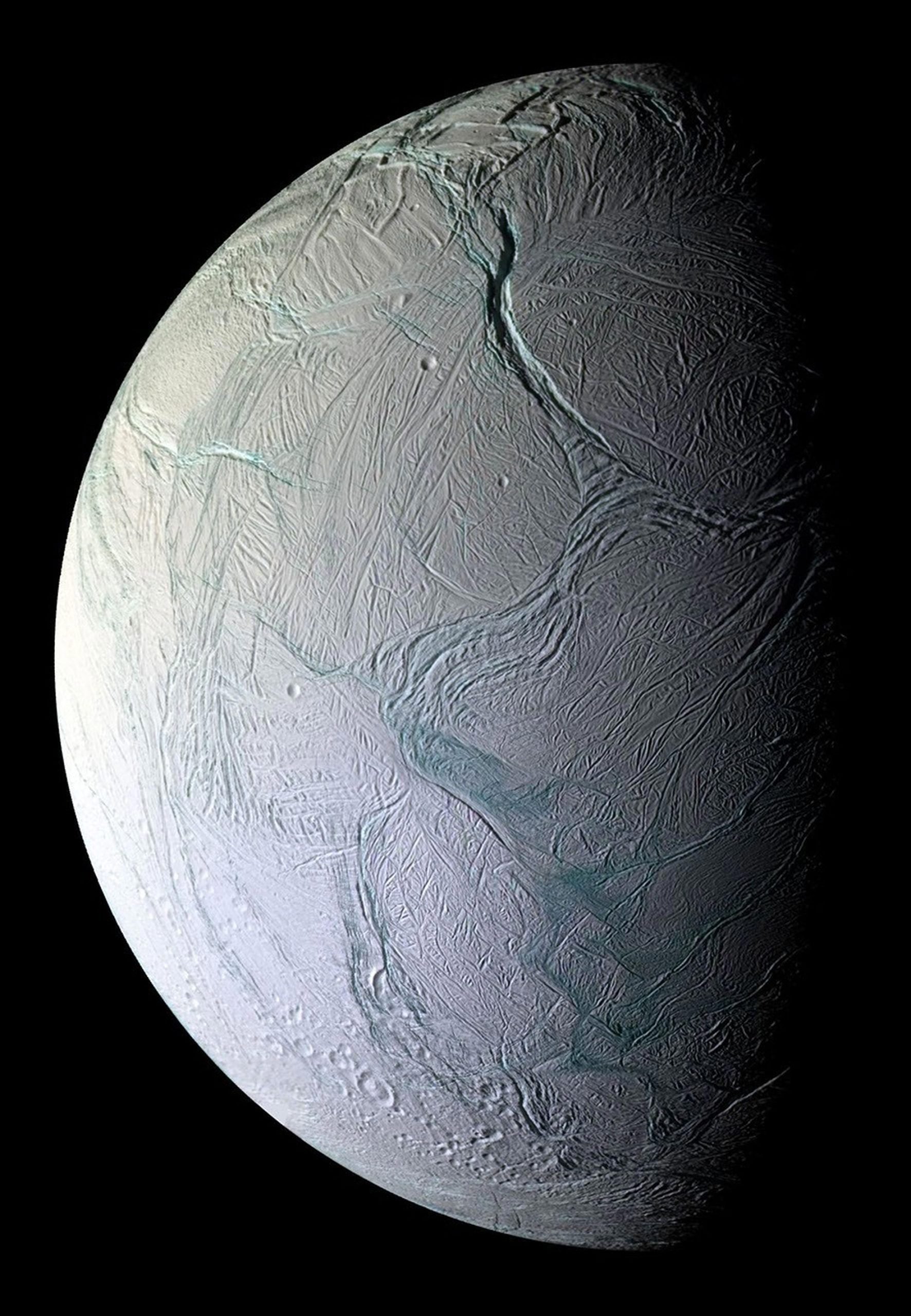
To explore this further, the team used computer models to estimate the energy output from radiolysis on Mars and on the ice-covered moons of Jupiter and Saturn. These celestial bodies are thought to contain subsurface liquid water beneath their icy exteriors. The simulations revealed that Saturn’s moon Enceladus offered the highest potential for life supported by this mechanism, with Mars coming next, followed by Jupiter’s moon Europa.
“This discovery changes the way we think about where life might exist,” said Atri. “Instead of looking only for warm planets with sunlight, we can now consider places that are cold and dark, as long as they have some water beneath the surface and are exposed to cosmic rays. Life might be able to survive in more places than we ever imagined.”
Defining the radiolytic habitable zone
The study introduces a new idea called the Radiolytic Habitable Zone. Unlike the traditional “Goldilocks Zone” — the area around a star where a planet could have liquid water on its surface — this new zone focuses on places where water exists underground and can be energized by cosmic radiation. Since cosmic rays are found throughout space, this could mean there are many more places in the universe where life could exist.
The findings provide new guidance for future space missions. Instead of only looking for signs of life on the surface, scientists might also explore underground environments on Mars and the icy moons, using tools that can detect chemical energy created by cosmic radiation.
This research opens up exciting new possibilities in the search for life beyond Earth and suggests that even the darkest, coldest places in the solar system could have the right conditions for life to survive.
Reference: “Estimating the potential of ionizing radiation-induced radiolysis for microbial metabolism on terrestrial planets and satellites with rarefied atmospheres” by Dimitra Atri, Margaret Kamenetskiy, Michael May, Archit Kalra, Aida Castelblanco and Antony Quiñones-Camacho, 28 July 2025, International Journal of Astrobiology.
DOI: 10.1017/S1473550425100025
Never miss a breakthrough: Join the SciTechDaily newsletter.
Follow us on Google and Google News.