
Jupiter’s Orbit Shape Plays Key Role on Earth That Has Been Overlooked
Of all known planets, Earth is as friendly to life as any planet could possibly be — or is it? A new study shows that if Jupiter’s orbit changes, Earth could be even more hospitable to life than it is today.
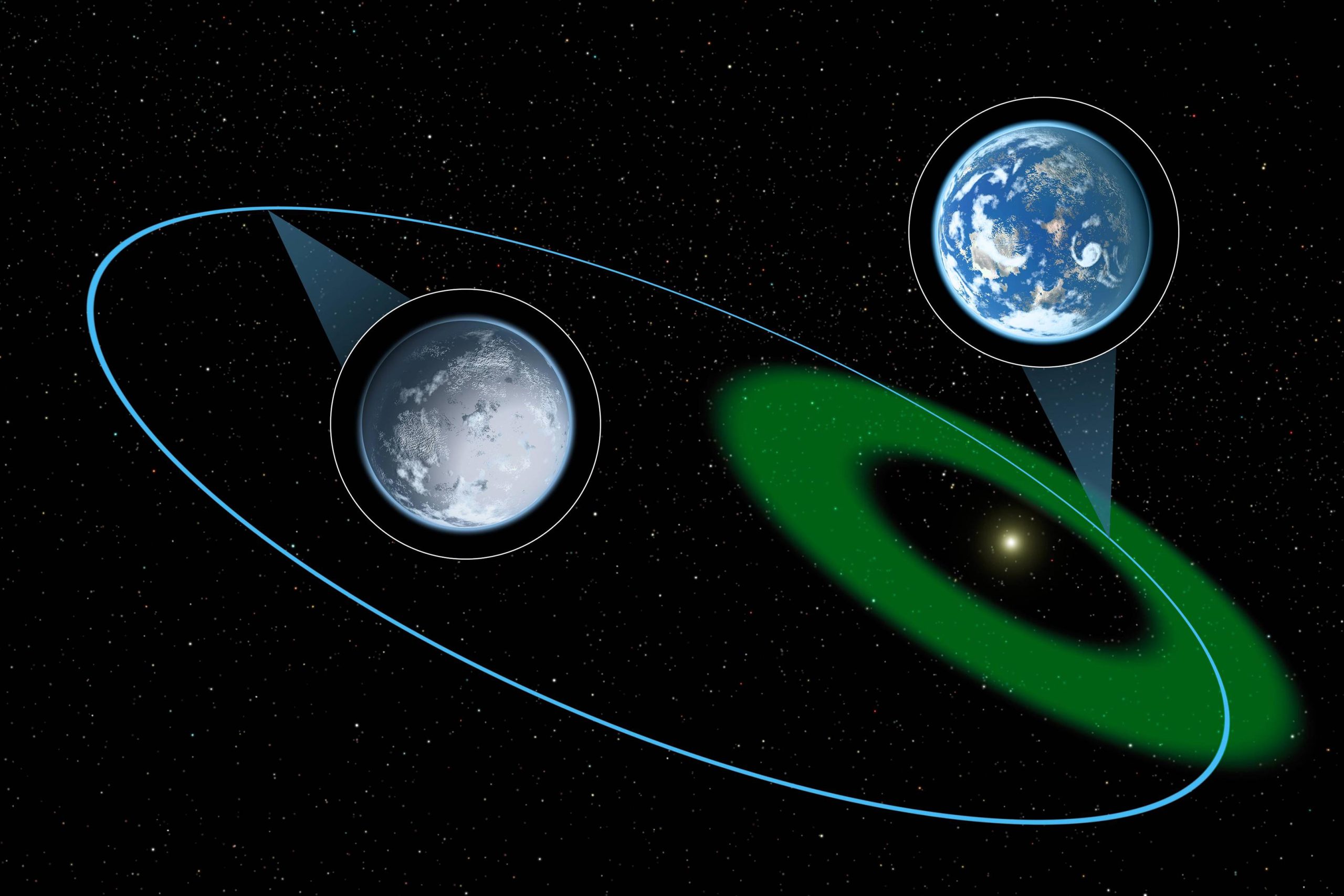
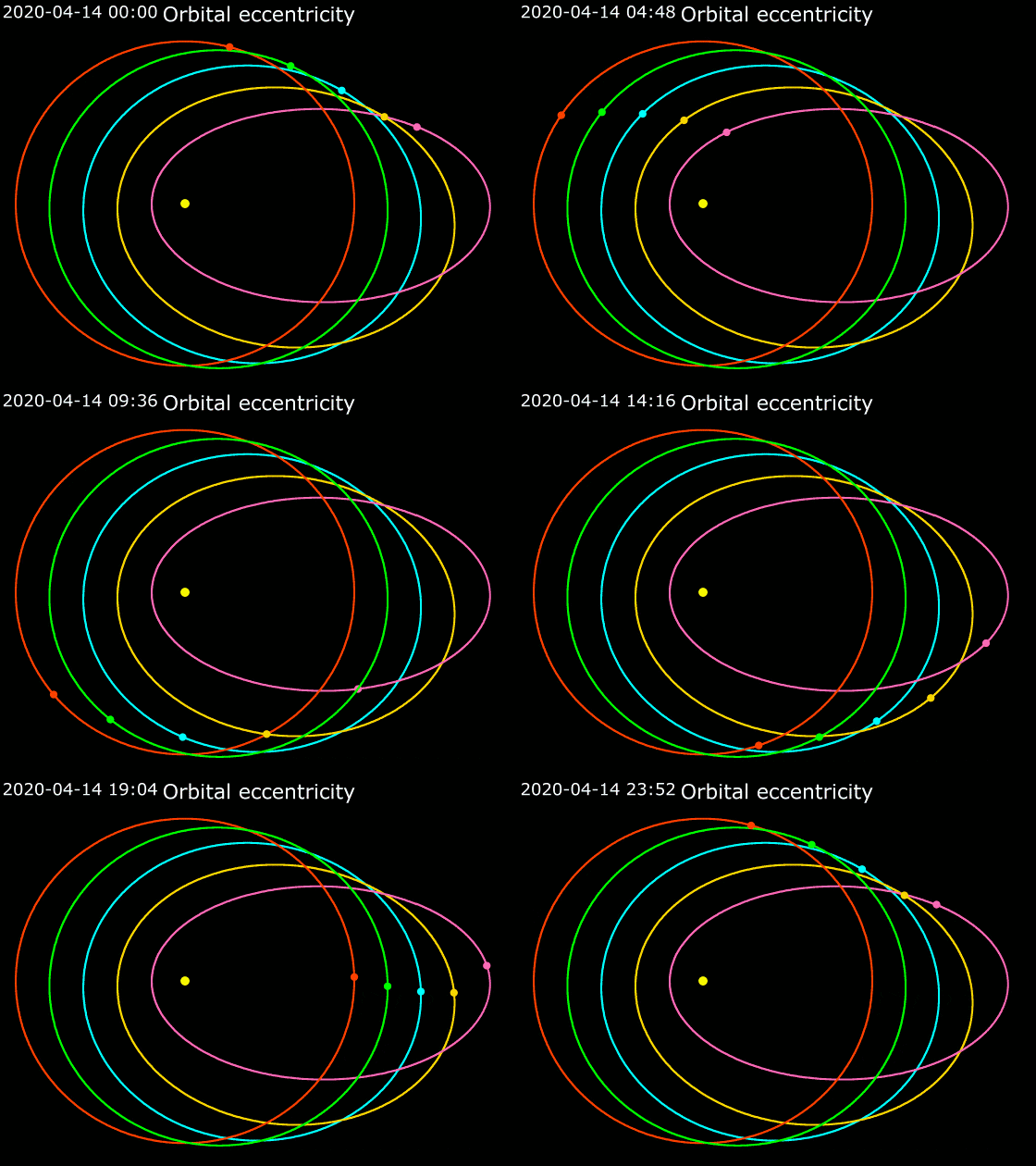
When a planet has a perfectly circular orbit around its star, the distance between the planet and the star never changes. However, most planets have “eccentric” orbits around their stars, meaning the orbit is oval-shaped. When the planet gets closer to its star, it receives more heat, affecting the climate.
Using detailed models based on data from the solar system as it is known today, researchers from the University of California, Riverside (UCR) created an alternative solar system. In this hypothetical system, they discovered that if gigantic Jupiter’s orbit were to become more eccentric, it would in turn induce major changes in the shape of Earth’s orbit.
Jupiter’s Orbital Change and Earth’s Increased Habitability
“If Jupiter’s position remained the same, but the shape of its orbit changed, it could actually increase this planet’s habitability,” said Pam Vervoort, lead study author and UCR Earth and planetary scientist.
Between zero and 100 degrees Celsius (32 and 212 degrees Fahrenheit), the Earth’s surface is habitable for multiple known life forms. If Jupiter pushed Earth’s orbit to become more eccentric, parts of the Earth would sometimes get closer to the sun. Parts of the Earth’s surface that are now sub-freezing would get warmer, increasing temperatures into the habitable range.
This result, published on September 8 in the Astronomical Journal, upends two long-held scientific assumptions about our solar system.
“Many are convinced that Earth is the epitome of a habitable planet and that any change in Jupiter’s orbit, being the massive planet it is, could only be bad for Earth,” Vervoort said. “We show that both assumptions are wrong.”
The researchers are interested in applying this discovery to the search for habitable planets around other stars, called exoplanets.
“The first thing people look for in an exoplanet search is the habitable zone, the distance between a star and a planet to see if there’s enough energy for liquid water on the planet’s surface,” said Stephen Kane, study co-author and UCR astrophysicist.
During its orbit, different parts of a planet receive more or fewer direct rays, resulting in the planet having seasons. While parts of the planet may be pleasant during one season, they can be extremely hot or cold in another.
“Having water on its surface is a very simple first metric, and it doesn’t account for the shape of a planet’s orbit, or seasonal variations a planet might experience,” Kane said.
Measuring Planetary Orbits and Tilt for Habitability
Existing telescopes are capable of measuring a planet’s orbit. However, there are additional factors that could affect habitability, such as the degree to which a planet is tilted toward or away from a star. The part of the planet tilted away from the star would get less energy, causing it to be colder.
This same study found that if Jupiter were positioned much closer to the sun, it would induce extreme tilting on Earth. This would make large sections of the Earth’s surface sub-freezing.
It is more difficult to measure tilt, or a planet’s mass, so the researchers would like to work to develop methods that help them estimate those factors as well.
Ultimately, understanding the movement of a giant planet is important in the quest to make predictions about the habitability of planets in other systems as well as the quest to ascertain its influence in this solar system.
“It’s important to understand the impact that Jupiter has had on Earth’s climate through time, how its effect on our orbit has changed us in the past, and how it might change us once again in the future,” Kane said.
Reference: “System Architecture and Planetary Obliquity: Implications for Long-term Habitability” by Pam Vervoort, Jonathan Horner, Stephen R. Kane, Sandra Kirtland Turner and James B. Gilmore, 8 September 2022, The Astronomical Journal.
DOI: 10.3847/1538-3881/ac87fd
Never miss a breakthrough: Join the SciTechDaily newsletter.
Follow us on Google and Google News.
2 Comments
As if the Greenland and Antarctic glaciers aren’t melting fast enough now. Earth would need that increased “habitable range” to re-locate the populations migrating away from the flooded coastlines.
Just one of the after-effects of increasing the planet’s “habitable range”.
No thanks. Let’s leave Jupiter right where it is. We already have enough problems.
Woulda, shoulda, not gonna happen. An interesting study anyway, but what is the next article, sly a 1,000,000 ton satellite into Jupiter to modify its orbit? And who calculates the trajectory, Minnesota Fats?