
Close Menu
    Facebook X (Twitter) Instagram
    SciTechDaily
    • Biology
    • Chemistry
    • Earth
    • Health
    • Physics
    • Science
    • Space
    • Technology
    Facebook X (Twitter) Pinterest YouTube RSS
    SciTechDaily
    Home»Earth»Could Whakaari’s Ash Plumes Signal Something Bigger?
    Earth

    Could Whakaari’s Ash Plumes Signal Something Bigger?

    By Adam Voiland, NASA Earth ObservatoryJanuary 17, 20251 Comment2 Mins Read
    Facebook Twitter Pinterest Telegram LinkedIn WhatsApp Email Reddit
    Share
    Facebook Twitter LinkedIn Pinterest Telegram Email Reddit
    Whakaari White Island Volcano 2025 Annotated
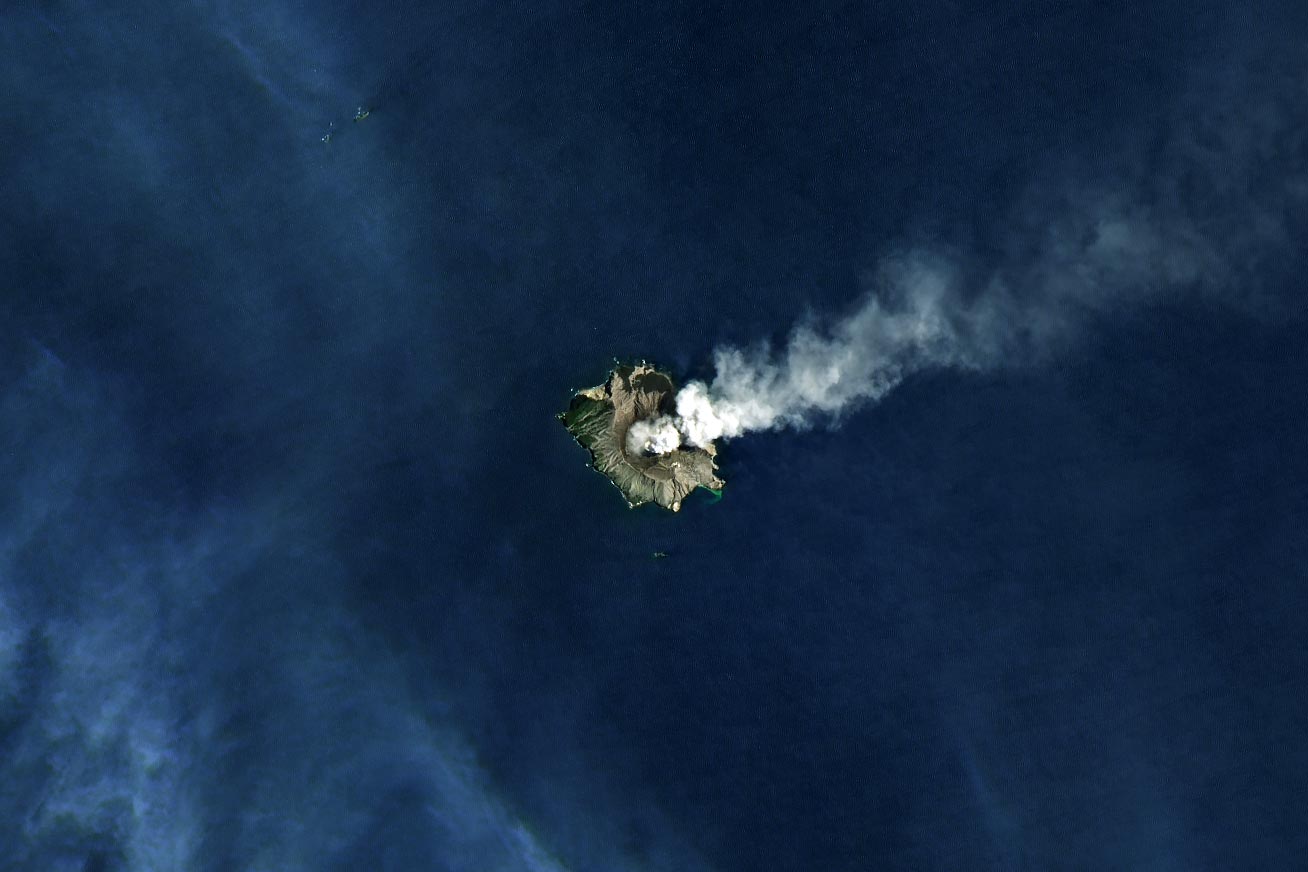
    The perpetually restless and occasionally explosive Whakaari/White Island volcano in New Zealand, seen here in a satellite image captured on January 7, 2025, has been emitting steam, volcanic gases, and a bit of ash.

    New Zealand’s Whakaari/White Island, a continuously active volcano, was recently photographed by Landsat 9 during a phase of increased activity. Although only minor ash emissions have been reported, the situation is closely monitored to ensure safety as the volcano shows signs of potential escalation.

    Whakaari/White Island, a partially submerged volcano in New Zealand’s Bay of Plenty, is a constantly active and occasionally explosive stratovolcano located off the coast of North Island. Its name reflects its nature: Te Puia o Whakaari, a Māori phrase meaning “dramatic volcano,” combined with White Island, a name given by British explorer James Cook in 1769 after observing its almost continuous steam emissions.

    On January 7, 2025, Landsat 9’s Operational Land Imager-2 (OLI-2) acquired a striking image of Whakaari during a relatively calm phase. However, by January 13, GeoNet, New Zealand’s hazard monitoring agency, reported a period of “heightened unrest.” Over the previous two to three weeks, the volcano had been emitting weak-to-moderate steam and gas plumes along with small amounts of ash. As a result, authorities raised the aviation color code to orange, signaling a potential risk to air traffic, though prevailing winds have kept ash away from the mainland.

    “Currently, this activity is not affecting air traffic as the dominant wind is blowing the ash away from the mainland and the plume is very low elevation—a few thousand feet,” said Craig Miller, a geophysicist at GNS Science. He added that while this type of passive ash emission is technically an eruption, events need to be more explosive to be classified as a minor eruption (level 3 on the regional system for Volcanic Alert Levels).

    GeoNet geologists think magma is quite close to the surface based on high vent temperatures. When magma is near the surface, it becomes easier for rising gases to pull small bits of cooled magma into the plume as ash fragments, he said. Sometimes hot gases rising through the vent also cause bits of the crater wall to flake off into the plume and become an additional source of ash, he added.

    NASA Earth Observatory image by Michala Garrison, using Landsat data from the U.S. Geological Survey.

    Never miss a breakthrough: Join the SciTechDaily newsletter.
    Follow us on Google and Google News.

    Geography NASA NASA Earth Observatory Popular Volcano
    Share. Facebook Twitter Pinterest LinkedIn Email Reddit

    Related Articles

    Dark Skies Over Indonesia: Explosive Eruption Sends Ash Miles Into the Sky

    Deadly Ashfall: Over 10,000 Impacted by Mount Lewotobi’s Explosive Eruption

    Popocatépetl’s Persistent Eruptions Pose Ongoing Threat to Millions

    The Towering Inferno: Mount Erebus’ Dramatic Emergence From the Antarctic Clouds

    Antarctic Volcano: A Mountain of Terror?

    Massive Tonga Volcano Plume Reached the Mesosphere – 36 Miles Into the Atmosphere

    Island Obliterated: Dramatic Changes at Hunga Tonga-Hunga Ha’apai

    Hunga Tonga Island Obliterated – NASA Satellites Capture Massive Blast

    A Wolf Awakens in the Galápagos Islands at Night

    1 Comment

    1. Barbara Donaldson on January 22, 2025 4:57 pm

      Interesting and educational would like to see more of things like this

      Reply
    Leave A Reply Cancel Reply

    • Facebook
    • Twitter
    • Pinterest
    • YouTube

    Don't Miss a Discovery

    Subscribe for the Latest in Science & Tech!

    Trending News

    Artificial Sweeteners May Harm Future Generations, Study Suggests

    Splashdown! NASA Artemis II Returns From Record-Breaking Moon Mission

    What If Consciousness Exists Beyond Your Brain

    Scientists Finally Crack the 100-Million-Year Evolutionary Mystery of Squid and Cuttlefish

    Beyond “Safe Levels”: Study Challenges What We Know About Pesticides and Cancer

    Researchers Have Found a Dietary Compound That Increases Longevity

    Scientists Baffled by Bizarre “Living Fossil” From 275 Million Years Ago

    Your IQ at 23 Could Predict Your Wealth at 27, Study Finds

    Follow SciTechDaily
    • Facebook
    • Twitter
    • YouTube
    • Pinterest
    • Newsletter
    • RSS
    SciTech News
    • Biology News
    • Chemistry News
    • Earth News
    • Health News
    • Physics News
    • Science News
    • Space News
    • Technology News
    Recent Posts
    • What if Dark Matter Has Two Forms? Bold New Hypothesis Could Explain a Cosmic Mystery
    • Researchers Expose Hidden Chemistry of “Ore-Forming” Elements in Biology
    • Geologists Reveal the Americas Collided Earlier Than We Thought
    • 20x Difference: Study Reveals True Source of Airborne Microplastics
    • Scientists Uncover Hidden Force Powering Yellowstone’s Supervolcano
    Copyright © 1998 - 2026 SciTechDaily. All Rights Reserved.
    • Science News
    • About
    • Contact
    • Editorial Board
    • Privacy Policy
    • Terms of Use

    Type above and press Enter to search. Press Esc to cancel.