
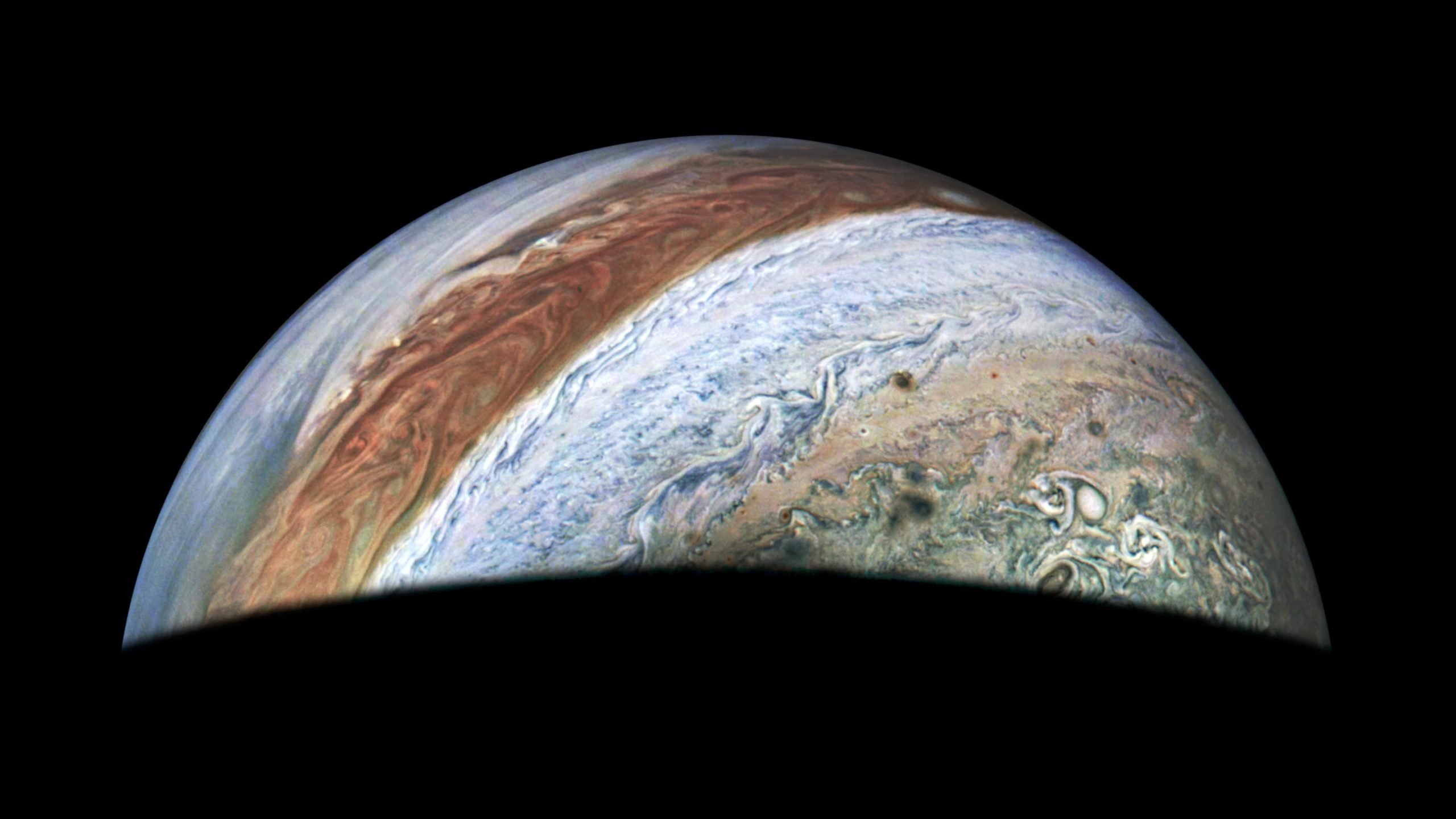
Using cameras designed for navigation, scientists count ‘fireflies’ to determine the amount of radiation the spacecraft receives during each orbit of Jupiter.
NASA’s Juno mission has created the first comprehensive 3D radiation map of Jupiter’s system, revealing the influence of smaller moons and the intensity of radiation near Europa. Utilizing innovative techniques with Juno’s onboard cameras, scientists have adapted these devices to study high-energy particles, providing valuable insights into the behavior of Jupiter’s magnetosphere and assisting future missions.
3D Radiation Mapping of Jupiter’s System
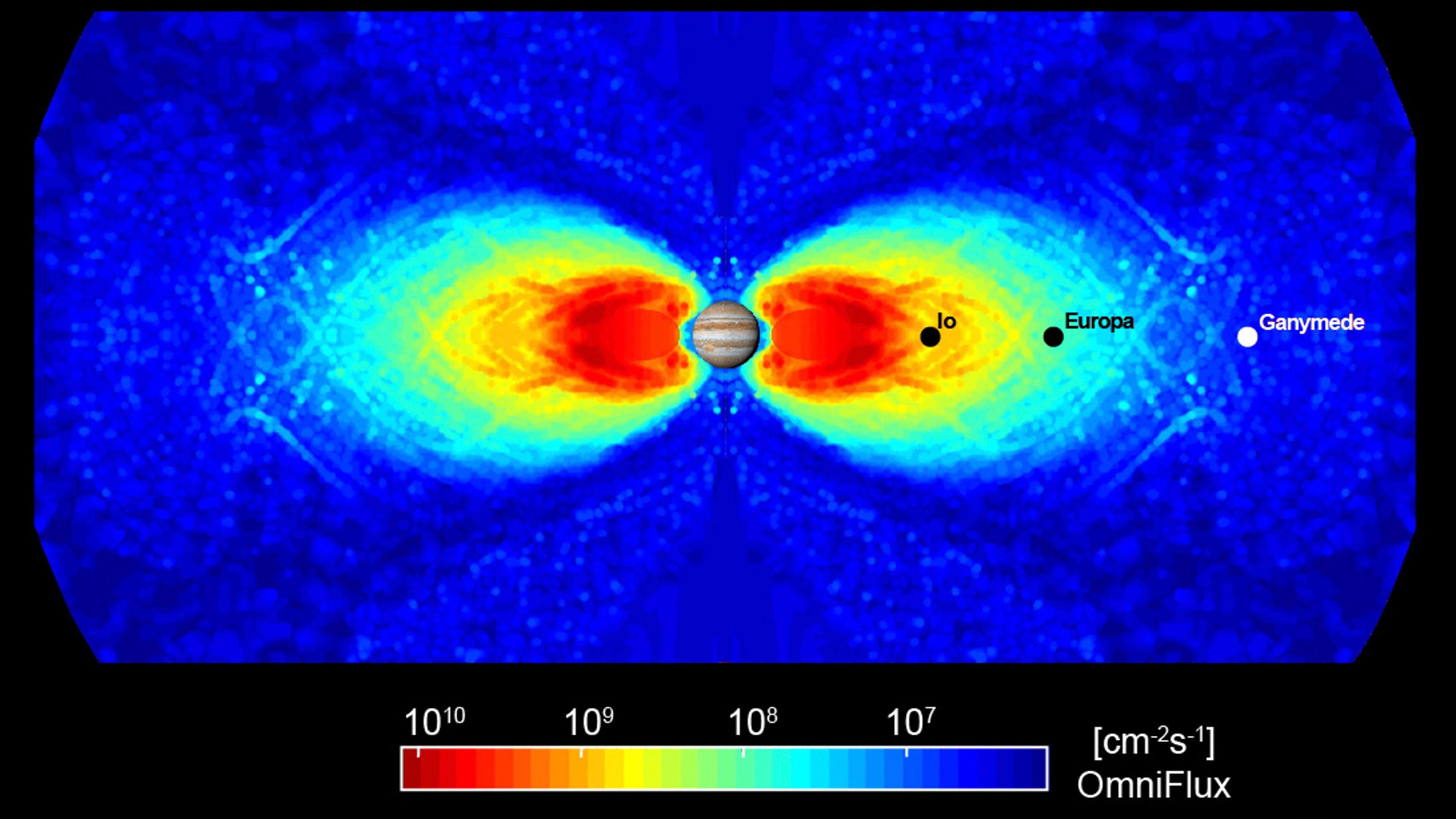
Scientists with NASA’s Juno mission have developed the first complete 3D radiation map of the Jupiter system. Along with characterizing the intensity of the high-energy particles near the orbit of the icy moon Europa, the map shows how the radiation environment is sculpted by the smaller moons orbiting near Jupiter’s rings.
The work relies on data collected by Juno’s Advanced Stellar Compass (ASC), which was designed and built by the Technical University of Denmark, and the spacecraft’s Stellar Reference Unit (SRU), which was built by Leonardo SpA in Florence, Italy. The two datasets complement each other, helping Juno scientists characterize the radiation environment at different energies.
Innovative Use of Navigation Cameras
Both the ASC and SRU are low-light cameras designed to assist with deep-space navigation. These types of instruments are on almost all spacecraft. But to get them to operate as radiation detectors, Juno’s science team had to look at the cameras in a whole new light.
“On Juno we try to innovate new ways to use our sensors to learn about nature, and we have used many of our science instruments in ways they were not designed for,” said Scott Bolton, Juno principal investigator from the Southwest Research Institute in San Antonio. “This is the first detailed radiation map of the region at these higher energies, which is a major step in understanding how Jupiter’s radiation environment works. This will help planning observations for the next generation of missions to the Jovian system.”
Counting Fireflies
Consisting of four star cameras on the spacecraft’s magnetometer boom, Juno’s ASC takes images of stars to determine the spacecraft’s orientation in space, which is vital to the success of the mission’s magnetic field experiment. But the instrument has also proved to be a valuable detector of high-energy particle fluxes in Jupiter’s magnetosphere. The cameras record “hard radiation,” or ionizing radiation that impacts a spacecraft with sufficient energy to pass through the ASC’s shielding.
“Every quarter-second, the ASC takes an image of the stars,” said Juno scientist John Leif Jørgensen of the Technical University of Denmark. “Very energetic electrons that penetrate its shielding leave a telltale signature in our images that looks like the trail of a firefly. The instrument is programmed to count the number of these fireflies, giving us an accurate calculation of the amount of radiation.”
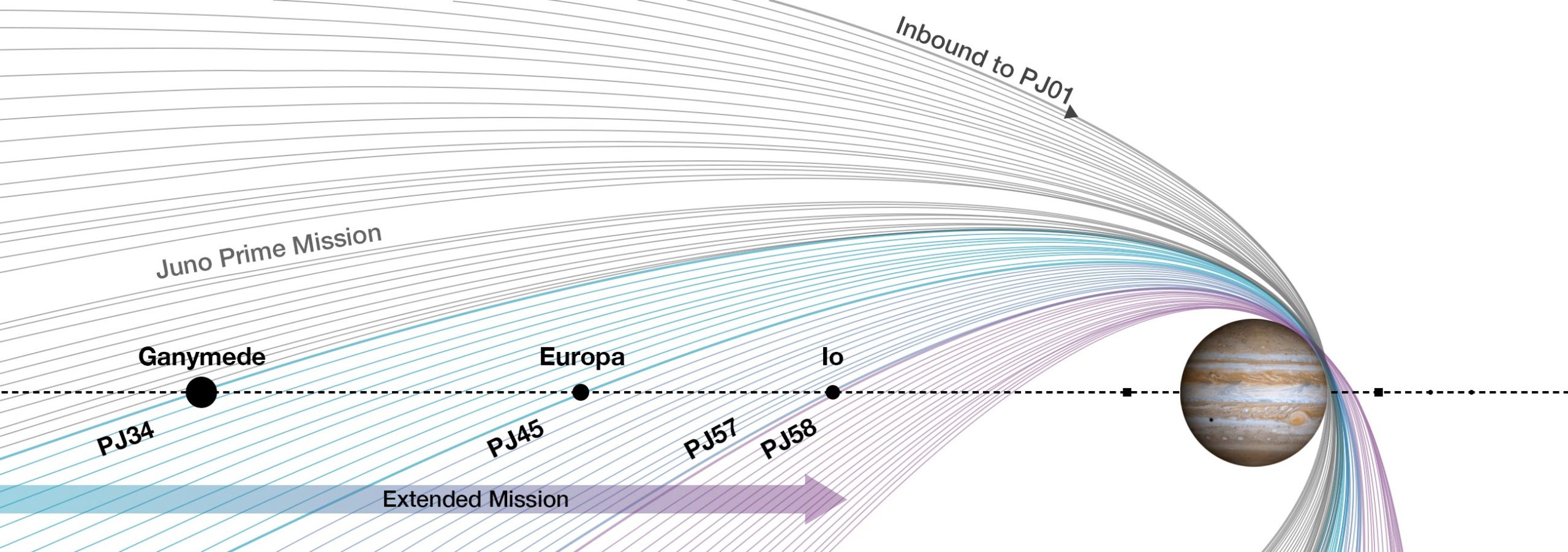
Because of Juno’s ever-changing orbit, the spacecraft has traversed practically all regions of space near Jupiter.
Credit: NASA/JPL-Caltech/SwRI
Insights Into Jupiter’s Magnetosphere
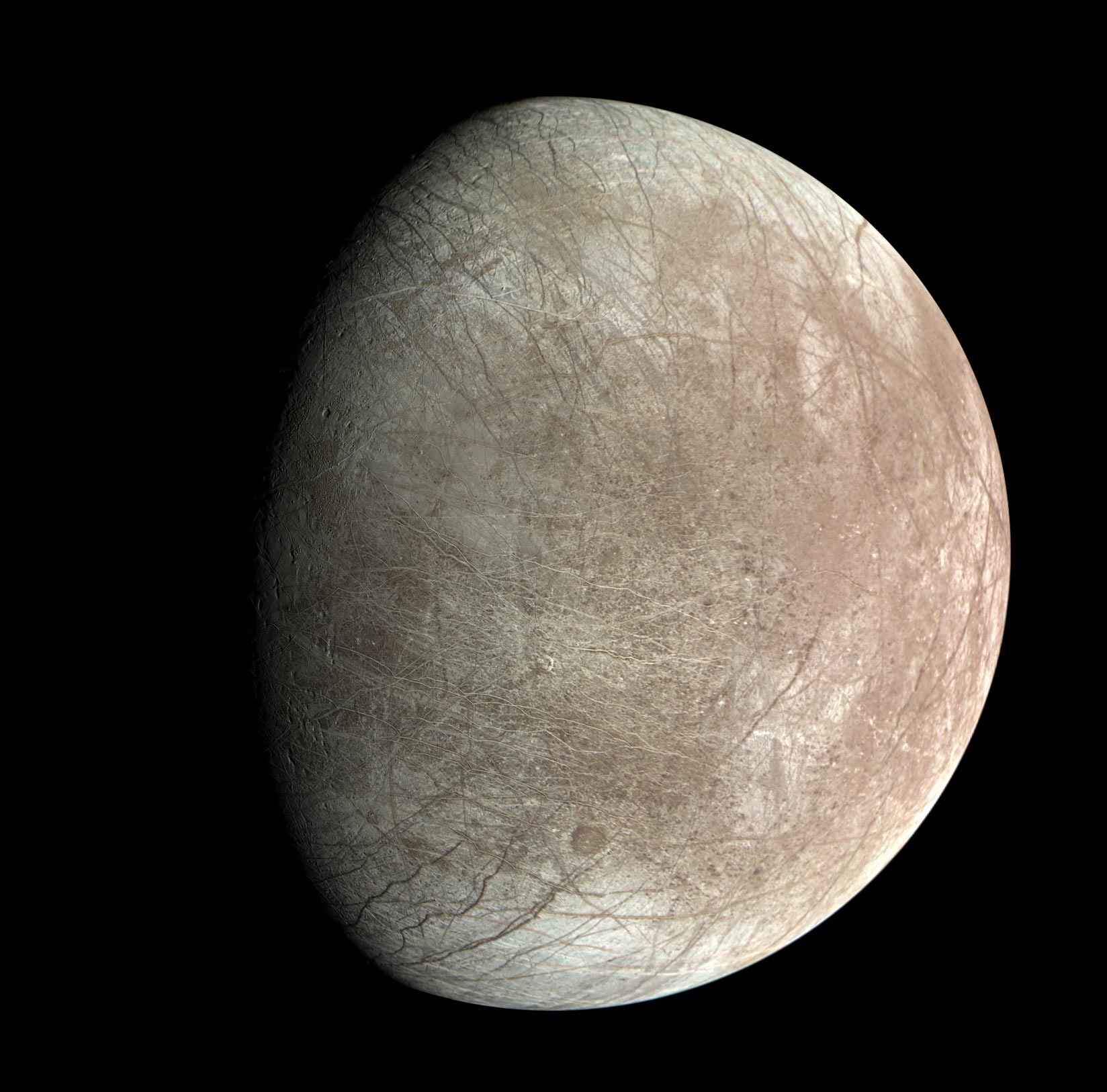
ASC data suggests that there is more very high-energy radiation relative to lower-energy radiation near Europa’s orbit than previously thought. The data also confirms that there are more high-energy electrons on the side of Europa facing its orbital direction of motion than on the moon’s trailing side. This is because most of the electrons in Jupiter’s magnetosphere overtake Europa from behind due to the planet’s rotation, whereas the very high-energy electrons drift backward, almost like fish swimming upstream, and slam into Europa’s front side.
Jovian radiation data is not the ASC’s first scientific contribution to the mission. Even before arriving at Jupiter, ASC data was used to determine a measurement of interstellar dust impacting Juno. The imager also discovered a previously uncharted comet using the same dust-detection technique, distinguishing small bits of the spacecraft ejected by microscopic dust impacting Juno at a high velocity.
Interaction With Jupiter’s Moons and Rings
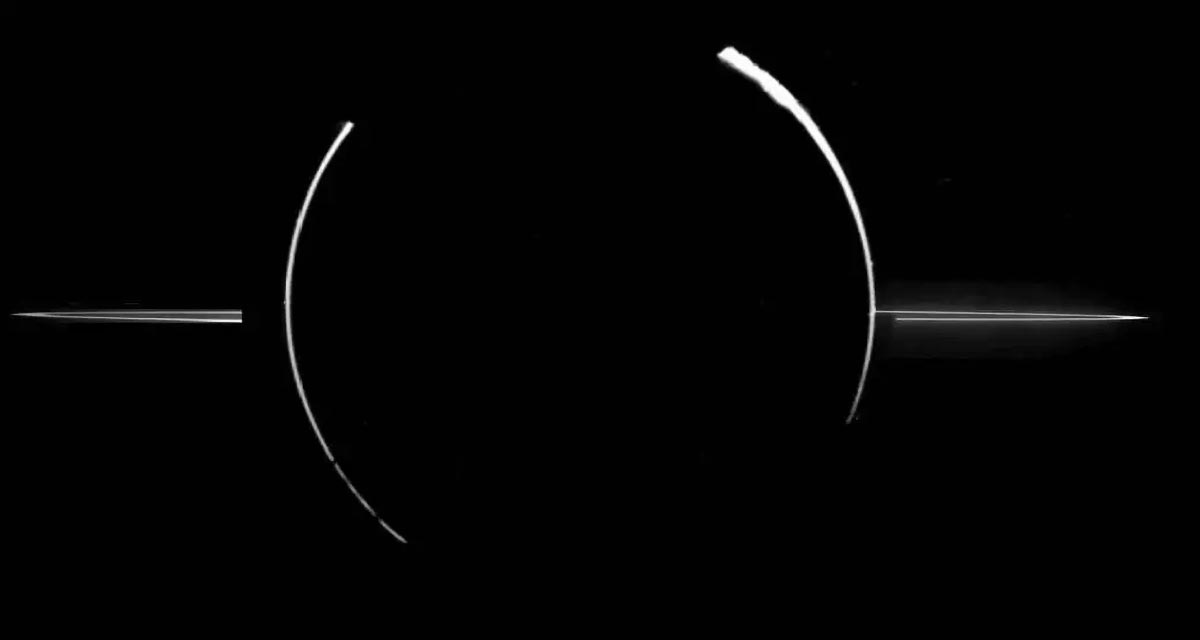
Like Juno’s ASC, the SRU has been used as a radiation detector and a low-light imager. Data from both instruments indicates that, like Europa, the small “shepherd moons” that orbit within or close to the edge of Jupiter’s rings (and help to hold the shape of the rings) also appear to interact with the planet’s radiation environment. When the spacecraft flies on magnetic field lines connected to ring moons or dense dust, the radiation count on both the ASC and SRU drops precipitously. The SRU is also collecting rare low-light images of the rings from Juno’s unique vantage point.
“There is still a lot of mystery about how Jupiter’s rings were formed, and very few images have been collected by prior spacecraft,” said Heidi Becker, lead co-investigator for the SRU and a scientist at NASA’s Jet Propulsion Laboratory (JPL) in Southern California, which manages the mission. “Sometimes we’re lucky and one of the small shepherd moons can be captured in the shot. These images allow us to learn more precisely where the ring moons are currently located and see the distribution of dust relative to their distance from Jupiter.”
More About the Juno Mission
Managed by NASA’s Jet Propulsion Laboratory in Pasadena, California, the Juno Mission is an integral part of the New Frontiers Program aimed at exploring Jupiter to gain insights into the giant planet’s origins and environment. Constructed and operated by Lockheed Martin Space in Denver, the spacecraft features critical components like the Advanced Stellar Compass developed by the Technical University of Denmark and the Stellar Reference Unit by Leonardo SpA in Florence, Italy. Under the guidance of principal investigator Scott Bolton from the Southwest Research Institute, Juno helps unveil the mysteries of the largest planet in our solar system.
Never miss a breakthrough: Join the SciTechDaily newsletter.
Follow us on Google and Google News.