
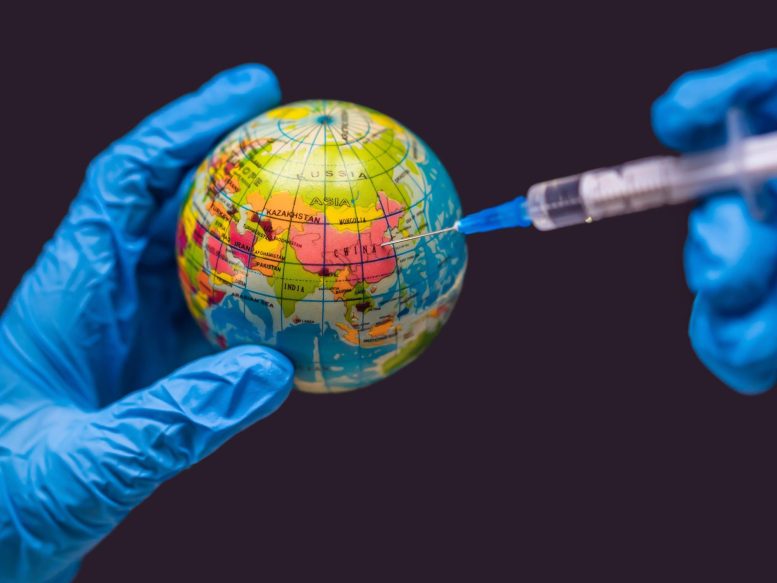
Research shows the Sinovac vaccine is insufficient against the omicron variant, with recipients requiring additional mRNA boosters to achieve comparable antibody levels to those with just two mRNA doses. The study highlights the need for extra boosters and the utility of T cells in managing infections.
Millions of people around the world have received two shots of Sinovac, a Chinese-manufactured inactive vaccine that is used in 48 countries to help reduce transmission rates of COVID-19.
However, those vaccinations alone are of no help against the widely circulating omicron variant, shows a new study by researchers at Yale and the Dominican Republic. The results are published in the journal Nature Medicine.
Study Results on Omicron Neutralization
An analysis of blood serum from 101 individuals from the Dominican Republic showed that omicron infection produced no neutralizing antibodies among those who received the standard two-shot regimen of the Sinovac vaccine. Antibody levels against omicron rose among those who had also received a booster shot of the mRNA vaccine made by Pfizer-BioNTech.
But when researchers compared these samples with blood serum samples stored at Yale, they found that even those who had received two Sinovac shots and a booster had antibody levels that were only about the same as those who’d received two shots of the mRNA vaccines but no booster shot. In other studies, the two-shot mRNA regimen without a booster has been shown to offer only limited protection against omicron.
Challenges in Global Omicron Strategy
Also, the researchers found that individuals who had been infected by earlier strains of the SARS-Cov-2 virus saw little immune protection against omicron.
The findings will likely complicate global efforts to combat the omicron strain, which has supplanted the more dangerous but less transmissible Delta strain as the most dominant circulating virus in much of the world. An additional booster shot — and possibly two — are clearly needed in areas of the globe where the Sinovac shot has been chief source of vaccination, said Akiko Iwasaki, the Waldemar Von Zedtwitz Professor of Immunobiology and senior author of the paper.
Importance of Boosters and Other Immune Responses
“Booster shots are clearly needed in this population because we know that even two doses of mRNA vaccines do not offer sufficient protection against infection with omicron,” Iwasaki said.
Omicron has proven particularly problematic to combat because it possesses 36 mutations on the spike proteins on its surface, which the virus uses to enter cells, researchers say. Existing mRNA vaccines are designed to trigger antibody response when spike proteins are recognized.
Iwasaki stressed, however, that the human immune system still has other weapons it can use against COVID-19, such as T cells that can attack and kill infected cells and prevent severe disease.
“But we need antibodies to prevent infection and slow transmission of the virus,” she said.
Reference: “Neutralizing antibodies against the SARS-CoV-2 Delta and Omicron variants following heterologous CoronaVac plus BNT162b2 booster vaccination” by Eddy Pérez-Then, Carolina Lucas, Valter Silva Monteiro, Marija Miric, Vivian Brache, Leila Cochon, Chantal B. F. Vogels, Amyn A. Malik, Elena De la Cruz, Aidelis Jorge, Margarita De los Santos, Patricia Leon, Mallery I. Breban, Kendall Billig, Inci Yildirim, Claire Pearson, Randy Downing, Emily Gagnon, Anthony Muyombwe, Jafar Razeq, Melissa Campbell, Albert I. Ko, Saad B. Omer, Nathan D. Grubaugh, Sten H. Vermund and Akiko Iwasaki, 20 January 2022, Nature Medicine.
DOI: 10.1038/s41591-022-01705-6
Carolina Lucas and Valter Silva Monteiro, both from the Yale School of Medicine, are co-lead authors of the paper. Eddy Perez-Then, of the Health Ministry of the Dominican Republic, and Marija Miric, of Two Oceans Health in Santo Domingo, are co-lead authors.
Never miss a breakthrough: Join the SciTechDaily newsletter.
Follow us on Google and Google News.
1 Comment
All the coronaviruses and all their variants have different protein spikes, with Delta and Omicron having spikes that are more efficient at getting around the vaccines. But the real problem is in the virus itself, not its protein shell, and why the most dangerous (MERS, SARS, and Covid-19) are so infectious. My independent research has found multiple one-in-a-million nucleotide sequence matches between all the coronaviruses and the human genome. Those sequences are the same as some of the loops of human tRNA. Using those loops and their amino acid code matches, viruses may be able to fool the nucleus membrane in cells to allow the virus to enter and associate with the human DNA, creating more opportunities for further infection. Our immune system may be compromised and may no longer be able to stop the virus and other diseases from attacking organs throughout the body. Vaccines that attack the virus protein shells while ignoring their contents are doomed to failure from the Darwin effect, but recognizing these loops suggests a possible approach to successful coronavirus vaccines. Only the infection process is considered in my work, not the innate virulence of the virus. For more info, check out this YouTube, Coronavirus – Using Your DNA Against You. https://www.youtube.com/watch?v=8dOIzD6ch8s