
Close Menu
    Facebook X (Twitter) Instagram
    SciTechDaily
    • Biology
    • Chemistry
    • Earth
    • Health
    • Physics
    • Science
    • Space
    • Technology
    Facebook X (Twitter) Pinterest YouTube RSS
    SciTechDaily
    Home»Health»COVID Vaccination Strategies: When Is One Dose Better Than Two?
    Health

    COVID Vaccination Strategies: When Is One Dose Better Than Two?

    By American Institute of PhysicsOctober 22, 2021No Comments3 Mins Read
    Facebook Twitter Pinterest Telegram LinkedIn WhatsApp Email Reddit
    Share
    Facebook Twitter LinkedIn Pinterest Telegram Email Reddit
    Vaccination Strategy Comparison
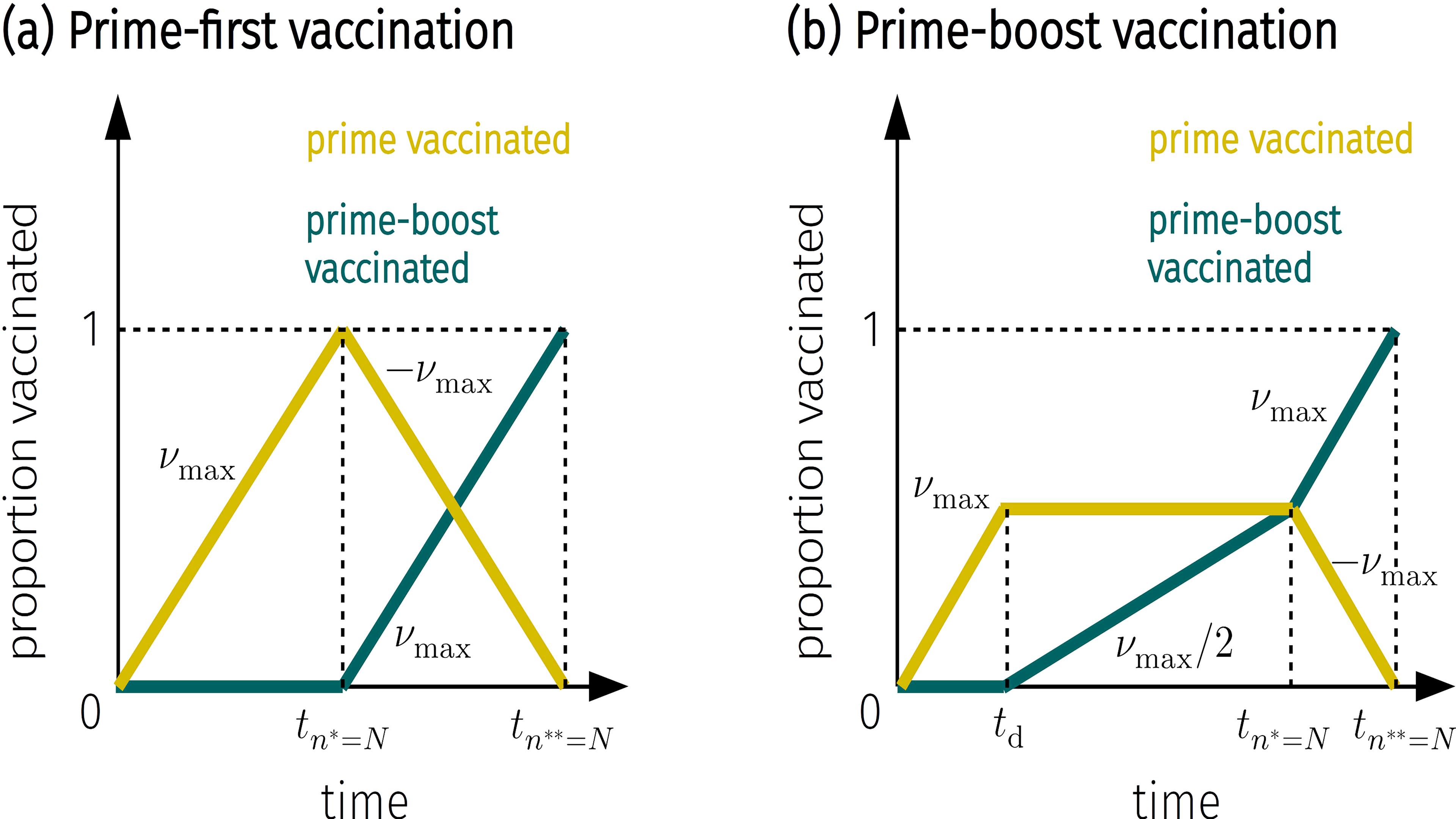
    The number of people vaccinated once (yellow) and twice (green) under the prime first and prime boost scenarios. Prime first vaccinates double the number of people initially, while prime boost focuses on full vaccinations. Credit: Lucas Böttcher and Jan Nagler

    Under certain conditions, vaccinating more people with a single dose slows virus spread.

    In many parts of the world, the supply of COVID-19 vaccines continues to lag behind the demand. While most vaccines are designed as a two-dose regimen, some countries, like Canada, have prioritized vaccinating as many people as possible with a single dose before giving out an additional dose.

    In Chaos, by AIP Publishing, researchers from the Frankfurt School of Finance and Management and the University of California, Los Angeles illustrate the conditions under which a “prime first” vaccine campaign is most effective at stopping the spread of the COVID-19 virus.

    The prime first campaign does not suggest people should receive only one dose of the vaccine. Instead, it emphasizes vaccinating large numbers of people as quickly as possible, then doubling back to give out second doses. In comparison, the “prime boost” vaccine campaign prioritizes fully vaccinating fewer people.

    Immunologically speaking, the prime boost scenario is always superior. However, under supply constraints, the advantages of vaccinating twice as many people may outweigh the advantages of a double dose.

    The scientists simulated the transmission of COVID-19 with a susceptible, exposed, infected, recovered, deceased model. Each of these disease states is associated with a compartment containing individual people. Transitions between compartments depend on disease parameters like virus transmissibility.

    Each compartment is further divided to account for unvaccinated, partially vaccinated, and fully vaccinated individuals. The researchers measured how each vaccine group compared to the others under different conditions.

    “We have this giant degree of uncertainty about the parameters of COVID-19,” said author Jan Nagler. “We acknowledge that we don’t know these precise values, so we sample over the entire parameter space. We give a nice idea of when prime first campaigns are better with respect to saving lives than prime boost vaccination.”

    The team found the vaccine waning rate to be a critically important factor in the decision. If the waning, or decrease in vaccine effectiveness, is too strong after a single dose, the double dose vaccination strategy is often the better option.

    However, the vaccine strategy flips if the waning rate after a single dose is more like the waning rate after a double dose.

    “Our results suggest that better estimates of immunity waning rates are important to decide if prime first protocols are more effective than prime boost vaccination,” said author Lucas Böttcher.

    As the scientific community gathers more data on COVID-19 vaccinations, the scientists hope this model will become more informative for public health experts and politicians who must decide for or against a certain vaccination protocol.

    Reference: “Decisive conditions for strategic vaccination against SARS-CoV-2” by Lucas Böttcher and Jan Nagler, 20 October 2021, Chaos An Interdisciplinary Journal of Nonlinear Science.
    DOI: 10.1063/5.0066992

    Never miss a breakthrough: Join the SciTechDaily newsletter.
    Follow us on Google and Google News.

    American Institute of Physics COVID-19 Immunology Infectious Diseases Public Health Vaccine Virology
    Share. Facebook Twitter Pinterest LinkedIn Email Reddit

    Related Articles

    New Study Shows Third Dose of Pfizer-BioNTech COVID Vaccine May Protect Against Omicron

    COVID Delta and Delta Plus Variants Evade the Antibody Response

    Cross-Protective COVID Immunity: One Coronavirus Vaccine Can Provide Broad Immunity Against Other Coronaviruses

    Structural Changes Identified in COVID Alpha and Beta Variants – Suggests Need for Updated Vaccine Booster

    Why Do We Continue to See COVID-19 Outbreaks in Fully Vaccinated Care Homes?

    Experts Warn: Vaccines Alone May Not Be Enough to End COVID-19 Pandemic

    Common Molecular Feature of Antibodies That Neutralize SARS-CoV-2 Discovered, Boosting COVID-19 Vaccine Prospects

    FDA Approved Drug May Help Calm Cytokine Storm in COVID-19

    Newly Developed Vaccines Protect Against COVID-19 in Macaques Study

    Leave A Reply Cancel Reply

    • Facebook
    • Twitter
    • Pinterest
    • YouTube

    Don't Miss a Discovery

    Subscribe for the Latest in Science & Tech!

    Trending News

    AI Could Detect Early Signs of Alzheimer’s in Under a Minute – Far Before Traditional Tests

    What if Dark Matter Has Two Forms? Bold New Hypothesis Could Explain a Cosmic Mystery

    This Metal Melts in Your Hand – and Scientists Just Discovered Something Strange

    Beef vs. Chicken: Surprising Results From New Prediabetes Study

    Alzheimer’s Breakthrough: Scientists Discover Key Protein May Prevent Toxic Protein Clumps in the Brain

    Quantum Reality Gets Stranger: Physicists Put a Lump of Metal in Two Places at Once

    Scientists May Have Found the Key to Jupiter and Saturn’s Moon Mystery

    Scientists Uncover Brain Changes That Link Pain to Depression

    Follow SciTechDaily
    • Facebook
    • Twitter
    • YouTube
    • Pinterest
    • Newsletter
    • RSS
    SciTech News
    • Biology News
    • Chemistry News
    • Earth News
    • Health News
    • Physics News
    • Science News
    • Space News
    • Technology News
    Recent Posts
    • Humans Returned to Britain 500 Years Earlier Than Scientists Thought
    • 250-Million-Year-Old Egg Solves One of Evolution’s Biggest Mysteries
    • Living With Roommates Might Be Changing Your Gut Microbiome Without You Knowing
    • Simple and Cheap Blood Test Could Detect Cancer and Other Diseases Before Symptoms Appear
    • Century-Old Cleaning Chemical Linked to 500% Increased Risk of Parkinson’s Disease
    Copyright © 1998 - 2026 SciTechDaily. All Rights Reserved.
    • Science News
    • About
    • Contact
    • Editorial Board
    • Privacy Policy
    • Terms of Use

    Type above and press Enter to search. Press Esc to cancel.