

CPP clusters offer a breakthrough in delivering therapeutics across biological barriers, with potential applications in treating cancer and neurodegenerative diseases.
Researchers from Macquarie University and Oxford University have conducted a comprehensive review of studies on cell-penetrating peptide (CPP) clusters, offering a valuable roadmap for biomedical scientists to advance the development of next-generation treatments for cancer and neurodegenerative diseases.
Biological barriers such as the blood-brain barrier and the plasma membrane, which protect neurons, prevent toxins from attacking the central nervous system, but they also stop potentially lifesaving treatments from reaching their intracellular targets.
More than half of the structures in the body that could potentially be affected by medicines are found inside the cells, making it vital to find ways of carrying large molecules like antibodies and genetic treatments across these biological barriers.
CPPs were first discovered three decades ago as a potential answer to the problem. They are cheap to produce, have a long history in research, and are easy to integrate into biological drugs, but issues with their efficacy have meant that no therapies using them have yet been approved by the world’s regulatory bodies.
Breakthroughs in CPP Cluster Technology
A breakthrough came two years ago, in the form of CPP clusters that could be created to carry cargos of antibodies, proteins, enzymes, and peptides across biological barriers.
Oxford University researchers created the first tricyclic CPP cluster, which was also the first in the world to transport functional antibodies into cells at low concentrations. At the same time, another research team from Nanyang Technological University in Singapore made a conceptually similar discovery, using a different agent to transport mRNA into cells.
Dr Ole Tietz, one of the Oxford team, is now a Senior Research Fellow at the Macquarie University Dementia Research Centre (DRC). He says this breakthrough marked a fundamental shift in the understanding of how CPPs could be used.
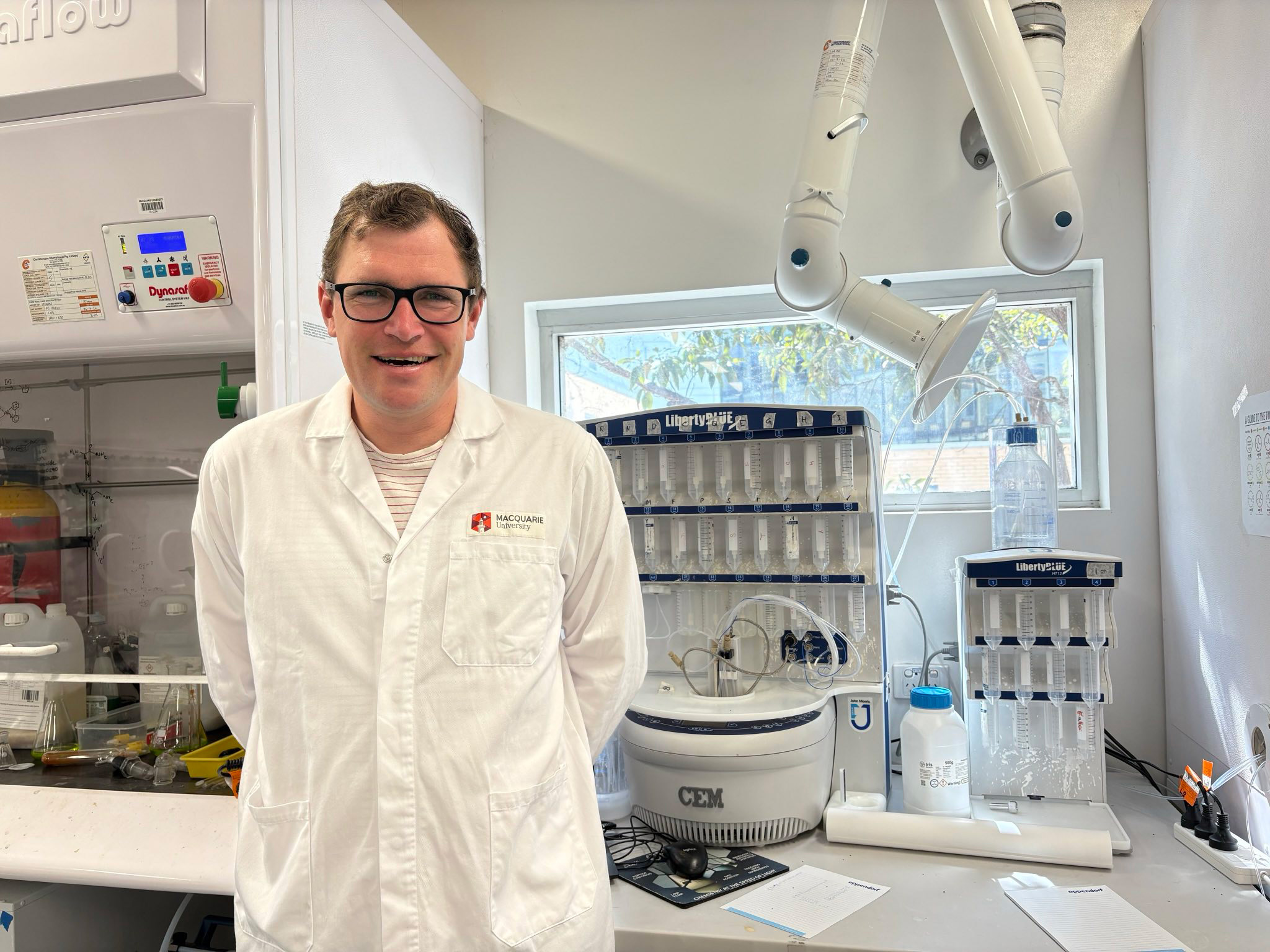
“The key to successful CPP cluster carriers lies in arranging them in a specific configuration, so they can act as a key to the barrier’s lock,” he says.
“These clusters are molecular Trojan horses, fooling the blood-brain barrier into allowing the molecules they’re carrying to cross over.
“Until now, many therapies have had to be administered in very high doses for a small amount to get through, and this can cause cytotoxicity, which can have very serious effects.
“There is a small therapeutic window with these treatments, after which you reach a concentration that is toxic and starts killing the cells instead.
“These new generation CPPs have the potential to allow us to deliver the minimum needed for treatment, which could improve patient outcomes dramatically.”
Systematic Review and Design Guidelines for CPPs
To help other biomedical scientists navigate the development and use of CPPs, Dr Tietz’s team has written a systematic review, published in the latest edition of Trends in Chemistry, that collects all the research findings on this new class of CPP, effectively creating a roadmap to using the new paradigm.
Lead author, Joseph Reeman, a Master of Research student at Macquarie Medical School, says one of the key aspects of the paper is its provision of a set of design criteria.
“These guidelines will assist researchers in developing the next generation of intracellular therapeutics, with a focus on translation into clinical practice,” he says.
“We cover how to use existing CPP clusters with cargos and how to create new clusters, the outstanding questions of what needs to happen in the field, as well as some of what we are currently addressing through our research program.”
The team is currently developing a CPP cluster that they hope could be used as a ‘plug and play’ carrier for various types of intracellular treatments, including antibodies and gene therapies.
Animal testing has already shown it can penetrate the brain, and they are now investigating whether it can transport an antibody across the blood-brain barrier and into a neuron.
If successful, it could be used to target the pathogenic build-ups of the brain proteins TDP-43 and tau that are associated with neurodegenerative diseases including Alzheimer’s disease, frontotemporal dementia, and motor neuron disease, which are a key research focus for DRC scientists.
Reference: “Strength in numbers: cell penetrating peptide clusters to build next-generation therapeutics” by Joseph Reeman, Lars M. Ittner, Katherine A. Vallis and Ole Tietz, 24 October 2024, Trends in Chemistry.
DOI: 10.1016/j.trechm.2024.09.003
Never miss a breakthrough: Join the SciTechDaily newsletter.
Follow us on Google and Google News.