
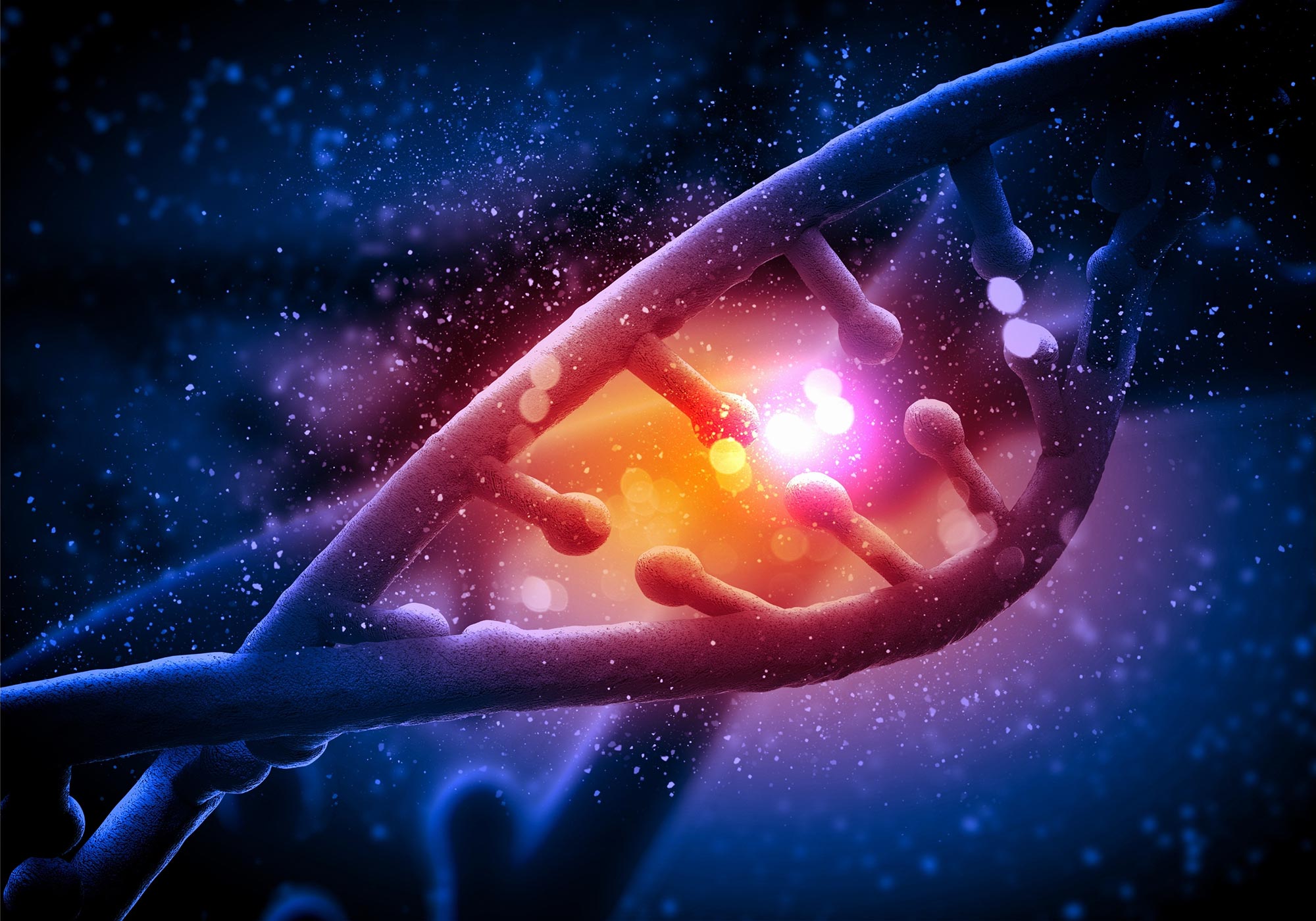
DNA is crucial for life, and its organization has been a significant scientific challenge. GROVER, a model developed by BIOTEC, decodes DNA like text, promising advancements in genomics and personalized medicine.
DNA holds the essential information required to sustain life. Deciphering how this information is stored and organized has been one of the greatest scientific challenges of the past century. Now, with GROVER, a new large language model trained on human DNA, researchers can attempt to decode the intricate information concealed within our genome. Developed by a team at the Biotechnology Center (BIOTEC) of Dresden University of Technology, GROVER treats human DNA as text, learning its rules and context to extract functional information about DNA sequences. Published in Nature Machine Intelligence, this innovative tool has the potential to revolutionize genomics and accelerate personalized medicine.
Since the discovery of the double helix, scientists have sought to understand the information encoded in DNA. 70 years later, it is clear that the information hidden in the DNA is multilayered. Only 1-2 % of the genome consists of genes, the sequences that code for proteins.
“DNA has many functions beyond coding for proteins. Some sequences regulate genes, others serve structural purposes, and most sequences serve multiple functions at once. Currently, we don’t understand the meaning of most of the DNA. When it comes to understanding the non-coding regions of the DNA, it seems that we have only started to scratch the surface. This is where AI and large language models can help,” says Dr. Anna Poetsch, research group leader at the BIOTEC.
DNA as a Language
Large language models, like GPT, have transformed our understanding of language. Trained exclusively on text, the large language models developed the ability to use the language in many contexts.
“DNA is the code of life. Why not treat it like a language?” says Dr. Poetsch. The Poetsch team trained a large language model on a reference human genome. The resulting tool named GROVER, or “Genome Rules Obtained via Extracted Representations”, can be used to extract biological meaning from the DNA.
“GROVER learned the rules of DNA. In terms of language, we are talking about grammar, syntax, and semantics. For DNA this means learning the rules governing the sequences, the order of the nucleotides and sequences, and the meaning of the sequences. Like GPT models learning human languages, GROVER has basically learned how to ‘speak’ DNA,” explains Dr. Melissa Sanabria, the researcher behind the project.
The team showed that GROVER can not only accurately predict the following DNA sequences but can also be used to extract contextual information that has biological meaning, e.g., identify gene promoters or protein binding sites on DNA. GROVER also learns processes that are generally considered to be “epigenetic”, i.e., regulatory processes that happen on top of the DNA rather than being encoded.
“It is fascinating that by training GROVER with only the DNA sequence, without any annotations of functions, we are actually able to extract information on biological function. To us, it shows that the function, including some of the epigenetic information, is also encoded in the sequence,” says Dr. Sanabria.
The DNA Dictionary
“DNA resembles language. It has four letters that build sequences and the sequences carry a meaning. However, unlike a language, DNA has no defined words,” says Dr. Poetsch. DNA consists of four letters (A, T, G, and C) and genes, but there are no predefined sequences of different lengths that combine to build genes or other meaningful sequences.
To train GROVER, the team had to first create a DNA dictionary. They used a trick from compression algorithms. “This step is crucial and sets our DNA language model apart from the previous attempts,” says Dr. Poetsch.
“We analyzed the whole genome and looked for combinations of letters that occur most often. We started with two letters and went over the DNA, again and again, to build it up to the most common multi-letter combinations. In this way, in about 600 cycles, we have fragmented the DNA into ‘words’ that let GROVER perform the best when it comes to predicting the next sequence,” explains Dr. Sanabria.
The Promise of AI in Genomics
GROVER promises to unlock the different layers of genetic code. DNA holds key information on what makes us human, our disease predispositions, and our responses to treatments.
“We believe that understanding the rules of DNA through a language model is going to help us uncover the depths of biological meaning hidden in the DNA, advancing both genomics and personalized medicine,” says Dr. Poetsch.
Reference: “DNA language model GROVER learns sequence context in the human genome” by Melissa Sanabria, Jonas Hirsch, Pierre M. Joubert and Anna R. Poetsch, 23 July 2024, Nature Machine Intelligence.
DOI: 10.1038/s42256-024-00872-0
Never miss a breakthrough: Join the SciTechDaily newsletter.
Follow us on Google and Google News.
1 Comment
Very cool! When will I be able to transfer my memories to a young, accelerated grown clone, thereby gaining immortality?