
Close Menu
    Facebook X (Twitter) Instagram
    SciTechDaily
    • Biology
    • Chemistry
    • Earth
    • Health
    • Physics
    • Science
    • Space
    • Technology
    Facebook X (Twitter) Pinterest YouTube RSS
    SciTechDaily
    Home»Technology»LED Lights May Help Prevent Astronaut Insomnia Aboard the ISS
    Technology

    LED Lights May Help Prevent Astronaut Insomnia Aboard the ISS

    By SciTechDailyJanuary 1, 2013No Comments2 Mins Read
    Facebook Twitter Pinterest Telegram LinkedIn WhatsApp Email Reddit
    Share
    Facebook Twitter LinkedIn Pinterest Telegram Email Reddit
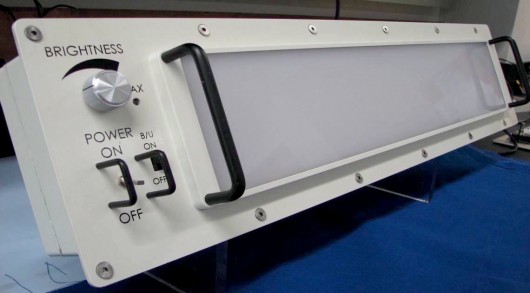
    An early prototype of new LED fixtures (Solid State Lighting Module) that could help to prevent astronaut insomnia aboard the International Space Station. Credit: Kennedy Space Center
    An early prototype of new LED fixtures (Solid State Lighting Module) that could help to prevent astronaut insomnia aboard the International Space Station. Credit: Kennedy Space Center

    By investing $11.4 million to change out aging fluorescent lights in the International Space Station’s U.S. Orbital Segment, NASA hopes to prevent astronaut insomnia and to help space station crews sleep better aboard the International Space Station.

    Sleep medication drugs are the second-most common drug taken by astronauts after painkillers, according to NASA. Astronauts are scheduled for 8.5 hours of sleep a day, but average six hours, and that’s with the help of pills, relaxation technique, and sleep education. If sleep deprivation is maintained over the course of several months, it starts to take its toll.

    NASA has found no single reason why astronauts often go months without a good night’s sleep. It could be a combination of the sensation of floating in bed, constant noise, variable temperature, poor air circulation, nagging backaches and headaches, frequent shifts between Houston and Moscow time zones, and a new dawn every 90 minutes that confuses circadian rhythms.

    Sleep deprivation is dangerous in orbit and NASA hopes to fix the disruption of normal circadian rhythms with new lamps. Research shows that our bodily clocks are wound by light exposure and about a decade ago, scientists discovered a new type of light-sensitive cell in our eyes. The retinal ganglion cells have no role in vision, but instead inform the suprachiasmatic nucleus in the brain what time it is. This in turn provides cues for thousands of schedule-sensitive bodily processes.

    When these receptors are exposed to a wavelength of blue, humans feel more alert because the brain suppresses melatonin, a key hormone in sleep regulation. In contrast, red-spectrum light allows melatonin to flow without impedance.

    The new lamps fit the exact footprint of their predecessors, and comprise a rainbow of more than 100 LED bulbs cloaked by a diffuser, so they appear as a single panel of white light. The fixtures have three modes, each with a subtly different hue: White light is for general vision, a cooler blue-shifted light promotes alertness, and a warmer red-shifted light triggers sleepiness. The LEDs are lighter, cooler, more durable, less toxic, and more energy-efficient.

    The lamps are expected to be delivered by Boeing by 2015.

    Never miss a breakthrough: Join the SciTechDaily newsletter.
    Follow us on Google and Google News.

    International Space Station ISS NASA Neuroscience Sleep Science
    Share. Facebook Twitter Pinterest LinkedIn Email Reddit

    Related Articles

    First Contact: NASA’s Space Station Laser Communication Terminal Achieves Milestone

    SEAQUE: Space Station To Host “Self-Healing” Quantum Communications Technology Demo

    NASA Interns Take Space Washing Machine Designs for a Spin

    ISS “Firestation” Experiment to Explore the Tops of Thunderstorms

    NASA Designing Space Habitat From Spare ISS Parts

    SCaN Testbed Headed for International Space Station Later This Year

    NASA Mobile Launcher Reacted as Expected During Move to Launch Pad 39B

    Botched Pressure Test of Russian Soyuz Capsule Delays Launch by a Month

    NASA Reviews Ideas for Greener Aircraft

    Leave A Reply Cancel Reply

    • Facebook
    • Twitter
    • Pinterest
    • YouTube

    Don't Miss a Discovery

    Subscribe for the Latest in Science & Tech!

    Trending News

    Popular Childhood Drinks Linked to Higher Blood Pressure Later in Life

    Scientists Just Challenged a 70-Year-Old Myth About the Human Brain

    Intermittent Fasting Benefits May Last Long After the Diet Ends

    Scientists Develop a Food Ingredient That May Prevent Obesity

    NASA Satellites Spot a Powerful El Niño Building Beneath the Pacific

    Why Do Statins Hurt Muscles? Scientists May Finally Have an Answer

    Decades-Old Dark Matter Explanation Fails Its Most Direct Test Yet

    “One in a Million” Find: Soft Tissue Discovered in 450-Million-Year-Old Fossil

    Follow SciTechDaily
    • Facebook
    • Twitter
    • YouTube
    • Pinterest
    • Newsletter
    • RSS
    SciTech News
    • Biology News
    • Chemistry News
    • Earth News
    • Health News
    • Physics News
    • Science News
    • Space News
    • Technology News
    Recent Posts
    • Brighter Days May Lead to Deeper, Better Sleep
    • The Hidden Tradeoff Behind Today’s Most Powerful Weight-Loss Drugs
    • Morning Glories May Be Losing the Race Against Climate Change
    • Scientists Solve the Mystery of Why Antarctica Froze Before the Arctic
    • Atlantic Ocean Slowdown Could Supercharge California Storms
    Copyright © 1998 - 2026 SciTechDaily. All Rights Reserved.
    • Science News
    • About
    • Contact
    • Editorial Board
    • Privacy Policy
    • Terms of Use

    Type above and press Enter to search. Press Esc to cancel.