
Close Menu
    Facebook X (Twitter) Instagram
    SciTechDaily
    • Biology
    • Chemistry
    • Earth
    • Health
    • Physics
    • Science
    • Space
    • Technology
    Facebook X (Twitter) Pinterest YouTube RSS
    SciTechDaily
    Home»Earth»Cyclone Seroja Slams Australia, Causing Significant Damage to Coastal Towns
    Earth

    Cyclone Seroja Slams Australia, Causing Significant Damage to Coastal Towns

    By Kasha Patel, NASA Earth ObservatoryApril 13, 2021No Comments3 Mins Read
    Facebook Twitter Pinterest Telegram LinkedIn WhatsApp Email Reddit
    Share
    Facebook Twitter LinkedIn Pinterest Telegram Email Reddit
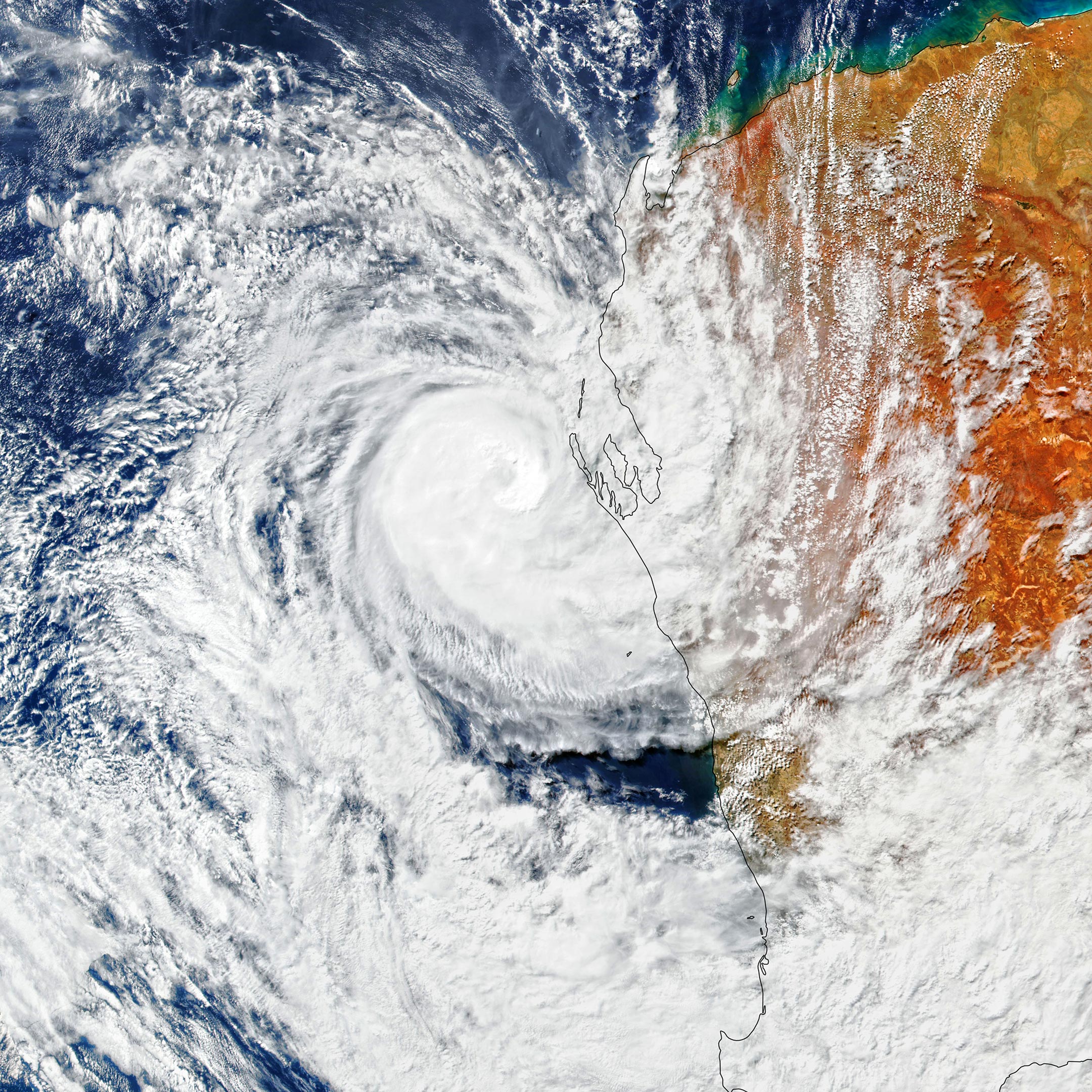
    Cyclone Seroja Australia Annotated
    Cyclone Seroja Australia, April 11, 2021

    The category three cyclone made a rare landfall in Western Australia, causing significant damage to coastal towns.

    On April 11, 2021, a category three storm made a rare landfall in Western Australia, causing significant damage to coastal towns that are mostly ill-equipped for cyclones. Tropical Cyclone Seroja tore through 1,000 kilometers (600 miles) of land, knocking down trees and damaging buildings along its southward path. At least 15,000 homes lost power. Seroja has since weakened and moved offshore, but government agencies are now dealing with the damage.

    The Visible Infrared Imaging Radiometer Suite (VIIRS) on the Suomi NPP satellite captured this image on April 11, hours before the storm made landfall.

    Kalbarri, a resort town of around 1,500 people, received the brunt of the storm’s force. Seroja made landfall just south of Kalbarri on the evening of the 11th and damaged about 70 percent of the town’s structures, according to news reports. Wind gusts clocked in at 170 kilometers (100 miles) per hour—likely the strongest winds in the area in more than 50 years. Overnight, Kalbarri received around 167 millimeters (6.6 inches) of rain.
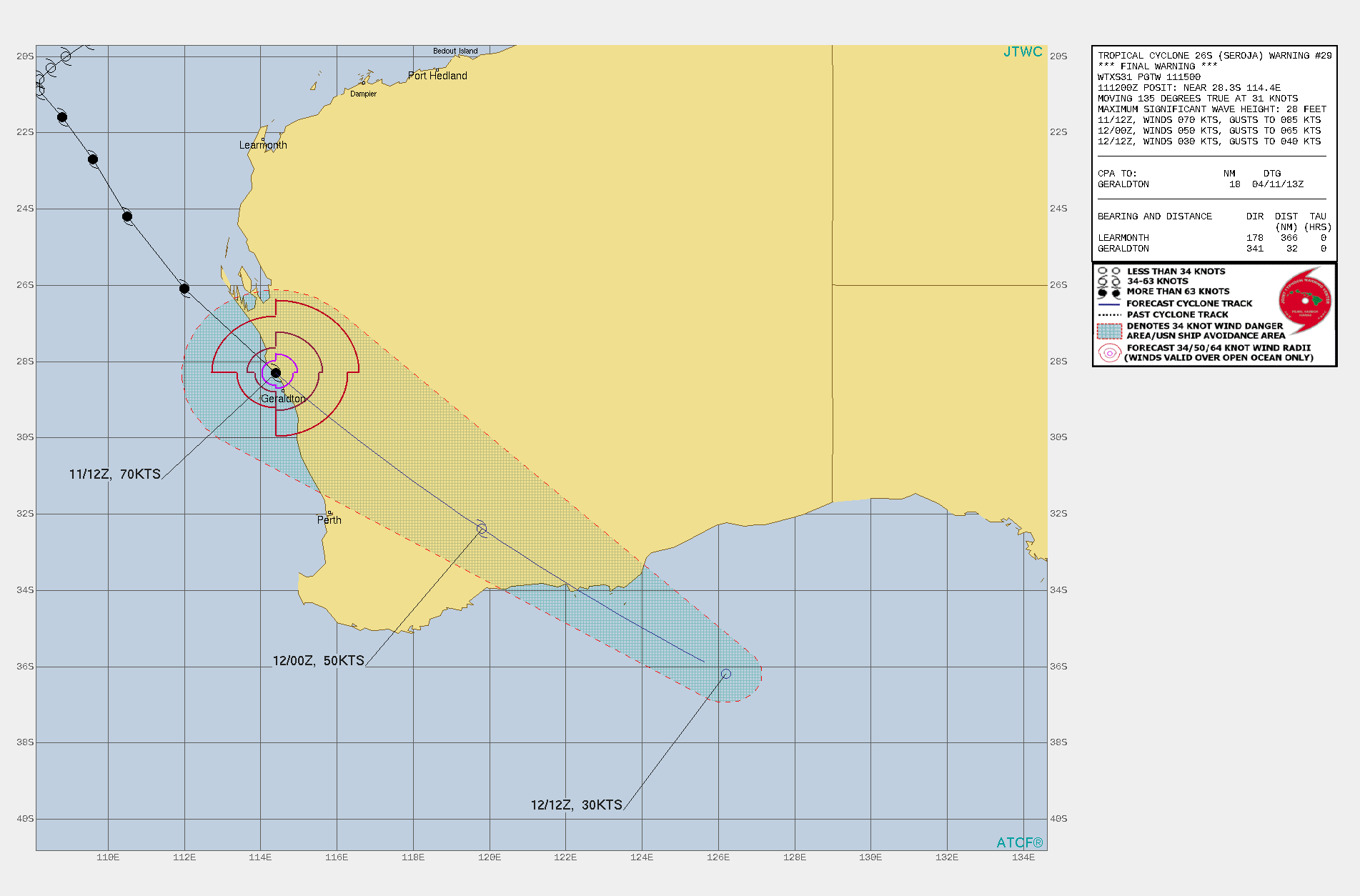
    Cyclone Seroja Australia
    Tropical cyclone Seroja. Credit: U.S. Navy

    Seroja continued southeast and caused damage in the city of Geraldton, too. Downgraded to a category two storm at the time, Seroja was the first storm of that intensity to hit Geraldton in more than 50 years. The storm was further downgraded on April 12th as it moved across the Wheat Belt, located in the southwest corner of Australia.

    Seroja’s southward trajectory is unusual; scientists estimate that cyclones of this intensity have only traveled this far south 26 times in the past 5,000 years. However, Seroja curved south when it interacted with a different tropical system earlier in the week. This clash—a rare phenomenon known as the Fujiwhara Effect—caused the systems to rotate around one another and launched Seroja towards the west. Seroja intensified due to warmer-than-normal sea surface temperatures influenced by La Niña conditions. Winds kept Seroja away from the coast and the weakened effects of land, allowing the cyclone to sustain relatively high intensity.

    Before entering Australian waters, Seroja had already caused significant damage to Indonesia. Seroja, which made landfall there on April 5, caused flash flooding and landslides. More than 160 people were killed and 22,000 people have been displaced. The storm was the strongest tropical cyclone to hit Indonesian land since 2008.

    NASA Earth Observatory image by Joshua Stevens, using VIIRS data from NASA EOSDIS LANCE, GIBS/Worldview, and the Suomi National Polar-orbiting Partnership.

    Never miss a breakthrough: Join the SciTechDaily newsletter.
    Follow us on Google and Google News.

    Cyclone NASA NASA Earth Observatory Weather
    Share. Facebook Twitter Pinterest LinkedIn Email Reddit

    Related Articles

    Bomb Cyclone Batters the Pacific Northwest Leaving 600,000 in the Dark

    Filipo’s Fury: Unleashing Nature’s Wrath on Mozambique

    Cyclone Jasper’s Fury: From Roaring Category-4 to Queensland’s Doorstep

    Unprecedented Wonder: Tropical Cyclone Freddy’s Record-Breaking Month-Long Journey Across the Indian Ocean

    Typhoon Hinnamnor: First Category 5 Cyclone on Earth in 2022

    Intense Extratropical “Bomb Cyclones” Drench US West Coast

    Tauktae: An Unusually Powerful Tropical Cyclone Strikes India

    Severe Tropical Cyclone Yasa Bearing Down on Island Nation of Fiji

    Cyclone Gati Makes Historic Landfall in Somalia – More Than a Year’s Worth of Rain in Two Days

    Leave A Reply Cancel Reply

    • Facebook
    • Twitter
    • Pinterest
    • YouTube

    Don't Miss a Discovery

    Subscribe for the Latest in Science & Tech!

    Trending News

    New Study Reveals Why Ozempic Works Better for Some People Than Others

    Climate Change Is Altering a Key Greenhouse Gas in a Way Scientists Didn’t Expect

    New Study Suggests Gravitational Waves May Have Created Dark Matter

    Scientists Discover Why the Brain Gets Stuck in Schizophrenia

    Scientists Engineer “Tumor-Eating” Bacteria That Devour Cancer From Within

    Even “Failed” Diets May Deliver Long-Term Health Gains, Study Finds

    NIH Scientists Discover Powerful New Opioid That Relieves Pain Without Dangerous Side Effects

    Collapsing Plasma May Hold the Key to Cosmic Magnetism

    Follow SciTechDaily
    • Facebook
    • Twitter
    • YouTube
    • Pinterest
    • Newsletter
    • RSS
    SciTech News
    • Biology News
    • Chemistry News
    • Earth News
    • Health News
    • Physics News
    • Science News
    • Space News
    • Technology News
    Recent Posts
    • The Surprising Reason You Might Want To Sleep Without a Pillow
    • Household Cats Could Hold the Secret to Fighting Breast Cancer
    • Scientists Say This Natural Hormone Reverses Obesity by Targeting the Brain
    • This 15,000-Year-Old Discovery Changes What We Know About Early Human Creativity
    • 35-Million-Year-Old Mystery: Strange Arachnid Discovered Preserved in Amber
    Copyright © 1998 - 2026 SciTechDaily. All Rights Reserved.
    • Science News
    • About
    • Contact
    • Editorial Board
    • Privacy Policy
    • Terms of Use

    Type above and press Enter to search. Press Esc to cancel.