
Close Menu
    Facebook X (Twitter) Instagram
    SciTechDaily
    • Biology
    • Chemistry
    • Earth
    • Health
    • Physics
    • Science
    • Space
    • Technology
    Facebook X (Twitter) Pinterest YouTube RSS
    SciTechDaily
    Home»Biology»Darcin in Mice Urine Attracts Other Mice
    Biology

    Darcin in Mice Urine Attracts Other Mice

    By SciTechDailyDecember 29, 2012No Comments2 Mins Read
    Facebook Twitter Pinterest Telegram LinkedIn WhatsApp Email Reddit
    Share
    Facebook Twitter LinkedIn Pinterest Telegram Email Reddit
    Darcin in Mice Urine Attracts Other Mice Repeatedly
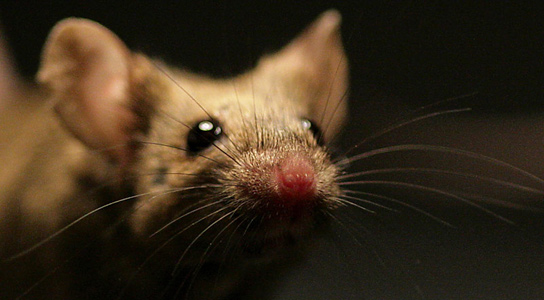
    Sniffing at a male mouse’s urine makes that place and that mouse’s body odor attractive to female mice. Credit: Michael Thom

    Mice seem to be addicted to the scent of urine and repeatedly go back to spots where they found the excretions. Researchers have discovered that this behavior is triggered by a single protein in the urine of male mice.

    The scientists published their findings in the journal Science. Mice use their scent to mark their territory, advertise their dominance and convey information about their health and reproductive status. These volatile pheromones usually disperse quickly, and it was unclear what exactly stimulated females to be attracted by specific males.

    Previously, research has shown that in the lab, female mice often return to a place where they had come across cage bedding soiled by males. Researchers at the University of Liverpool, in the UK, have confirmed this. Female mice spent five times as much time in a place where they encountered a dish with male urine than one where they encountered water. After 10 minutes of exposure, the urine was enough for the mice to show this place preference even after as long as 14 days.

    If the mice were prevented from touching the urine with their nose, the place seemed to lose its attractiveness. The researchers then separated the urine into different fractions to discover that a protein called darcin, which mice can only detect if their nose touches urine, is responsible for the frequent visits.

    The researchers found that darcin produced in the lab elicited the same reaction from mice and that the pheromones induced learning in mice. The mice learn to be attracted to the place where they encountered the darcin and they learn the odor cues of that specific male and are then attracted to it.

    Reference: “Pheromonal Induction of Spatial Learning in Mice” by Sarah A. Roberts, Amanda J. Davidson, Lynn McLean, Robert J. Beynon and Jane L. Hurst, 14 December 2012, Science.
    DOI: 10.1126/science.1225638

    Never miss a breakthrough: Join the SciTechDaily newsletter.
    Follow us on Google and Google News.

    Behavioral Science Ecology Mice Neuroscience
    Share. Facebook Twitter Pinterest LinkedIn Email Reddit

    Related Articles

    Birdsongs Elicit “Emotional” Response From Birds

    Humans Are a Greater Disturbance to Elk Than Natural Predators

    Why Children Believe Hiding Their Eyes Makes Them Disappear

    Optimism Bias Disrupted With a Small Magnetic Field

    Microscopic Parasite Toxoplasma Gondii Linked to Personality Changes

    Brain Scans Help Predict Whether Patients Will Respond to Therapy

    Odor Processing Function of Fly Resembles Mammalian Brain

    Sex Deprived Fruit Flies Consume More Alcohol

    Neuroscientists Study Cortical Areas Specialized in Processing Visual Inputs in Mice

    Leave A Reply Cancel Reply

    • Facebook
    • Twitter
    • Pinterest
    • YouTube

    Don't Miss a Discovery

    Subscribe for the Latest in Science & Tech!

    Trending News

    Just a Few Breathless Minutes a Day Could Slash Your Risk of 8 Major Diseases

    This Simple Habit Could Cut Your Risk of Dementia by 30%

    Scientists Debunk Rattlesnake Myth That Fooled Hikers and Doctors for Decades

    Scientists Discover Plants Can “Count” – and May Be Smarter Than We Thought

    New Research Reveals Ancient Mars May Have Been Warm, Wet – and Possibly Alive

    This Surprising Daily Habit Could Cut Dementia Risk by 35%

    Just 10 Minutes a Day: Scientists Say This Ancient Chinese Practice Shows Powerful Blood Pressure Benefits

    Scientists Say This Popular Food Could Help Your Body Get Rid of Microplastics

    Follow SciTechDaily
    • Facebook
    • Twitter
    • YouTube
    • Pinterest
    • Newsletter
    • RSS
    SciTech News
    • Biology News
    • Chemistry News
    • Earth News
    • Health News
    • Physics News
    • Science News
    • Space News
    • Technology News
    Recent Posts
    • NASA Artemis II Crew Scrambles To Fix Unexpected Toilet Failure in Space
    • Surviving Burns May Have Changed Human Evolution
    • Scientists Discover Hidden “Footprint of Death” That Could Transform How We Fight Disease
    • Blood-Sucking Parasites Could Revolutionize Treatment for Autoimmune Diseases
    • Scientists Uncover Massive Climate Secret Beneath Sweden’s Forests
    Copyright © 1998 - 2026 SciTechDaily. All Rights Reserved.
    • Science News
    • About
    • Contact
    • Editorial Board
    • Privacy Policy
    • Terms of Use

    Type above and press Enter to search. Press Esc to cancel.