
Scientists Take the Most Accurate Measurements Yet of Black Carbon in the Atmosphere
Our industrialized civilization contributes a broad array of pollutants to the environment. A significant source of these pollutants is combustion, which leads to the production of aerosol particles, including black carbon. Although black carbon only forms a small percentage of these particles, its ability to absorb and retain heat, along with its potential to disrupt the heat-reflecting properties of surfaces like snow, makes it a matter of concern. Therefore, understanding how black carbon interacts with sunlight is critical. In a significant development, researchers have recently achieved the most precise measurement of black carbon’s refractive index, which could influence climate models.
There are numerous contributors to climate change, with some like carbon dioxide emissions from fossil fuel combustion, sulfur dioxide from cement production, and methane emissions from livestock farming being more commonly known. However, black carbon aerosols, also a byproduct of combustion, are less frequently discussed but carry significant importance. Essentially a form of soot, black carbon excels at absorbing sunlight and storing heat, consequently contributing to atmospheric warming.
At the same time, given dark colors are less effective at reflecting light and therefore heat, as black carbon covers lighter surfaces including snow, it reduces the potential of those surfaces to reflect heat back into space.
The Critical Importance of Refractive Index
“Understanding the interaction between black carbon and sunlight is of fundamental importance in climate research,” said Assistant Professor Nobuhiro Moteki from the Department of Earth and Planetary Science at the University of Tokyo. “The most critical property of black carbon in this regard is its refractive index, basically how it redirects and disperses incoming light rays. However, existing measurements of black carbon’s refractive index were inaccurate. My team and I undertook detailed experiments to improve this. With our improved measurements, we now estimate that current climate models may be underestimating the absorption of solar radiation due to black carbon by a significant 16%.”
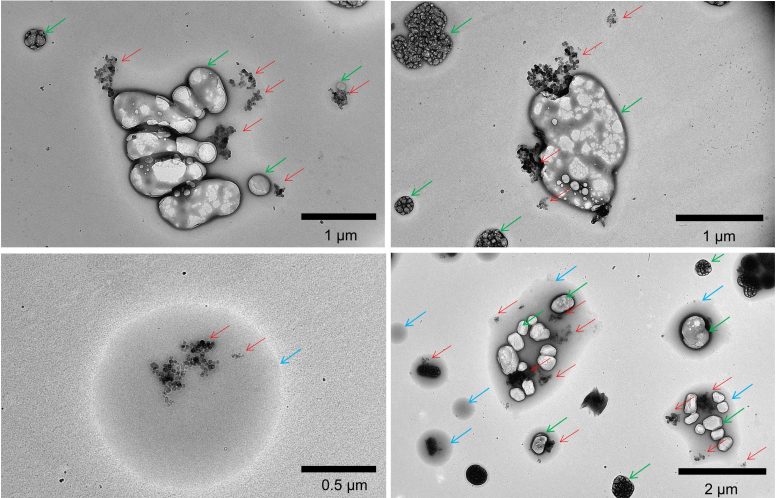
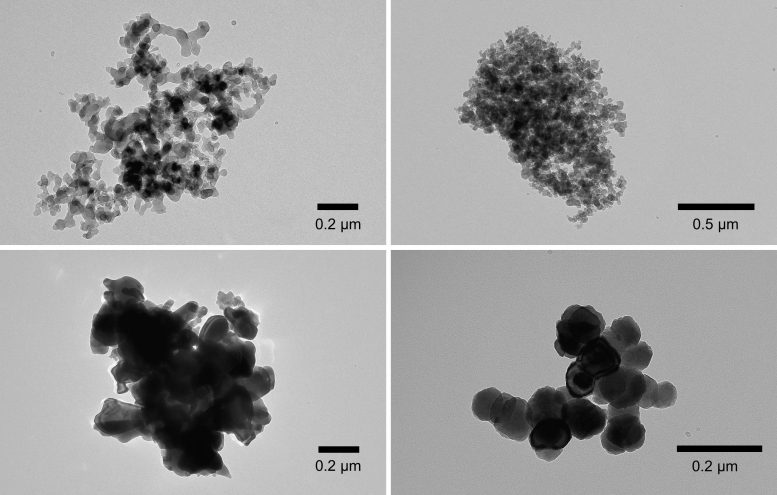
Previous measurements of the optical properties of black carbon were often confounded by factors such as lack of pure samples, or difficulties in measuring light interactions with particles of differing complex shapes. Moteki and his team improved this situation by capturing the black carbon particles in water, then isolating them with sulfates or other water-soluble chemicals. By isolating the particles, the team was better able to shine light on them and analyze the way they scatter, which gave researchers the data to calculate the value of refractive index.
“We measured the amplitude, or strength, and phase, or step, of the light scattered from black carbon samples isolated in water,” said Moteki. “This allowed us to calculate what is known as the complex refractive index of black carbon. Complex because rather than being a single number, it’s a value that contains two parts, one of which is ‘imaginary’ (concerned with absorption), though its impact is very, very real. Such complex numbers with imaginary components are actually very common in the field of optical science and beyond.”
Implications for Climate Models and Beyond
As the new optical measurements of black carbon imply that current climate models are underestimating its contribution to atmospheric warming, the team hopes that other climate researchers and policymakers can make use of their findings. The method developed by the team to ascertain the complex refractive index of particles can be applied to materials other than black carbon. This allows for the optical identification of unknown particles in the atmosphere, ocean, or ice cores, and the evaluation of optical properties of powdered materials, not just those related to the ongoing problem of climate change.
Reference: “Constraining the complex refractive index of black carbon particles using the complex forward-scattering amplitude” by Nobuhiro Moteki, Sho Ohata, Atsushi Yoshida and Kouji Adachi, 3 May 2023, Aerosol Science and Technology.
DOI: 10.1080/02786826.2023.2202243
The study was funded by the Environmental Restoration and Conservation Agency, the Japan Society for the Promotion of Science (JSPS), and the Arctic Challenge for Sustainability ArCS II project.
Never miss a breakthrough: Join the SciTechDaily newsletter.
Follow us on Google and Google News.
2 Comments
Interesting work. However, it does raise some questions about the utility in climate modeling when the effective complex refractive index (RI) varies with size and shape and may therefore be dependent on the source, and the environment in which it settles. Furthermore, because one of the major concerns is the reflectivity of snow contaminated with Black Carbon (BC), it doesn’t address the question of whether particles with a platy shape (formed by optically anisotropic carbon/graphite) might be different when on snow than when suspended in water. Snow typically has a distribution of hexagonal ice plates with alignment sub-parallel to the ground surface; whereas, suspended particles are more likely to be randomly oriented.
A lot of time and effort went into this study. However, because they are deriving an “effective” complex RI, rather than some absolute constant, there is the consequent issue of demonstrating that their measured effective RI is the best estimate for real world applications.
Both the real and imaginary components of the effective complex RI for the hematite-powder reference specimens are substantially lower than measurements obtained from polished ore mounts of hematite. That provides little support for the utility of the results from this research because different methods result in different results. The ellipsometric determination of the complex RI has a much smaller standard deviation than the forward scattering approach, leading one to question how best to handle the large range in the scattering values for the complex RI.