
Researchers Document Evolution of Plague Over Hundreds of Years in Medieval Denmark
Longitudinal study reveals Yersinia pestis, the bacteria that causes plague, was reintroduced into the population again and again.
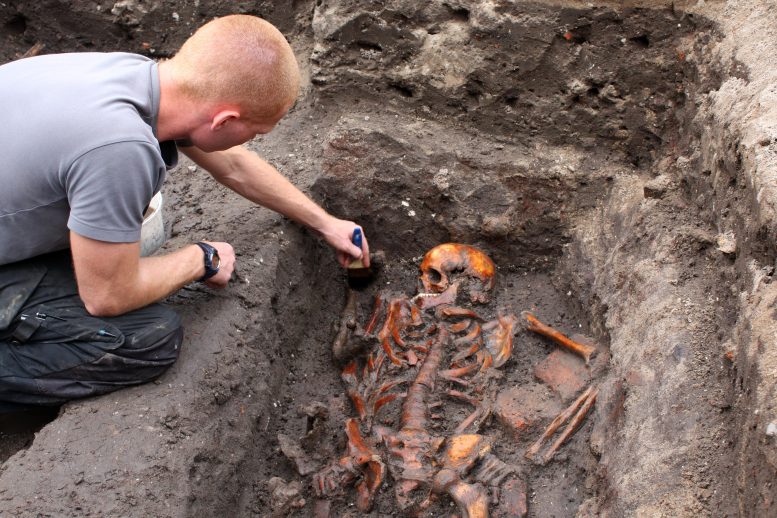
Scientists who study the origins and evolution of the plague have examined hundreds of ancient human teeth from Denmark, seeking to address longstanding questions about its arrival, persistence, and spread within Scandinavia.
In the first longitudinal study of its kind, focusing on a single region for 800 years (between 1000-1800AD), researchers reconstructed Yersinia pestis genomes, the bacterium responsible for the plague, and showed that it was reintroduced into the Danish population from other parts of Europe again and again, perhaps via human movement, with devastating effects.
The historical samples were taken from nearly 300 individuals located at 13 different archaeological sites throughout the country.
“We know that plague outbreaks across Europe continued in waves for approximately 500 years, but very little about its spread throughout Denmark is documented in historical archives,” says Ravneet Sidhu, one of the study’s lead authors and a graduate student at McMaster University’s Ancient DNA Center, where the analysis was conducted.
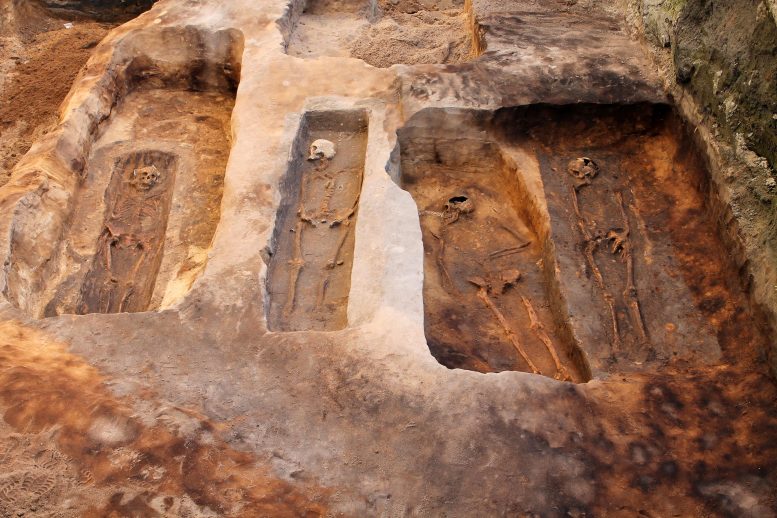
The McMaster researchers, working with a team of historians and bioarchaeologists in Denmark and Manitoba, performed an in-depth examination of the relatedness and differences between the different strains of plague that were present in Denmark during this time.
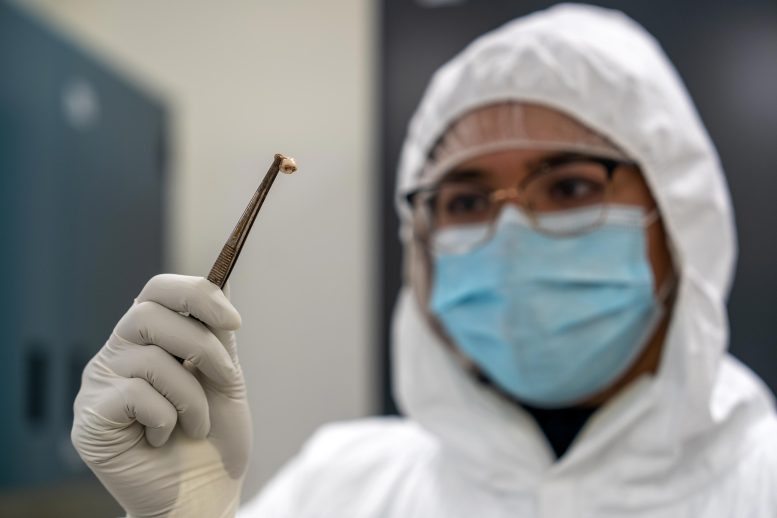
They reconstructed and sequenced the genomes of Y. pestis, using fragments teased from ancient teeth, which can preserve traces of blood-borne infection for centuries. They compared the plague genomes to one another and to their modern-day relatives.
Tracking the Spread and Persistence of Y. pestis
Researchers found positive plague samples in 13 individuals who had lived and died over a period of three centuries.
Nine of those samples provided enough genetic information to draw evolutionary conclusions about the plague’s persistence in Denmark. The results create a picture of urban and rural populations hammered by relentless waves of plague.
“The high frequency of Y. pestis reintroduction to Danish communities is consistent with the assumption that most deaths in the period were due to newly introduced pathogens. This association between pathogen introduction and mortality illuminates essential aspects of the demographic evolution, not only in Denmark but across the whole European continent,” says Jesper L. Boldsen, the skeletal collection curator and paleodemographer at ADBOU, University of Southern Denmark.
Cross-Continental Connections in Plague Strains
The analysis, reported today in the journal Current Biology, revealed that the Danish Y. pestis sequences were interspersed with medieval and early modern strains from other European countries, including the Baltic region and Russia, rather than coming from a single domestic cluster that re-emerged from natural reservoirs over the centuries.
“The evidence for plague in Denmark, both historical and archaeological, has been far more sparse than in some other regions, such as England and Italy. This study identified plague for the first time from medieval Denmark, therefore enabling us to connect the experience in Denmark to disease patterns elsewhere,” said Julia Gamble a co-author on the study and assistant professor of anthropology at the University of Manitoba.
In striking detail, researchers describe the earliest known appearance of Y. pestis in Denmark in the town of Ribe dating back to 1333 during the Black Death, its appearance in rural areas such Tirup—where there is no surviving historical evidence—and its disappearance by 1649.
Most places it hit in Denmark were port cities, but one of the last outbreaks struck a small rural site in the center of the country with no access to water, suggesting importation via land.
Human-Facilitated Spread of Disease
Plague is a disease of rodents, but clearly the results suggest human-facilitated movement of plague, either via rodents traveling with humans or via other vectors, such as lice, on them.
“The results reveal new connections between past and present experiences of plague, and add to our understanding of the distribution, patterns and virulence of re-emerging diseases,” says Hendrik Poinar, senior author of the paper, director of the McMaster Ancient DNA Centre and an investigator with the Michael G. DeGroote Institute for Infectious Disease Research.
“We can use this study and the methods we employed for the study of future pandemics,” he says.
Reference: “Emergence, continuity, and evolution of Yersinia pestis throughout medieval Denmark” by Katherine Eaton, Ravneet K. Sidhu, Jennifer Klunk, Julia A. Gamble, Jesper L. Boldsen, Ann G. Carmichael, Nükhet Varlık, Sebastian Duchene, Leo Featherstone, Vaughan Grimes, G. Brian Golding, Sharon N. DeWitte, Edward C. Holmes and Hendrik N. Poinar, 24 February 2023, Current Biology.
DOI: 10.1016/j.cub.2023.01.064
Never miss a breakthrough: Join the SciTechDaily newsletter.
Follow us on Google and Google News.