
Close Menu
    Facebook X (Twitter) Instagram
    SciTechDaily
    • Biology
    • Chemistry
    • Earth
    • Health
    • Physics
    • Science
    • Space
    • Technology
    Facebook X (Twitter) Pinterest YouTube RSS
    SciTechDaily
    Home»Space»Deep-Space Thrusters Ignite Hera’s Journey to Didymos
    Space

    Deep-Space Thrusters Ignite Hera’s Journey to Didymos

    By European Space Agency (ESA)November 21, 2024No Comments5 Mins Read
    Facebook Twitter Pinterest Telegram LinkedIn WhatsApp Email Reddit
    Share
    Facebook Twitter LinkedIn Pinterest Telegram Email Reddit
    Hera CubeSats Didymos
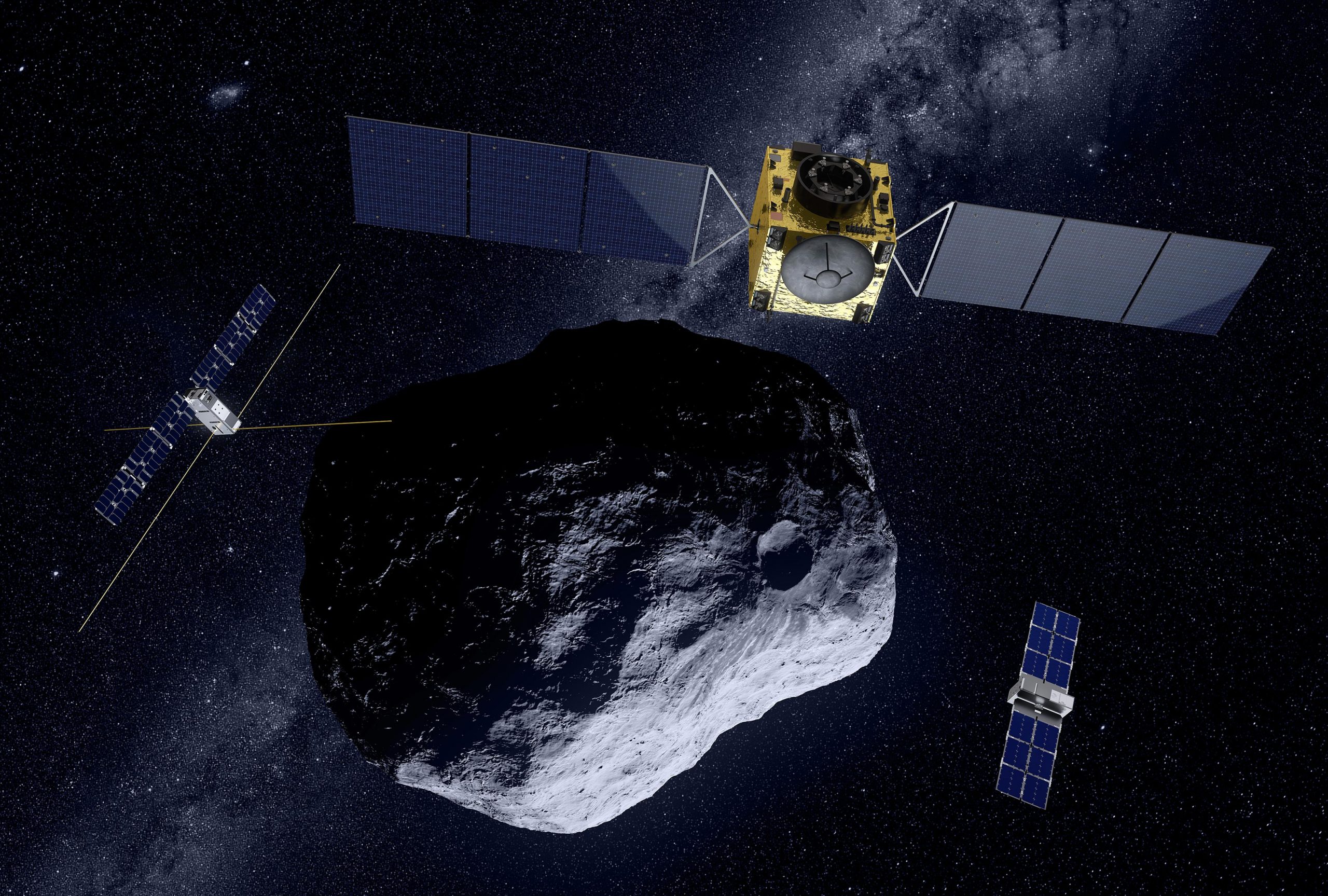
    Hera is ESA’s asteroid exploration mission, designed to study the Didymos binary asteroid system. Scheduled to arrive in 2026, Hera will analyze the aftermath of NASA’s DART mission, which tested asteroid deflection on the smaller moonlet, Dimorphos. (Hera, her CubeSats, and their rocky target destination.) Credit: ESA/Science Office

    ESA’s Hera mission has successfully executed critical maneuvers to align with the Didymos binary asteroid system, leveraging Mars for a gravity assist to shorten travel time.

    As it journeys, Hera will study the effects of NASA’s DART mission on the asteroid Dimorphos, aiming to uncover mysteries surrounding binary asteroid systems and their formations.

    Critical Maneuver Begins ESA’s Hera Mission

    The European Space Agency’s Hera mission has successfully executed its first critical maneuver on its journey to the Didymos binary asteroid system, following its launch on October 7.

    On October 23, Hera activated its three orbital control thrusters for 100 minutes, initiating its first deep-space maneuver and changing its velocity by about 146 m/s. A second, smaller burn on November 6, lasting 13 minutes, provided an additional boost of approximately 20 m/s.

    Hera Fires Its Thrusters
    Hera fires its thrusters. Credit: ESA-Science Office

    These two carefully coordinated burns have set Hera on a precise trajectory for a gravity assist at Mars, planned for March 2025.

    “Deep-space maneuvers are often split into parts,” said Sylvain Lodiot, Hera Spacecraft Operations Manager. “The first, larger burn does most of the work. Then, after precisely measuring the spacecraft’s trajectory, we use the second, smaller burn to correct any inaccuracy and provide the rest of the required boost.”

    This successful maneuver builds on three earlier test burns conducted in the weeks following Hera’s launch by its control team at ESA’s European Space Operations Centre (ESOC) in Germany.
    ESA Malargüe Tracking Station at Sunrise
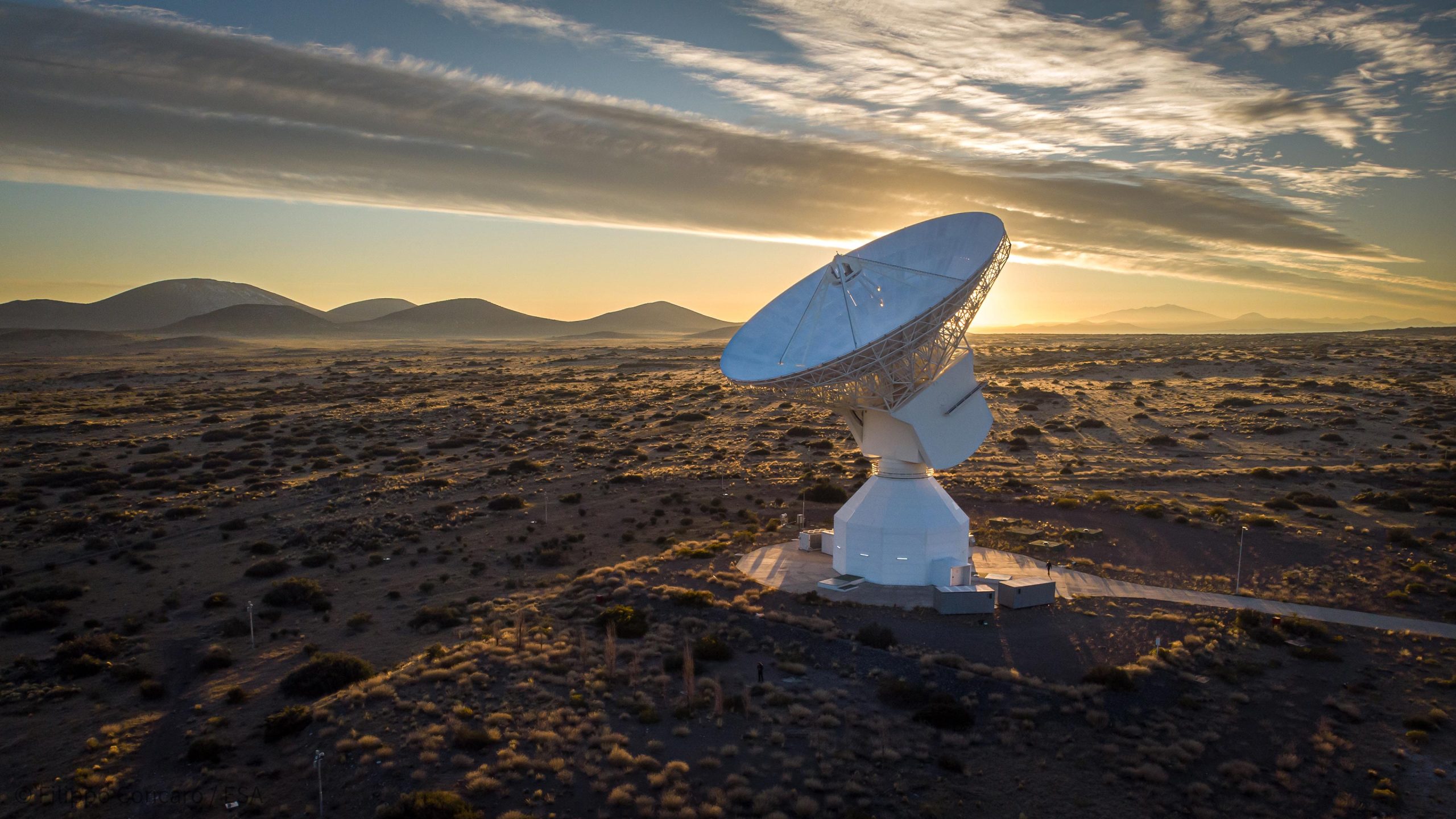
    ESA’s Malargüe deep space ground station. Credit: ESA / Filippo Concaro

    The team used the Agency’s deep space radio dishes in Spain, Argentina, and Australia to track Hera during the maneuver and to precisely measure its velocity before and after each burn.

    “We are now analyzing Hera’s new trajectory following the second burn,” says Francesco Castellini from ESOC’s Flight Dynamics team, the mathematical experts that keep ESA missions across the Solar System on track.

    “It appears to have gone very well. We will execute a much smaller correction maneuver of a few tens of cm/s on November 21 to fine-tune the trajectory for the upcoming Mars flyby.”
    Hera Propulsion Module
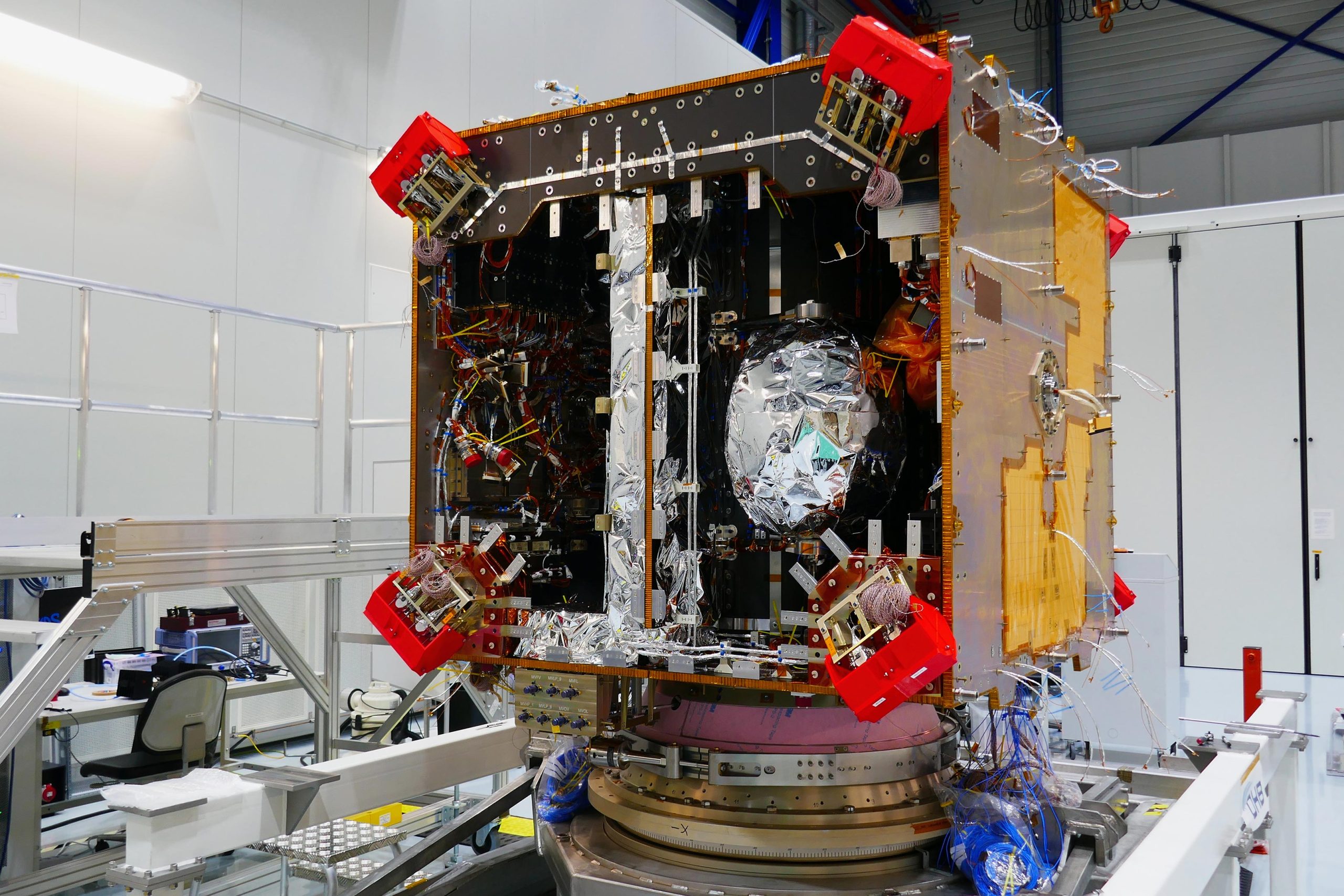
    Hera’s Propulsion Module incorporates its propellant tanks – housed within a central titanium cylinder, the ‘backbone’ of the spacecraft – along with piping and thrusters, which will have the job of hauling the mission across deep space for more than two years, then to maneuver around Dimorphos and Didymos. This module was mated with Hera’s Core Module at OHB Bremen to complete the spacecraft structure. Credit: OHB

    A Helping Hand From Mars

    Hera is on a two-year journey to the Didymos binary asteroid system, where it will analyze the results of humankind’s first asteroid deflection experiment.

    The recent deep-space maneuver was carefully calculated to line Hera up for a gravity assist in March 2025 that will shorten the travel time to Didymos.

    “We are very fortunate that Mars is in the right place at the right time to lend a hand to Hera,” says Pablo Muñoz from ESOC’s Mission Analysis team, who planned Hera’s journey.

    “This enabled us to design a trajectory that uses the gravity of Mars to accelerate Hera towards Didymos, offering substantial fuel savings to the mission and allowing Hera to arrive at the asteroids months earlier than would otherwise be possible.”
    Hera Mars Swingby
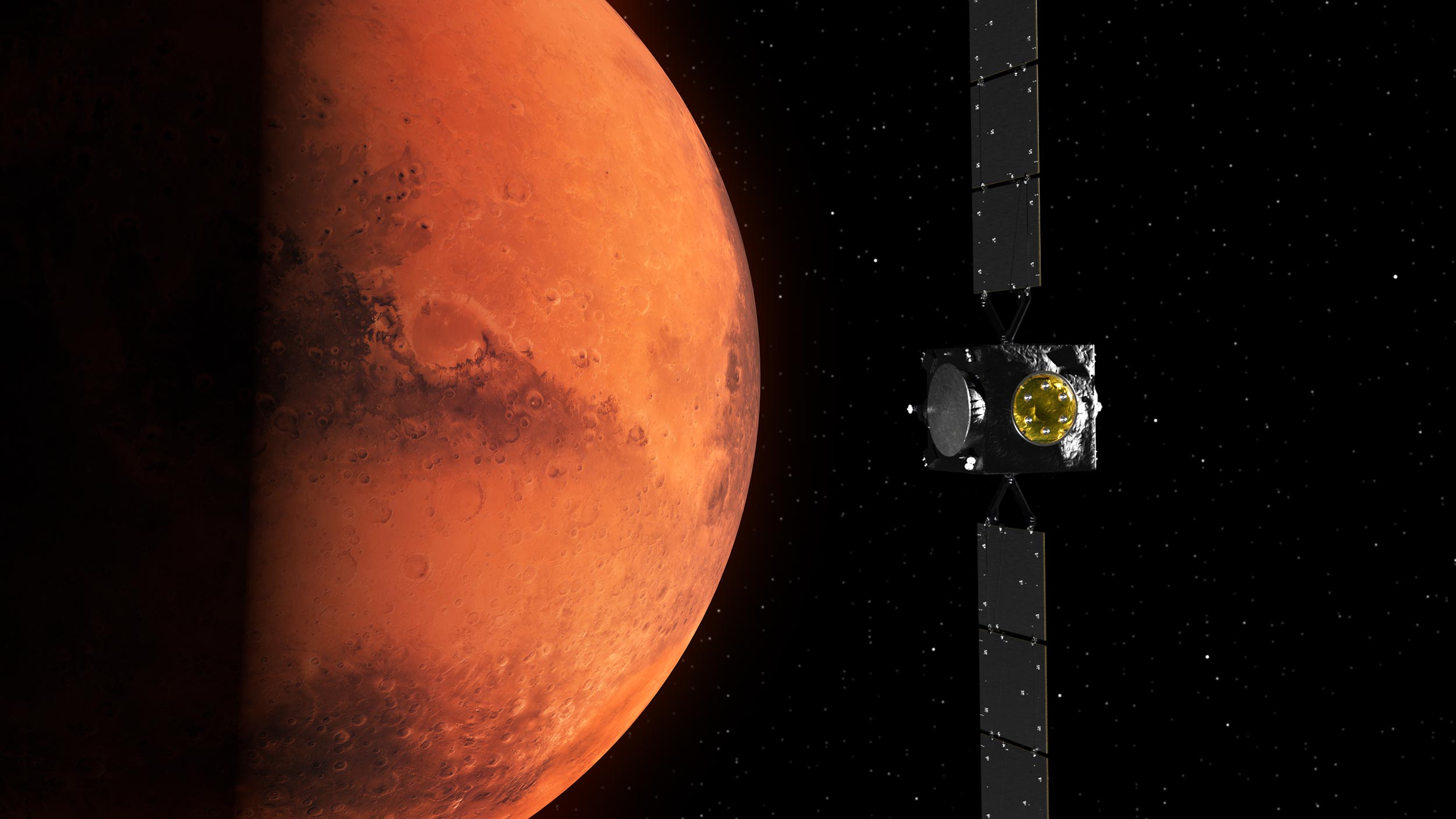
    Hera will perform a swingby of Mars in March 2025 as a way of gathering extra momentum on its way to the Didymos binary asteroid system. The spacecraft will fly within the orbits of both Martian moons Deimos and Phobos, and perform science observations of the former body and the planet’s surface, in synergy with the UAE’s Hope orbiter and gathering preparatory data for JAXA-DLR’s MMX Martian Moons eXploration mission due to be launched in 2026. Credit: ESA-Science Office

    Scientific Opportunities and Future Maneuvers

    Hera will also use the Mars flyby for some opportunistic science. The ESA teams have designed a trajectory that will see the spacecraft fly past Deimos at a distance of just 300 km before passing Mars itself, offering a rare chance to study this small and mysterious Martian moon.

    Hera will then carry out a second deep space maneuver in February 2026 before a sequence of rendezvous maneuvers from October to December 2026 brings it into proximity of the asteroids.

    At Didymos, Hera will begin its mission to answer questions such as: How and why do binary asteroid systems form? When NASA’s DART mission impacted Didymos’s moonlet Dimorphos in 2022, did it leave a crater, or did it reshape the entire asteroid? What is Dimorphos’s internal structure?

    ESA’s Growing Focus on Asteroid Missions

    It’s a busy time for ESA’s asteroid teams. October saw the launch of the Agency’s first asteroid mission, Hera, and the start of work on its second asteroid mission, the proposed Ramses mission to asteroid Apophis.

    Meanwhile, ESA’s Near-Earth Object Coordination Centre has continued discovering, tracking, and analyzing new asteroids from the ground and recently helped to identify the tenth asteroid ever discovered prior to Earth impact.

    About Hera

    The European Space Agency’s Hera mission is part of an international collaboration to study asteroid dynamics and planetary defense. Targeting the Didymos binary asteroid system, Hera will closely examine Dimorphos, the site of NASA’s 2022 DART impact, to evaluate crater formation, asteroid composition, and internal structure. By combining high-resolution data and cutting-edge science, Hera aims to enhance our understanding of binary asteroids and develop effective asteroid deflection techniques.

    Never miss a breakthrough: Join the SciTechDaily newsletter.
    Follow us on Google and Google News.

    ESA's Hera European Space Agency
    Share. Facebook Twitter Pinterest LinkedIn Email Reddit

    Related Articles

    Spooky Spectral Views of Earth Captured by Hera’s HyperScout From Deep Space

    Planetary Defense Mission: Hera Launches for Asteroid Crash Scene Investigation

    Watch the Skies: Debris From NASA’s DART Asteroid Collision Could Spark a Meteor Display on Earth

    ESA’s Planetary Defense Mission: Hera Asteroid Spacecraft Is Complete

    ESA’s Hera Mission: Mini-Radar Will Probe Asteroid’s Heart

    ESA’s Planetary Defense Mission: Time of Trial for Hera Spacecraft

    Catching DART Asteroid Deflection Mission’s First Words

    Hera Team Congratulates Japan Aerospace Exploration Agency on Hayabusa2’s Asteroid Sample Return

    ESA’s Ambitious Hera Planetary Defense Mission Awards $153 Million Contract

    Leave A Reply Cancel Reply

    • Facebook
    • Twitter
    • Pinterest
    • YouTube

    Don't Miss a Discovery

    Subscribe for the Latest in Science & Tech!

    Trending News

    Breakthrough Bowel Cancer Trial Leaves Patients Cancer-Free for Nearly 3 Years

    Natural Compound Shows Powerful Potential Against Rheumatoid Arthritis

    100,000-Year-Old Neanderthal Fossils in Poland Reveal Unexpected Genetic Connections

    Simple “Gut Reset” May Prevent Weight Gain After Ozempic or Wegovy

    2.8 Days to Disaster: Scientists Warn Low Earth Orbit Could Suddenly Collapse

    Common Food Compound Shows Surprising Power Against Superbugs

    5 Simple Ways To Remember More and Forget Less

    The Atomic Gap That Could Cost the Semiconductor Industry Billions

    Follow SciTechDaily
    • Facebook
    • Twitter
    • YouTube
    • Pinterest
    • Newsletter
    • RSS
    SciTech News
    • Biology News
    • Chemistry News
    • Earth News
    • Health News
    • Physics News
    • Science News
    • Space News
    • Technology News
    Recent Posts
    • ADHD Isn’t Just a Deficit: Study Reveals Powerful Hidden Strengths
    • Scientists Uncover “Astonishing” Hidden Property of Light
    • Scientists Discover Stem Cells That Could Regrow Teeth and Bone
    • Scientists Discover Natural Molecule That Stops Alzheimer’s Protein Clumps From Forming
    • Early Cannabis Use May Stall Key Brain Skills in Teens
    Copyright © 1998 - 2026 SciTechDaily. All Rights Reserved.
    • Science News
    • About
    • Contact
    • Editorial Board
    • Privacy Policy
    • Terms of Use

    Type above and press Enter to search. Press Esc to cancel.