
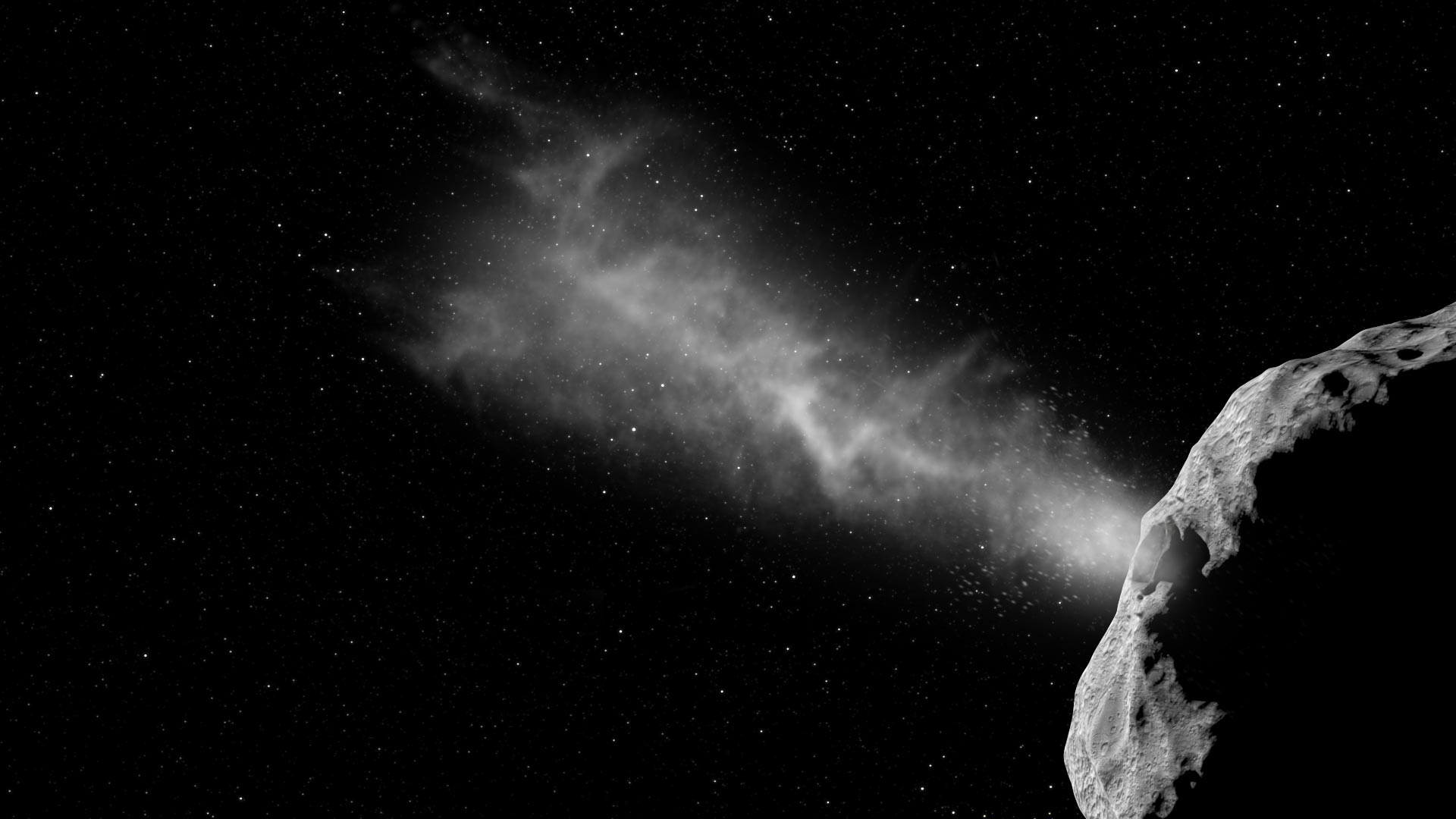
NASA’s DART mission in 2022 dramatically altered an asteroid’s orbit, potentially sending debris toward Earth and Mars, creating observable meteors.
ESA’s upcoming Hera mission aims to closely examine these impacts, enhancing our planetary defense techniques and possibly leading to the observation of the first human-made meteor shower.

Historic Impact and Debris Trajectory
In 2022 NASA’s DART spacecraft made history, and changed the Solar System forever, by impacting the Dimorphos asteroid and measurably shifting its orbit around the larger Didymos asteroid. In the process, a plume of debris was thrown out into space.
The latest modeling, accepted for publication in the September volume of The Planetary Science Journal, shows how small meteoroids from that debris could eventually reach both Mars and Earth – potentially in an observable (although quite safe) manner.
On September 26, 2022, NASA’s approximately half-tonne Double Asteroid Redirect Test (DART) spacecraft impacted the 151 m diameter Dimorphos asteroid at an approximate speed of 6.1 km/s, shortening its orbit around Didymos by more than half an hour during the first part of an international planetary defense collaboration.
ESA’s Mission and Ejecta Analysis
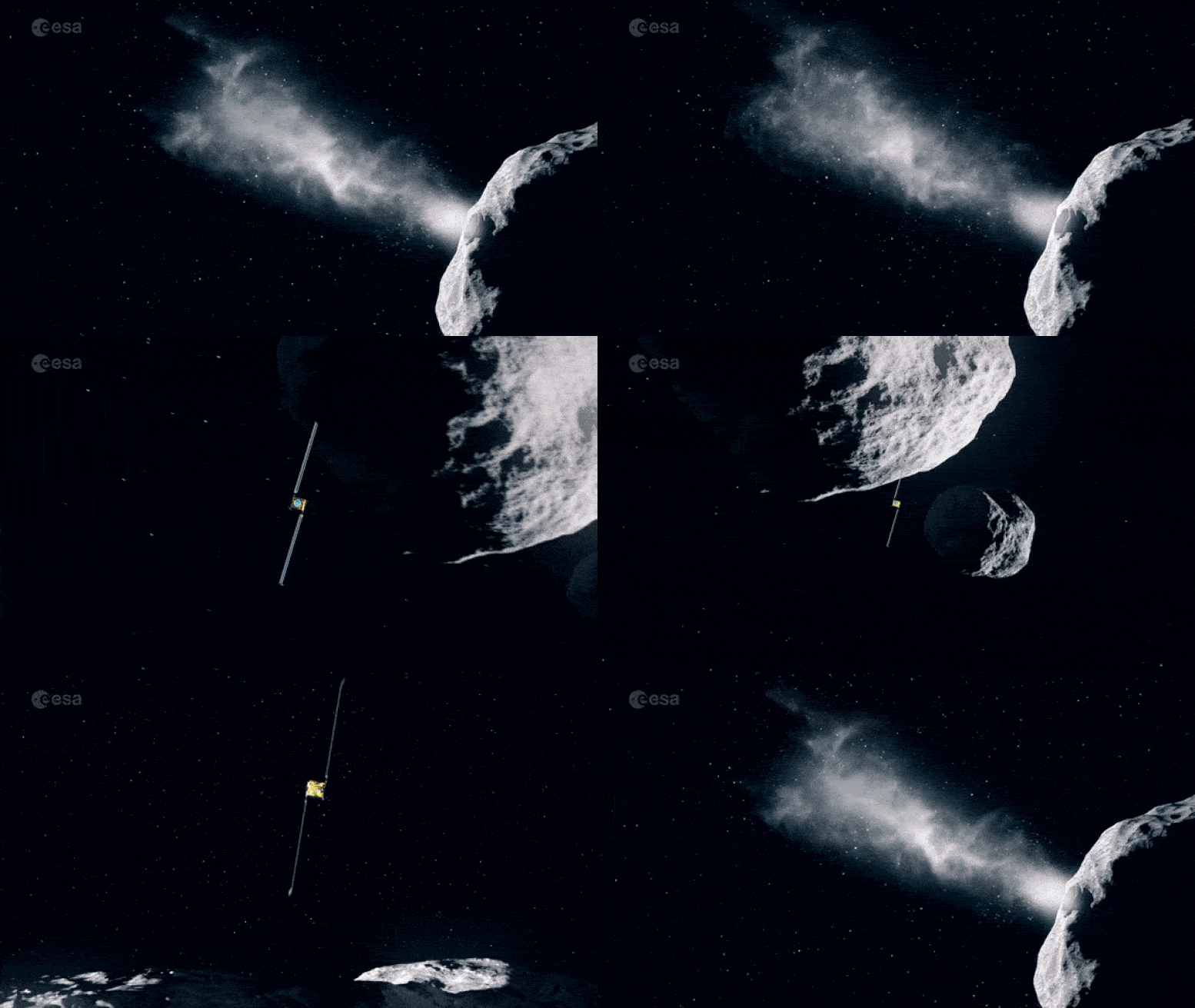
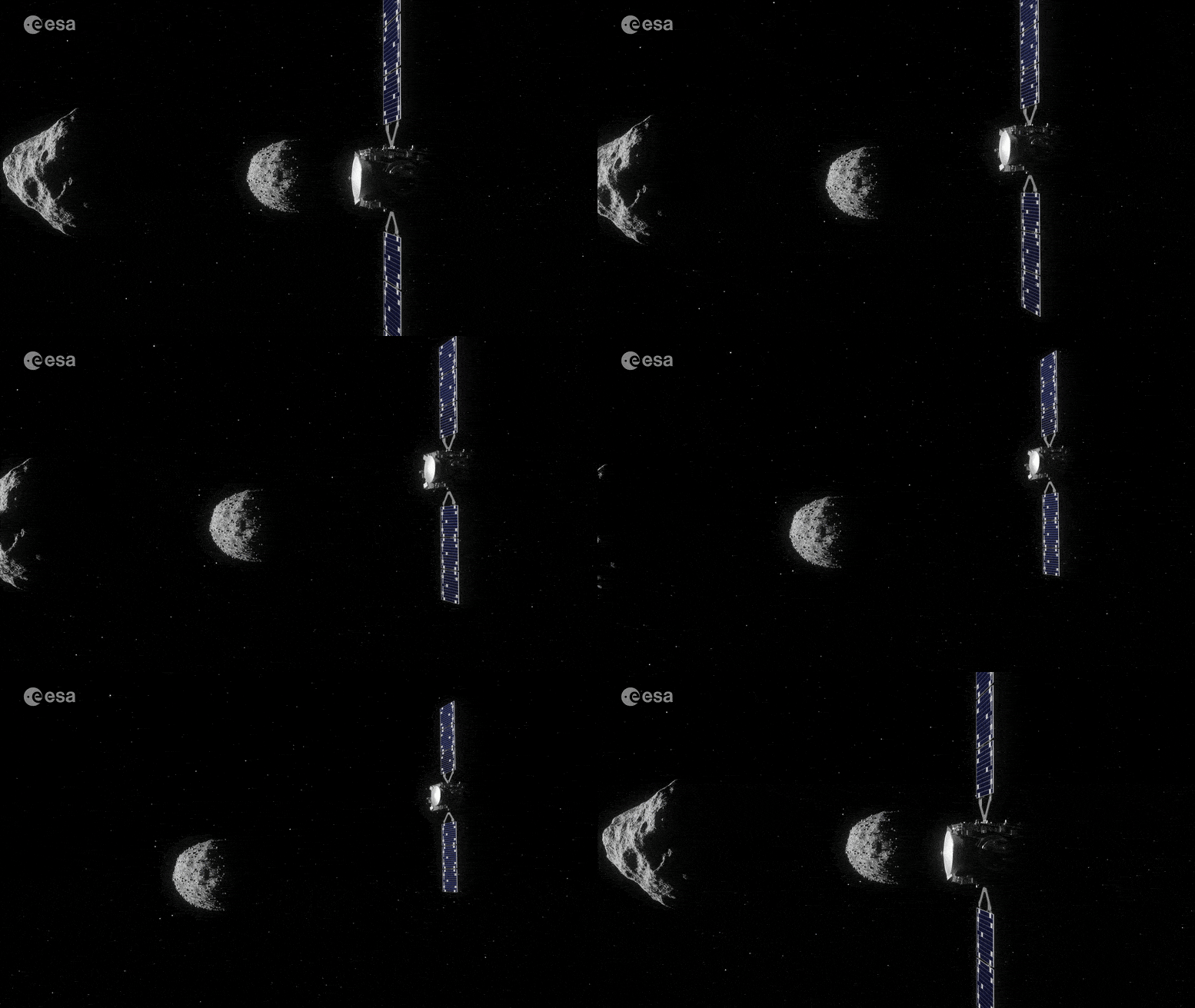
ESA’s Hera spacecraft will be launched this October to reach Dimorphos and perform a close-up ‘crash scene investigation’, gathering data on the asteroid’s mass, structure, and make-up to turn this kinetic impact method of planetary defense into a well-understood and repeatable technique.
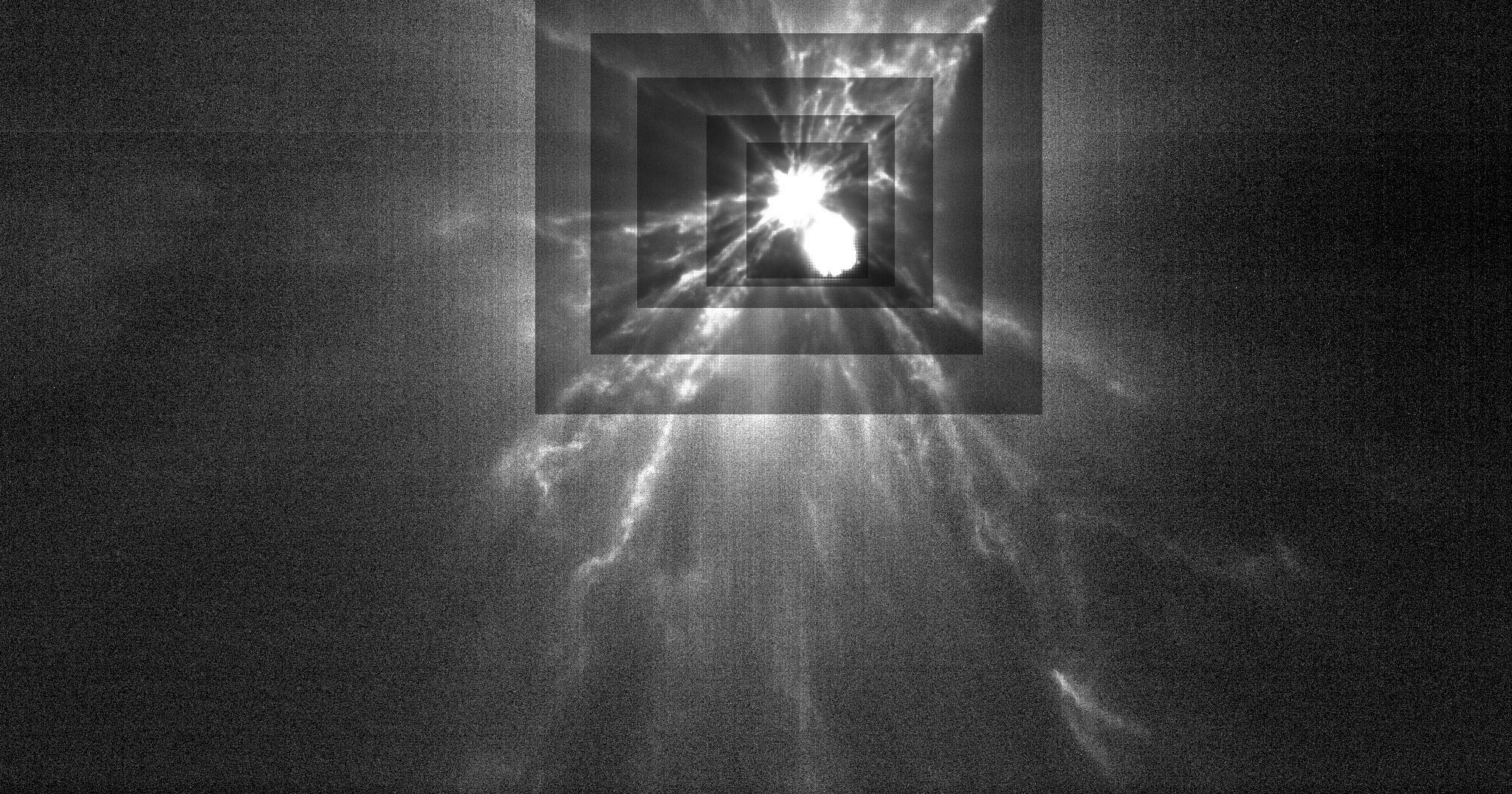
“The DART impact offers a rare opportunity to investigate the delivery of ejecta to other celestial bodies, thanks to the fact that we know the impact location and that this impact was observed by the Italian LICIACube deployed from DART as well as by Earth-based observers,” explains co-author and ESA Hera mission scientist Michael Kueppers.
“We simulated the ejecta to match LICIACube observations using three million particles grouped into three size populations – 10 cm, 0.5 cm, and 30 μm, or thousandths of a millimeter – moving at speeds of 1 to 1000 m/s or a faster rate of up to 2 km/s.”
Ejecta Trajectories and Earth Impact Predictions
Study lead author Eloy Peña-Asensio, of the Department of Aerospace Science and Technology, Politecnico di Milano, explains: “We identified ejecta orbits compatible with the delivery of meteor-producing particles to both Mars and Earth. Our results indicate the possibility of ejecta reaching the gravitational field of Mars in 13 years for launch velocities around 450 m/s, while faster ejecta launched at 770 m/s could reach its vicinity in just seven years. Particles moving above 1.5 km/s could reach the Earth-Moon system in a similar timescale.”
Eloy adds: “In the coming decades, meteor observation campaigns will be crucial in determining whether fragments of Dimorphos, resulting from the DART impact, will reach our planet.”
“If this happens, we will witness the first human-made meteor shower.”
Meteor Shower Possibilities and Impact Analysis
Josep M. Trigo-Rodríguez from the Spanish Institute of Space Sciences (CSIC/IEEC) supported the study of the dynamic evolution of the debris generated by DART’s impact within the framework of his contribution to the DART mission, adding: “We were amazed to discover that it is possible for some centimeter-sized particles to reach the Earth-Moon system and produce a new meteor shower.”
Whether the meteoroids head towards Earth or Mars would depend on their position in DART’s cone-shaped impact plume – material on its north side is more likely to head Mars-ward while southwestern material is more likely to reach Earth.
The very largest of these meteoroids would only be the size of a softball. They would be certain to burn up in Earth’s atmosphere, although they might make it through the thinner Martian atmosphere.
Long-Term Observations and Impact Consequences
In any case, it appears that only smaller particles are likely to reach Earth, as these are the ones that would have been launched at the highest velocities. We cannot yet determine if these particles will be large enough to produce observable meteors, so continued monitoring of the night sky will be essential.
Michael adds: “Our accurate knowledge of the impact site and impactor properties in terms of size, mass, and velocity plus the observations of the ejecta are what allowed us to estimate the long-term fate of the material leaving the Didymos system.”
“Combined with Hera’s upcoming investigation of the target asteroid, we will end up in the unique situation of having full information about the impactor, the target asteroid, and the material ejected from it.”
Astronomical Significance of DART’s Meteoroids
There are more than 1000 known meteoroid streams crisscrossing Earth’s orbit, linked to famous annual meteor showers such as the recent Perseids and the autumn Taurids.
Astronomers have become skilled at tracing back the origin of meteors to particular meteoroid streams or parent comet or asteroid bodies. This study involves the same kind of calculation but in reverse, to foretell the likely characteristics and timings of meteors linked to DART’s impact.
Michael explains: “The exciting thing is the prospect of identifying and observing meteors linked to the DART impact, either on Earth or perhaps one day even on Mars, with their brightness and color revealing details of their makeup.”
“Our study includes the distinct orbital characteristics that would distinguish these meteors from comparable ones. The potential meteors created by DART would be slow-moving, primarily visible from the southern hemisphere, and most likely to occur in May.”

Preparation for Hera’s Mission
Hera was recently transported from Europe to Cape Canaveral in the USA for launch by SpaceX Falcon 9 in October. It is due to reach the Dimorphos asteroid and begin its investigation in late 2026.
Reference: “Delivery of DART Impact Ejecta to Mars and Earth: Opportunity for Meteor Observations” by Eloy Peña-Asensio, Michael Küppers, Josep M. Trigo-Rodríguez and Albert Rimola, September 2024, The Planetary Science Journal.
DOI: 10.3847/PSJ/ad6b0f
Never miss a breakthrough: Join the SciTechDaily newsletter.
Follow us on Google and Google News.