
Close Menu
    Facebook X (Twitter) Instagram
    SciTechDaily
    • Biology
    • Chemistry
    • Earth
    • Health
    • Physics
    • Science
    • Space
    • Technology
    Facebook X (Twitter) Pinterest YouTube RSS
    SciTechDaily
    Home»Space»Incredible Telescope View Captures DART Asteroid Impact
    Space

    Incredible Telescope View Captures DART Asteroid Impact

    By European Space Agency (ESA)October 3, 2022No Comments3 Mins Read
    Facebook Twitter Pinterest Telegram LinkedIn WhatsApp Email Reddit
    Share
    Facebook Twitter LinkedIn Pinterest Telegram Email Reddit
    DART Asteroid Impact From Ground
    Observations of the DART asteroid impact by the Les Makes Observatory in Le Reunion show in a few seconds what took place in under half an hour. Credit: Les Makes observatory, J. Berthier, F. Vachier / T. Santana-Ros / ESA NEOCC, D. Föhring, E. Petrescu, M. Micheli

    On Monday, September 26, 2022, at 7:14 p.m. EDT (23:14 UTC), NASA’s DART spacecraft successfully smashed into asteroid Dimorphos, the 160-meter (525-foot) moonlet orbiting around the larger Didymos asteroid. About 38 seconds later, the time it took for the light to arrive at Earth, people all over the world saw the abrupt end of the live stream from the spacecraft, signaling that the impact had happened successfully – DART was obliterated.

    On a small slice of our planet’s surface, extending from southern and eastern Africa to the Indian Ocean and the Arabian Peninsula, astronomers could actually watch it live with their telescopes. Among those were a half dozen stations joined together for a dedicated observing campaign organized by ESA’s Planetary Defence Office and coordinated by the team of observers of the Agency’s Near-Earth Object Coordination Center (NEOCC). As usual, when such a time-dependent astronomical event happens, not all stations were successful in their observations: clouds, technical problems, and other issues always affect real-life observations. 
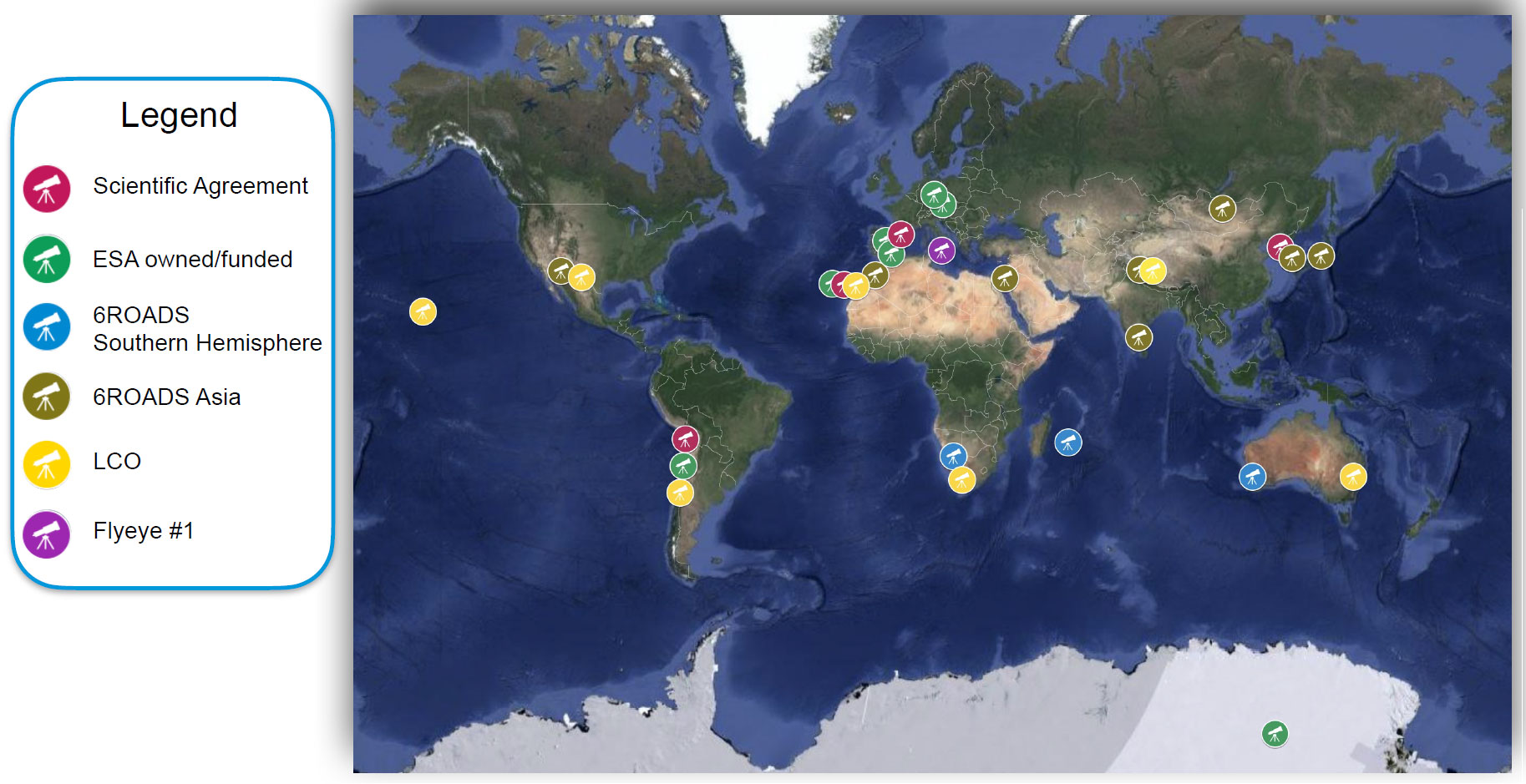
    ESA NEOCC Global Network of Telescopes
    ESA NEOCC has near-real-time access to a global network of telescopes. Credit: ESA

    However, a few of ESA’s collaborating stations could immediately report a successful direct confirmation of DART’s impact. One of them was the team of the Les Makes observatory, on the French island of La Reunion in the Indian Ocean. The sequence of images they provided in real-time was impressive: the asteroid immediately started brightening upon impact, and within a few seconds it was already noticeably brighter. Within less than a minute a cloud of ejected material became visible and could be followed while it drifted eastwards and slowly dissipated.

    The following video is from observations by the Les Makes Observatory in Le Reunion and shows in a few seconds what took place in under half an hour.

    “Something like this has never been done before, and we weren’t entirely sure what to expect. It was an emotional moment for us as the footage came in,” explains Marco Micheli, Astronomer at ESA’s NEOCC.

    Dora Föhring, another NEOCC Astronomer adds:

    “This was the conclusion of weeks of discussions, meetings, accurate planning, and observational design by our team, together with local observers and scientists at all our collaborating stations. This fantastic campaign has produced data that our astronomers, together with the whole DART collaboration, will now begin to analyze to extract valuable scientific information on the effects of the impact.”
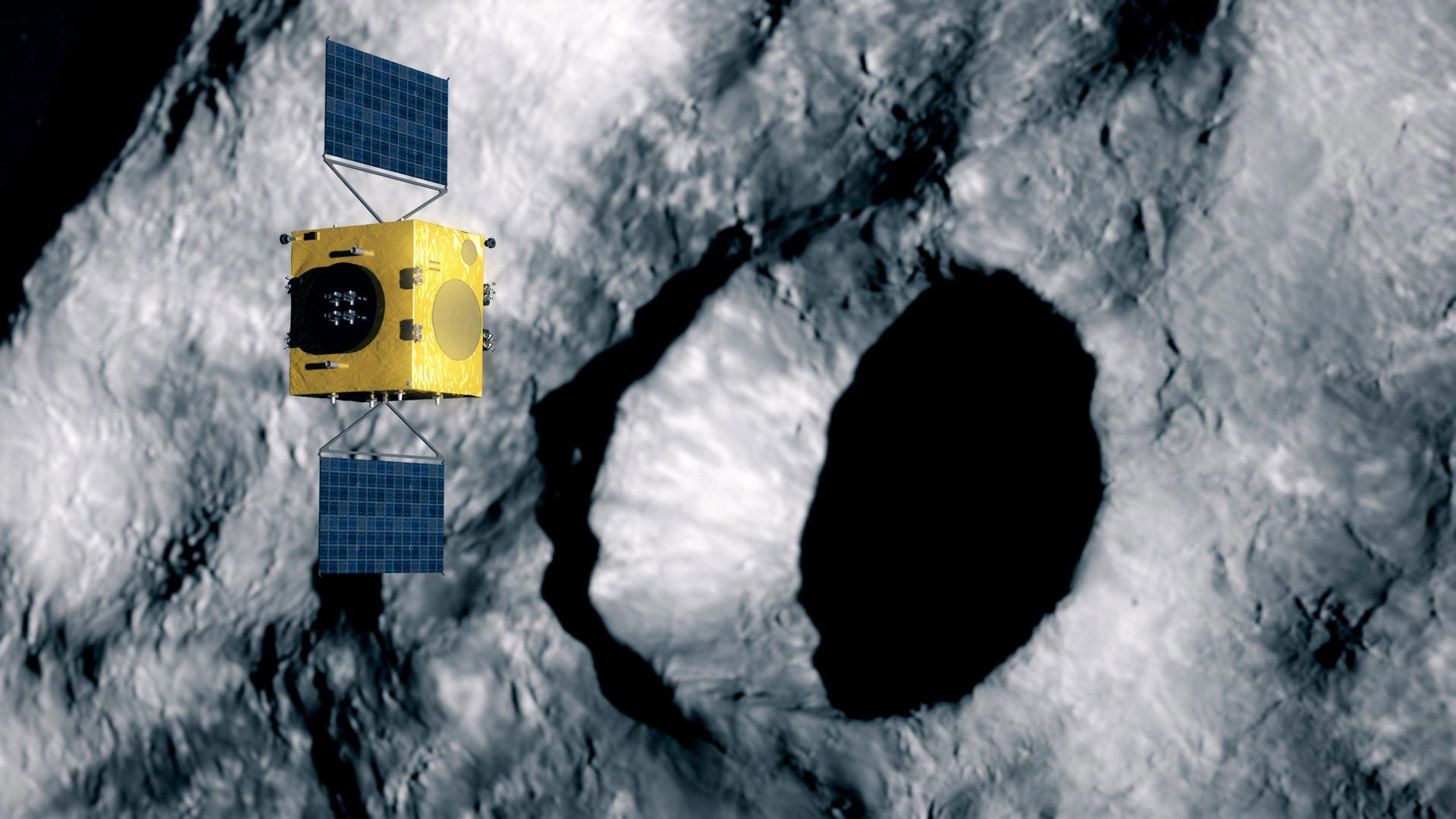
    Hera Scans DART Impact Crater
    Hera scans DART’s impact crater. Credit: ESA – Science Office

    As DART’s mission ends, the work begins for astronomers and researchers around the globe. In addition, a new chapter opens for ESA’s Hera mission which now takes a leading role in studying up close the first-ever test of asteroid deflection.

    “The results from DART will prepare us for Hera’s visit to the Didymos binary system to examine the aftermath of this impact a few years from now,” says Ian Carnelli, Hera Mission Manager.

    “Hera will help us understand what happened to Dimorphos, the first celestial body to be measurably moved by humankind, and ultimately to protect ourselves from space rocks that could one day do the same.”

    See More:

    • DART’s final images before DART’s impact
    • LICIACube Satellite’s First Images From After DART’s Collision
    • Webb and Hubble Capture Detailed Views of DART Asteroid Impact

    Never miss a breakthrough: Join the SciTechDaily newsletter.
    Follow us on Google and Google News.

    Asteroid Astronomy European Space Agency NASA DART Popular
    Share. Facebook Twitter Pinterest LinkedIn Email Reddit

    Related Articles

    Planetary Defense Mission: Hera Launches for Asteroid Crash Scene Investigation

    Watch the Skies: Debris From NASA’s DART Asteroid Collision Could Spark a Meteor Display on Earth

    NEOMIR: Planetary Defense Mission for Finding Dangerous Asteroids Hidden by Sun

    DART Asteroid Impact Aftermath: Hubble Spots Unexpected Twin Tails in “Stunning Surprise”

    Immense Trail of Debris From DART Collision With Asteroid Dimorphos Captured by SOAR Telescope

    Webb and Hubble Space Telescopes Capture Detailed Views of DART Asteroid Impact

    Starquakes! Gaia Spacecraft Sees Strange Stars in Most Detailed Milky Way Survey to Date

    Feared Apophis Impact Ruled Out – Asteroid Will Pass Close Enough to Earth to See With Naked Eye

    Surprise Asteroid Zips Very Close to Earth, Grazing Path of Satellites in Geostationary Orbit

    Leave A Reply Cancel Reply

    • Facebook
    • Twitter
    • Pinterest
    • YouTube

    Don't Miss a Discovery

    Subscribe for the Latest in Science & Tech!

    Trending News

    Scientists May Have Found the Key to Jupiter and Saturn’s Moon Mystery

    Scientists Uncover Brain Changes That Link Pain to Depression

    Saunas May Do More Than Raise Body Temperature – They Activate Your Immune System

    Exercise in a Pill? Metformin Shows Surprising Effects in Cancer Patients

    Hidden Oceans of Magma Could Be Protecting Alien Life

    New Study Challenges Alzheimer’s Theories: It’s Not Just About Plaques

    Artificial Sweeteners May Harm Future Generations, Study Suggests

    Splashdown! NASA Artemis II Returns From Record-Breaking Moon Mission

    Follow SciTechDaily
    • Facebook
    • Twitter
    • YouTube
    • Pinterest
    • Newsletter
    • RSS
    SciTech News
    • Biology News
    • Chemistry News
    • Earth News
    • Health News
    • Physics News
    • Science News
    • Space News
    • Technology News
    Recent Posts
    • Ancient DNA Reveals Irish Goats Have a 3,000-Year-Old Lineage Still Alive Today
    • Historians Reveal Secrets of the Strange Hat Wars That Shook Early Modern England
    • “A Plague Is Upon Us”: The Mass Death That Changed an Ancient City Forever
    • This Strange Material Can Turn Superconductivity on and off Like a Switch
    • Scientists Discover Game-Changing New Way To Treat High Cholesterol
    Copyright © 1998 - 2026 SciTechDaily. All Rights Reserved.
    • Science News
    • About
    • Contact
    • Editorial Board
    • Privacy Policy
    • Terms of Use

    Type above and press Enter to search. Press Esc to cancel.