
Close Menu
    Facebook X (Twitter) Instagram
    SciTechDaily
    • Biology
    • Chemistry
    • Earth
    • Health
    • Physics
    • Science
    • Space
    • Technology
    Facebook X (Twitter) Pinterest YouTube RSS
    SciTechDaily
    Home»Space»Defending Earth From Cosmic Threats: Planetary Defense Experts Unite!
    Space

    Defending Earth From Cosmic Threats: Planetary Defense Experts Unite!

    By NASAApril 13, 20232 Comments5 Mins Read
    Facebook Twitter Pinterest Telegram LinkedIn WhatsApp Email Reddit
    Share
    Facebook Twitter LinkedIn Pinterest Telegram Email Reddit
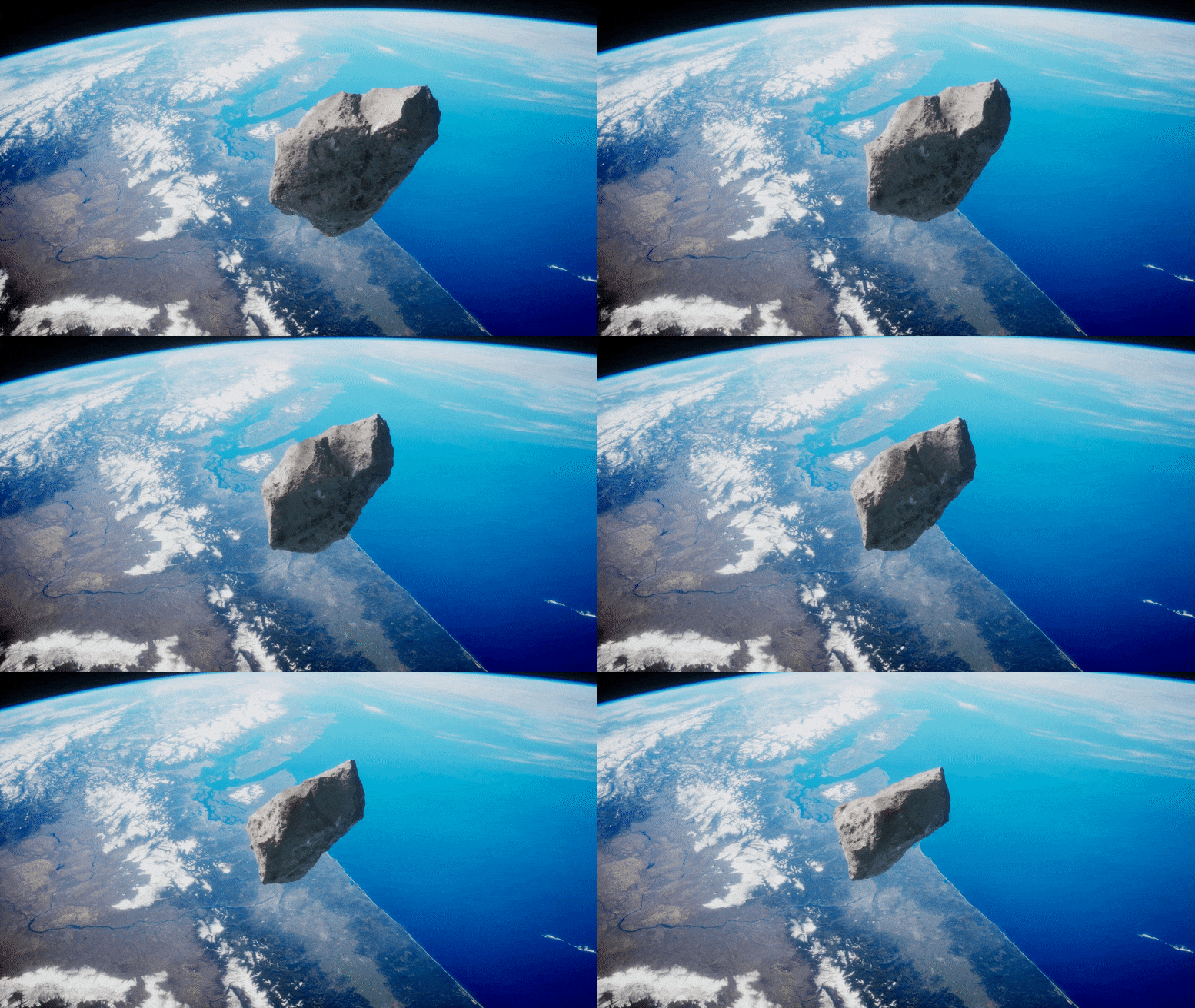
    Near Earth Asteroid Animation
    The 8th IAA Planetary Defense Conference was held in Vienna with the aim of discussing ongoing efforts focused on addressing the asteroid impact hazard. Scientists, engineers, policymakers, and other Planetary Defense experts shared their respective knowledge and expertise to encourage coordination among global asteroid impact mitigation. The conference allowed attendees to hear from national policymakers on how to coordinate response to emergency events and what information would be needed from the Planetary Defense community about an impending asteroid impact. Ultimately, preventing an asteroid impact with Earth and avoiding a catastrophic natural disaster poses a complex problem that requires a multidisciplinary approach and international coordination.

    The 8th IAA Planetary Defense Conference was held in Vienna to discuss efforts focused on addressing the asteroid impact hazard. Participants shared their knowledge and expertise to encourage coordination among global asteroid impact mitigation, and the conference also saw the release of the updated National Preparedness Strategy and Action Plan for Near-Earth Objects and Planetary Defense.

    In a world where many global challenges exist, finding ways to respond to an as yet undiscovered asteroid that might one day impact Earth could seem like a lesser priority. While it is true there are currently no known asteroids of significant size on a collision trajectory with Earth, an asteroid impact with our planet has potential for catastrophic damage and could change the course of civilization as we know it. Equipped with this understanding, Planetary Defense experts around the globe convened last week in Vienna, Austria, for the 8th IAA Planetary Defense Conference (PDC) to discuss ongoing efforts focused on addressing the asteroid impact hazard.
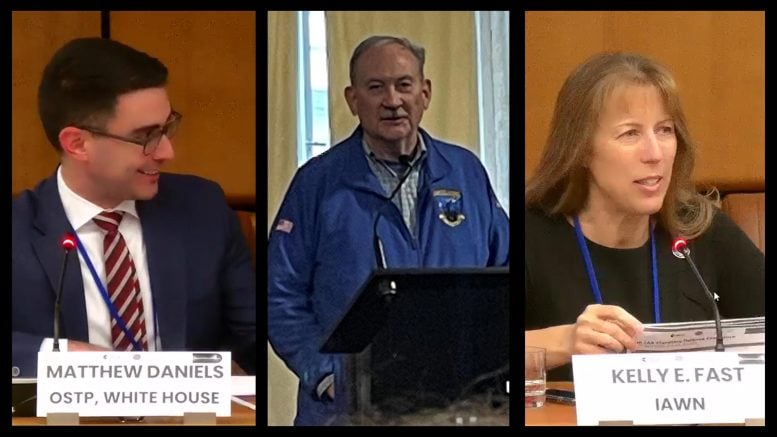
    Global Experts Convene During Planetary Defense Conference
    Left: Matt Daniels, Assistant Director of the White House Office of Science and Technology Policy (OSTP) for Space Security & Special Projects, briefs PDC participants on the newly released 2023 NEO Strategy and Action Plan for Planetary Defense; Center: NASA Planetary Defense Officer, Lindley Johnson, provides an update on the status of projects in NASA’s Planetary Defense program; Right: Kelly Fast, NASA’s NEO Object Observations Program Manager and Coordinating Officer for the International Asteroid Warning Network speaks to the importance of international collaboration. Credit: NASA

    During the conference, which occurred from April 3 – 7 and was hosted by the United Nations Office of Outer Space Affairs (UN-OOSA), scientists, engineers, global thought leaders, policymakers, government officials, and other Planetary Defense experts discussed what their respective stakeholders were doing to better understand how humanity might respond if an asteroid or comet, any near-Earth object (NEO), headed our way were ever discovered. Additionally, the PDC provided the Planetary Defense community the unique opportunity to engage directly with national policymakers to discuss the latest advancements in humanity’s capability to find, track, and deflect potentially hazardous NEOs.

    By bringing the world’s Planetary Defenders together, the PDC also allowed attendees to share their respective knowledge and expertise with one another to help encourage coordination among global asteroid impact mitigation. This knowledge sharing occurred through a series of panels and sessions, each with their own respective objectives and focus.
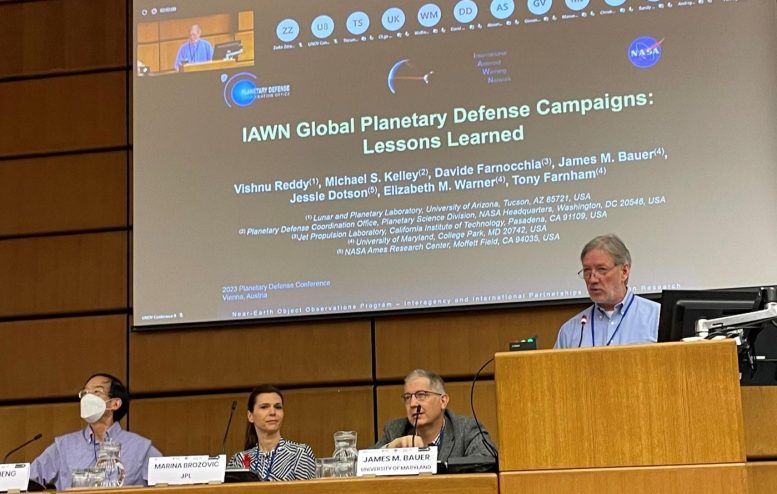
    IAWN Planetary Defense Presentation
    NASA Program Scientist Michael Kelley briefs PDC members on lessons learned from an international campaign to observe near-Earth asteroid Apophis during its 2021 close approach with Earth. Credit: NASA

    One such panel, which focused on disaster preparedness, allowed PDC attendees to hear directly from the Deputy Administrator of the Federal Emergency Management Agency (FEMA) on how they work with local and national government to coordinate response to emergency events and what information would be needed from the Planetary Defense community about an impending asteroid impact. Through these conversations, nations can learn best practices from one another and work toward creating a global strategy to respond to an actual impact threat if ever necessary. During the PDC, the White House Office of Science and Technology Policy (OSTP) also released the updated National Preparedness Strategy and Action Plan for Near-Earth Objects and Planetary Defense, which establishes six key US Government goals for the next ten years to ensure the Nation is well better equipped to mitigate potentially hazardous NEO impacts. NASA is planning to soon release its own complementary PD strategy to ensure the agency is working toward its goals in Planetary Defense for the next decade.
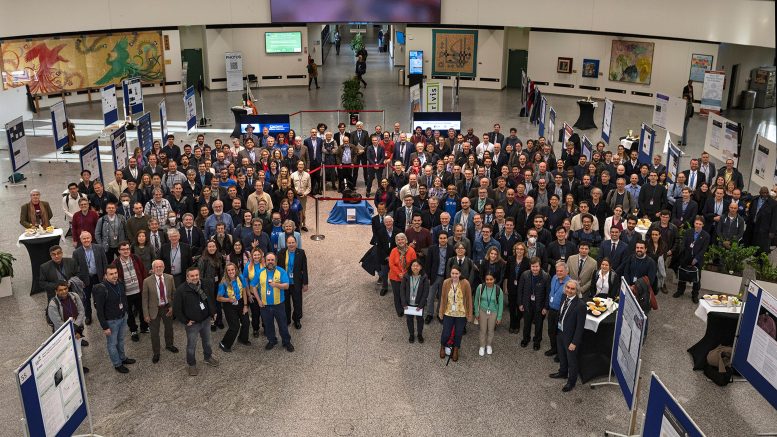
    8th International Academy of Astronautics Planetary Defense Conference
    Group photo of some of the in-person attendees of the 8th International Academy of Astronautics Planetary Defense Conference. Credit: Max Alexander

    Conference attendees also had the opportunity to participate in a brief asteroid impact tabletop exercise to simulate how information would unfold in the years and months leading to an actual asteroid impact event. The exercise included representatives from two collaborative bodies recommended in 2014 by the United Nations and now very active within the Planetary Defense community: The International Asteroid Warning Network (IAWN) and the Space Mission Planning Advisory Group (SMPAG). NEO impacts are a global hazard that require global cooperation and international collaboration through IAWN and SMPAG, and events like the PDC are key to fostering that cooperation.

    Ultimately, preventing an asteroid impact with Earth and avoiding a catastrophic natural disaster poses a complex problem that requires a multidisciplinary approach. Additionally, if a NEO were headed toward Earth, its devastation would not recognize national borders or politics. International coordination is at the heart of Planetary Defense, and conferences like the PDC provide an invaluable opportunity for experts around the world to come together, share their knowledge, and unite as one under the common goal of safeguarding Earth from asteroid impacts for generations to come.

    See the program and watch videos of the PDC:  https://www.unoosa.org/oosa/en/ourwork/topics/neos/2023/IAAPDC/index.html

    Never miss a breakthrough: Join the SciTechDaily newsletter.
    Follow us on Google and Google News.

    Asteroid NASA Planetary Defense
    Share. Facebook Twitter Pinterest LinkedIn Email Reddit

    Related Articles

    Webb Telescope Raises Moon Impact Odds for “City-Killer” Asteroid 2024 YR4

    Webb Zooms In on Building-Sized Asteroid Once Feared to Hit Earth – And It’s Stranger Than Expected

    NASA’s Heat-Seeking Space Telescope Is Almost Ready to Spot Killer Asteroids

    Asteroid Alert: NASA Drops Impact Risk to Near Zero, But There’s One Small Catch

    NASA’s New Asteroid Data Changes Everything – And the Moon Might Pay the Price

    Will Asteroid 2024 YR4 Strike Earth? NASA Revises Impact Probability

    NASA Just Doubled the Odds of an Asteroid Impact – Should We Worry?

    NASA Tracks Skyscraper-Sized Asteroid With a 1% Chance of Earth Impact in 2032

    NASA Double Asteroid Redirection Test: First Planetary Defense Mission Target Gets a New Name

    2 Comments

    1. Thomas Mwangi MOHUHI on April 13, 2023 9:56 pm

      Amazing THAAAAI

      Reply
    2. Mike on April 14, 2023 2:47 am

      Thank you for thinking collectively about this planet. What about some form of sonic boom to create waves to redirect any NEO’s
      IMO

      Reply
    Leave A Reply Cancel Reply

    • Facebook
    • Twitter
    • Pinterest
    • YouTube

    Don't Miss a Discovery

    Subscribe for the Latest in Science & Tech!

    Trending News

    Popular Sugar-Free Sweetener Linked to Liver Disease, Study Warns

    What Is Hantavirus? The Deadly Disease Raising Alarm Worldwide

    Scientists Just Discovered How the Universe Builds Monster Black Holes

    Scientists Unveil New Treatment Strategy That Could Outsmart Cancer

    A Simple Vitamin May Hold the Key to Treating Rare Genetic Diseases

    Scientists Think the Real Fountain of Youth May Be Hiding in Your Gut

    Ravens Don’t Follow Wolves, They Predict Them

    This Common Knee Surgery May Be Doing More Harm Than Good

    Follow SciTechDaily
    • Facebook
    • Twitter
    • YouTube
    • Pinterest
    • Newsletter
    • RSS
    SciTech News
    • Biology News
    • Chemistry News
    • Earth News
    • Health News
    • Physics News
    • Science News
    • Space News
    • Technology News
    Recent Posts
    • Popular Supplement Ingredient Linked to Shorter Lifespan in Men
    • Scientists May Have Found a Way To Repair Nerve Damage in Multiple Sclerosis
    • GLP-1 Weight Loss Linked To Dramatically Lower Risk of Sleep Apnea, Kidney Disease and More
    • Scientists Uncover the Surprising Source of Strange Clouds Near the Milky Way’s Supermassive Black Hole
    • This Dazzling Green Snake Was Hiding in Plain Sight for Decades
    Copyright © 1998 - 2026 SciTechDaily. All Rights Reserved.
    • Science News
    • About
    • Contact
    • Editorial Board
    • Privacy Policy
    • Terms of Use

    Type above and press Enter to search. Press Esc to cancel.