
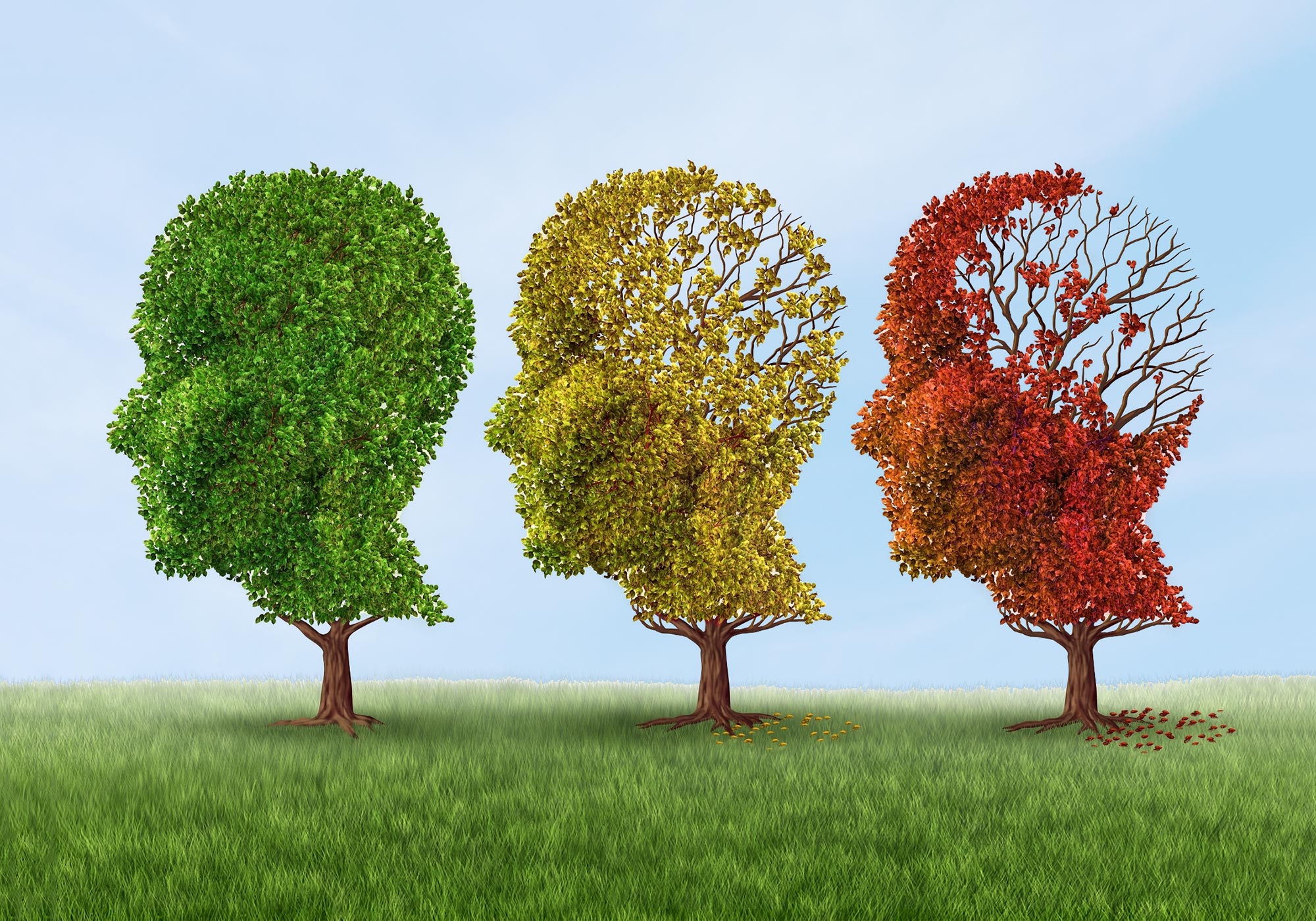
A groundbreaking study reveals that Americans over 55 now face a 42% risk of developing dementia, significantly higher than previous estimates. With cases expected to double by 2060, this poses major challenges and calls for urgent action in public health policies.
A new study reveals that 42% of Americans aged 55 and older are at risk of developing dementia, a figure more than twice as high as earlier estimates. This increased risk translates to approximately 500,000 new dementia cases this year, a number projected to double to 1 million annually by 2060.
Dementia, which involves a gradual decline in memory, focus, and decision-making, is on the rise due to the aging U.S. population. Additional risk factors include genetics, high rates of conditions like hypertension and diabetes, obesity, poor diets, lack of physical activity, and mental health challenges.
Study Reliability and Historical Underreporting
Researchers attribute the earlier, lower estimates to gaps in documenting dementia in health records and death certificates, limited tracking of early-stage cases, and underreporting within racial minority groups, who are disproportionately affected.
This large study is a collaboration funded by the National Institutes of Health to NYU Langone Health and includes authors from Johns Hopkins University and other U.S. institutions. The new study relies on information gathered from the ongoing Atherosclerosis Risk in Communities Neurocognitive Study (ARIC-NCS), which, since 1987, has closely tracked the vascular health and cognitive function of nearly 16,000 participants as they age. ARIC-NCS is also, the researchers say, the longest-followed cohort of African Americans for cognition and heart health.
Lifetime Dementia Risk Across Demographics
Publishing today (January 13) in the journal Nature Medicine, the study concludes that from 1987 until 2020, there were 3,252 study participants who were documented as having developed dementia. This translates to an overall lifetime risk for dementia among middle-aged Americans of 42%, which is an average of the 35% risk in men and the 48% risk in women. The excess risk in women was largely due to their lower death rates.
The new results also showed a higher risk among Black adults and in those who carried a variant of the APOE4 gene (between 45% and 60%), which codes for a protein that carries cholesterol and other lipids in the bloodstream. Having a certain version of APOE4 is thought to be the single biggest genetic risk factor in developing late-onset Alzheimer’s disease.
Projected Rise in Dementia Cases
“Our study results forecast a dramatic rise in the burden from dementia in the United States over the coming decades, with one in two Americans expected to experience cognitive difficulties after age 55,” said study senior investigator and epidemiologist Josef Coresh, MD, PhD, who serves as the founding director of the Optimal Aging Institute at NYU Langone.
Coresh, the Terry and Mel Karmazin Professor in the Department of Population Health and a professor in the Department of Medicine at NYU Grossman School of Medicine, says the expected rise in dementia cases is partly tied to the facts that a progressive decline in brain function is often observed starting in middle age, that women overall live longer on average than men, and that about 58 million Americans are now over age 65. Among the study’s other key findings was that the lifetime risk of dementia increases to over 50% among those who reach age 75.
Preventative Policies Could Mitigate Dementia Risk
However, previous findings from this study and others indicate that policies designed to prevent heart disease, such as blood pressure control and diabetes prevention, should also slow cognitive decline and prevent dementia.
“The pending population boom in dementia cases poses significant challenges for health policymakers, in particular, who must refocus their efforts on strategies to minimize the severity of dementia cases, as well as plans to provide more health care services for those with dementia,” said Coresh.
Tackling Hearing Loss to Reduce Dementia Risk
Loss of hearing among older adults has also been tied to increased risk of dementia. However, only a third of Americans with hearing loss use hearing aids. To address this, Coresh recommends greater monitoring and testing, and possibly even government assistance programs to support healthy hearing among the elderly, including making hearing aids more widely available and affordable.
Coresh also argues that far more resources are needed to address racial inequities in health care, noting that while dementia numbers among White individuals are expected to double over the next four decades, rates among Black individuals are expected to triple. Health policies should heighten efforts in Black communities to improve childhood education and nutrition, which he says previous research has shown to be beneficial in staving off cognitive decline later in life.
Data Modeling for Future Projections
For the latest analysis, researchers used data from the ARIC-NCS study and then modeled their projections of lifetime risk using information from the U.S. Census Bureau.
Reference: “Lifetime risk and projected burden of dementia” by Michael Fang, Jiaqi Hu, Jordan Weiss, David S. Knopman, Marilyn Albert, B. Gwen Windham, Keenan A. Walker, A. Richey Sharrett, Rebecca F. Gottesman, Pamela L. Lutsey, Thomas Mosley, Elizabeth Selvin and Josef Coresh, 13 January 2025, Nature Medicine.
DOI: 10.1038/s41591-024-03340-9
Funding support for the studies was provided by National Institutes of Health grants K24HL152440, K01DK138273, R01AG054787, 75N92022D00001, 75N92022D00002, 75N92022D00003, 75N92022D00004, 75N92022D00005, U01HL096812, U01HL096814, U01HL096899, U01HL096902, and U01Hl096917.
Besides Coresh, another NYU Langone researcher involved in this study is co-investigator Jordan Weiss, PhD.
Michael Fang, PhD, at Johns Hopkins University in Baltimore, Md., is the lead author of the study.
Other co-investigators and authors include Jiaqi Hu, MS; Marilyn Albert, PhD; A. Richey Sharrett, MD, DrPH; and Elizabeth Selvin, MPH, PhD, at Johns Hopkins; David Knopman, MD, at the Mayo Clinic in Rochester, Minn.; B. Gwen Windham, MHS, MD, and Thomas Mosley, PhD, at the University of Mississippi in Oxford; Keenan Walker, PhD, at the National Institute on Aging in Baltimore; Rebecca Gottesman, MD, PhD, at the National Institute of Neurological Disorders and Stroke in Bethesda, Md.; and Pamela Lutsey, PhD, MPH, at the University of Minnesota in Minneapolis.
Never miss a breakthrough: Join the SciTechDaily newsletter.
Follow us on Google and Google News.
7 Comments
Just another ignorant, incompetent and stupid rambling-on about comorbidities causing dementia. Having previously written researchers at most (if not all) of the institutions named in the article again wasting valuable time and money on inherently fatally-flawed dogmatic-past and invalid-new research, I herein repeat that the underlying problem is primarily undiagnosed nearly subclinical non-IgE-mediated food allergy reactions (e.g., Dr. Arthur F. Coca, by 1935; “The Pulse Test,” 1956) aggravated (or not) with at least a few toxic FDA approved food additives in varying degrees since the late 1960s (namely soy processed with toxic hexane with some residue, the cooking oil preservative and neuroendocrine disruptor TBHQ [1972] and the neurotoxic artificially cultured “free” [can cross the blood-brain barrier] MSG [1980]).
As to black Americans being impacted worse than white, poorer quality diets with fewer good food choices and harder work can explain that. As to women being less affected and living longer, estrogen is known to be protective against uric acid, a blood serum product of the very, very mild allergy reactions I write of. Or, is it just a too difficult long-term (months to decades; highly individual) puzzle for you more highly educated so-called “experts” to solve? For more details, reply to my comments and/or visit the “About” page of my ad-free video channel (https://odysee.com/@charlesgshaver:d?view=about).
You’re absolutely right! Nothing like this, with these kind of percentages exists overseas due to their food simplicity and their keeping these chemicals out of their food
Thanks, Dino, for the support and additional perspectives; much appreciated.
There’s a proven link between statins and dementia this is to blame for at least some of the rise,you can easily check this ,
It’s now come into the public domain that the original research into statins was rigged and the the fact that it can cause ibs ,diverticulitis,and even cancer which is why the Japanese pharma company researching statins dropped the research where others wanted all the money it would bring them regardless.
But several years before they proved the link between statins and dementia ,this however did not slow down the sales and new prescription of them ( wow shocker) to the number of a million new scripts every year worldwide,
These things are all easily checked
Don’t get me wrong though it’s by no means the only reason for the increase in in no way arguing with me shaver
Apologies ,bloody autocorrect ,I mean of course ,mr shaver
Apologies I mean Mr shaved not me shaver ,damn autocorrect
Thanks, Simon, for commenting. Still only relatively healthy after forty-three years of US FDA approved food poisoning related chronic illnesses, composing documents is a tedious task for me and I always try to keep things brief but don’t always succeed. As to “autocorrect,” it irks me to have to go back and correct what it changes, except when I’m wrong. Just yesterday I was thinking of resurrecting an older system with just a basic word processor on it and using a USB thumb drive to transfer documents for uploading them to the Internet; oh woe is humanity in the age of AI!
As to statins, only learning of (and addressing) my multiple very, very mild food allergies in late 1981, I was first diagnosed with still mostly untreated (bad side effects) high blood pressure, cholesterol and triglycerides in 1992 and I’m still alive in early 2025. By 1992 I was eleven years into dealing with previously undiagnosed food allergies and eight years away from learning of the true toxicity of added artificially cultured “free” (can cross the blood brain barrier) brain damaging, mind altering MSG. When researchers find a link between anything and dementia, now, the link is most likely really between misdiagnosed very, very mild food allergy reactions aggravated (or not) with officially approved adulterated foods and/or excessive related, resultant medical errors. Statins and dementia, probably not.