
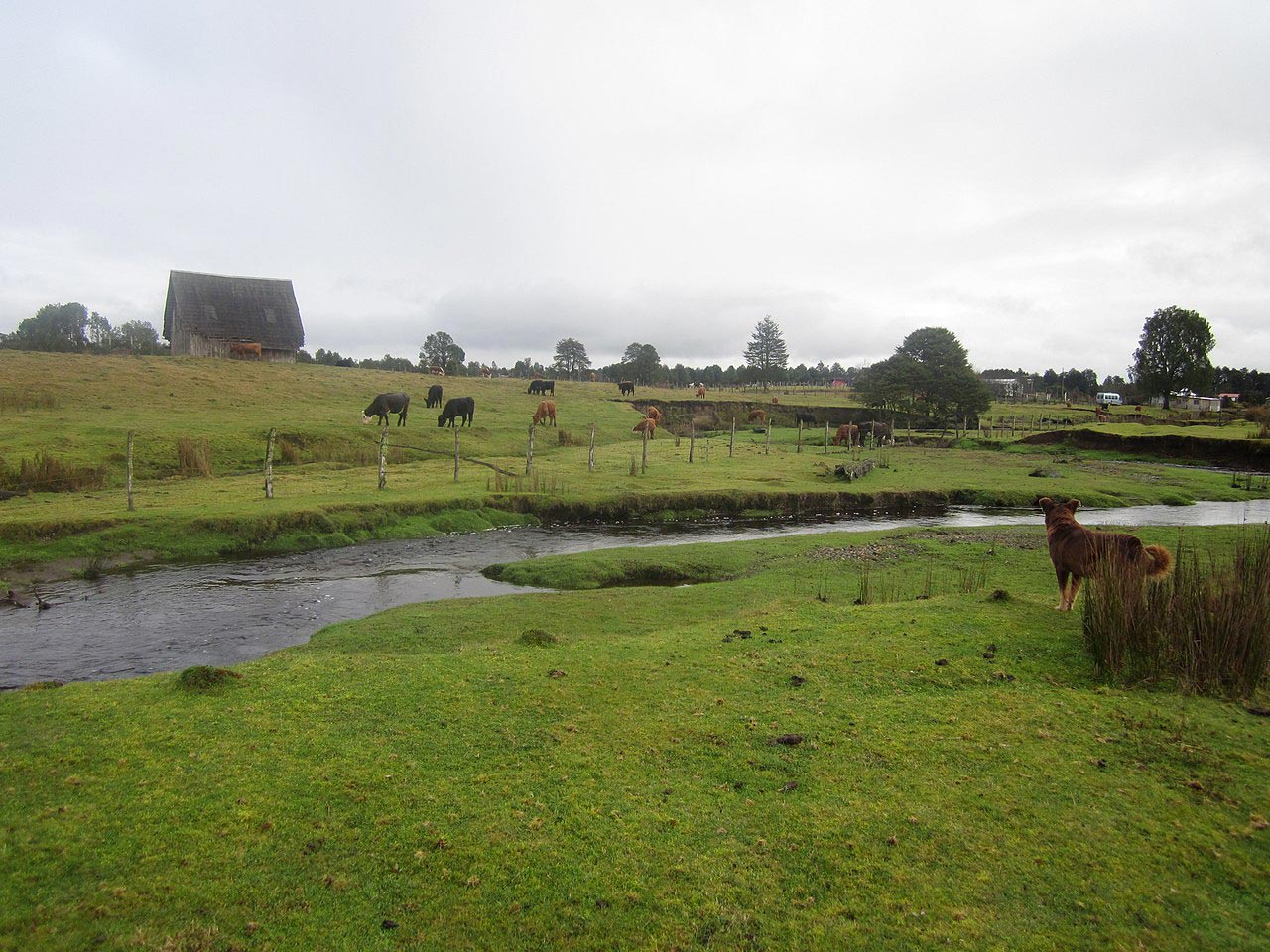
New findings from Chile challenge a foundational idea about the earliest settlement of the Americas.
New research led by a University of Wyoming archaeologist is challenging a widely accepted idea about the earliest people in the Americas. The study focuses on an ancient site in South America and questions whether populations associated with Clovis points in North America arrived after earlier groups had already settled farther south.
Led by UW Professor Todd Surovell, along with collaborators from Chile, Austria, and the U.S. Geological Survey, the team reexamined the well-known Monte Verde site in southern Chile. Their findings suggest the site is between 4,200 and 8,200 years old, rather than 14,500 years old as earlier studies from the 1970s through the 1990s had concluded.
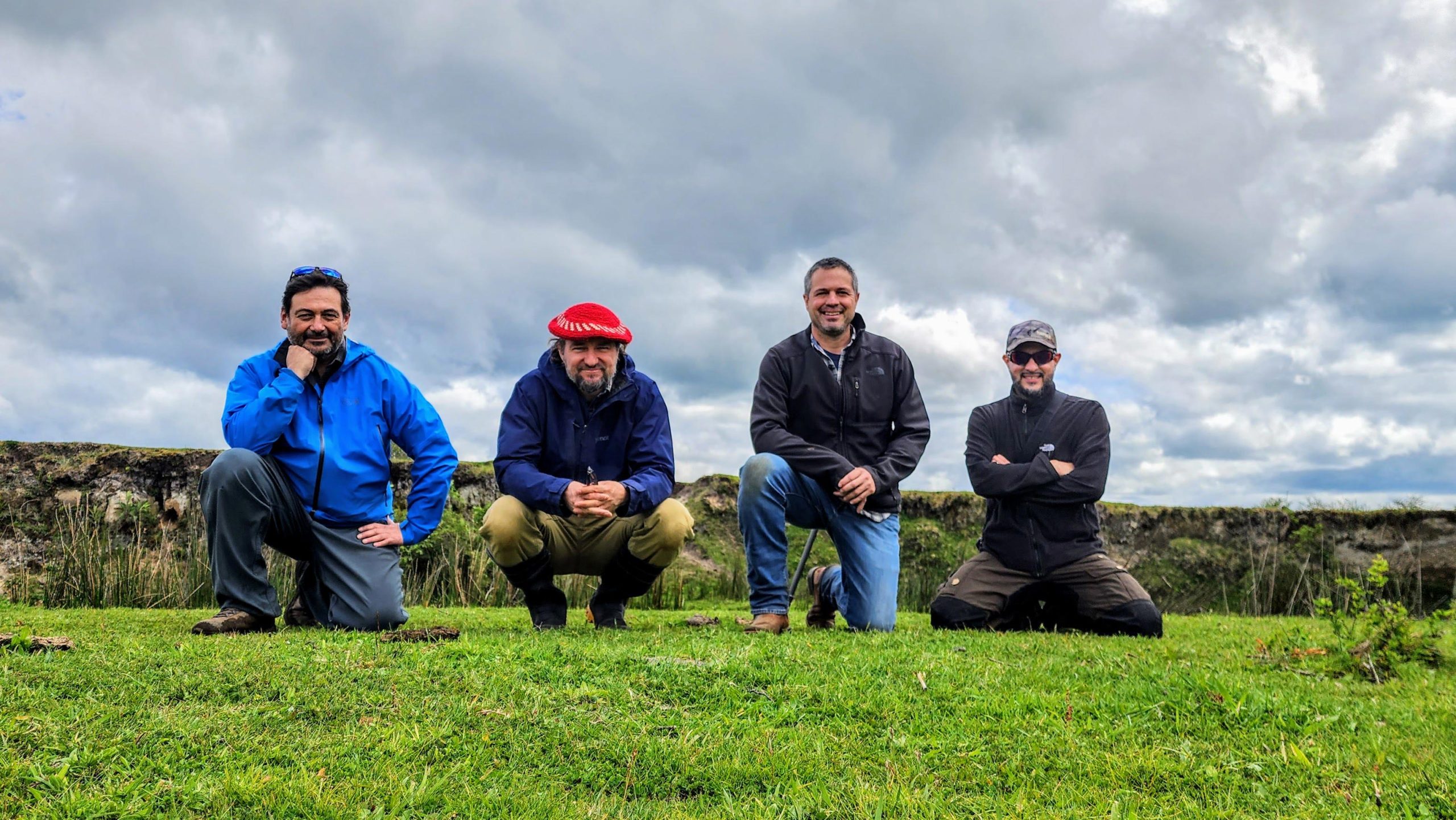
Surovell conducted the research with Claudio Latorre of Pontificia Universidad Católica in Santiago, Chile. They worked closely over four years with César Méndez and Juan-Luis García, also from the same university.
A Debate With Major Implications
The results, published in Science, add new momentum to the ongoing debate over when and how humans first reached the Americas. For decades, the dominant view held that hunter-gatherers crossed from Asia into North America via the Beringia land bridge up to 14,200 years ago, then moved south between massive ice sheets that covered much of the continent.
“Because of a validation of the Monte Verde site by outside experts 29 years ago, our understanding of the date of human arrival to the Americas was fundamentally changed,” Surovell says. “We now correct the record and show that the site is much younger than initially believed. With colonization of the Americas no longer anchored by Monte Verde, our revised chronology supports a more recent date of human arrival to the Americas.”
Although some archaeologists have questioned the 14,500-year age of Monte Verde, the earlier interpretation gained widespread acceptance. It placed the site nearly 1,500 years before firmly dated Clovis sites in North America and about 500 years before the earliest confirmed sites in Alaska. The findings became so influential that they reshaped how the story of human migration into the Americas was taught.
Why Monte Verde Became So Influential
To explain such an early presence far south, many researchers proposed that the first Americans traveled along the Pacific Coast, bypassing inland ice barriers and moving quickly into South America through a coastal route.
“Monte Verde is best known as the site that broke the Clovis barrier, after a site visit in 1997 by external scholars who confirmed the archaeological nature and age of the site,” Surovell says. “Findings from Monte Verde were so important that they were viewed as paradigm changing, effectively rewriting the history of the last instances in which humans colonized previously uninhabited continental land masses.”
Monte Verde sits along Chinchihuapi Creek, a tributary of the Maullín River about 36 miles (58 kilometers) from the Pacific Ocean. This new work marks the first independent investigation of the site since its discovery nearly 50 years ago.
Reexamining the Evidence
The team analyzed and dated nine alluvial deposits along the creek. Their results suggest that the much older dates previously reported can be explained by erosion and “redeposition,” which moved ancient materials into younger layers.
The creek deposits contain large amounts of Ice Age wood that became mixed into later archaeological sediments. As a result, radiocarbon dating of this wood can produce ages older than the actual human activity at the site. In other words, dating the wood does not necessarily reveal when people occupied Monte Verde, just as dating the raw stone of a tool does not indicate when the tool was made.
The researchers also identified 11,000-year-old volcanic ash, a known regional marker, beneath the archaeological material. If humans had been present 14,500 years ago, this ash layer should lie above the occupation level, but it does not.
What the Findings Could Mean
According to the researchers, the surface where the Monte Verde artifacts were found did not even exist 14,500 years ago. Instead, it likely formed sometime after 8,600 years ago. This finding weakens the case for Monte Verde as key evidence supporting early coastal migration into South America.
“The acceptance of the pre-Clovis age of Monte Verde led some to reject migration through the ice-free corridor as a possible route of initial entry, and a coastal route … has been suggested as more likely,” the researchers concluded. “Although our findings do not preclude the possibility of earlier dates of initial entry to the Americas, they do support an initial interior migration into continental North America as a viable colonization hypothesis.”
The study builds on earlier work by Surovell that examined how archaeological evidence has been interpreted across the Americas. That research suggested that some claims of very early human presence may result from mixed layers of artifacts from different time periods.
It also found a clear contrast between regions. Sites in Alaska show strong, well-preserved stratigraphy that supports early human occupation. In contrast, sites farther south that suggest earlier dates often show signs of mixing, making their timelines less certain.
Reference: “A mid-Holocene age for Monte Verde challenges the timeline of human colonization of South America” by Todd A. Surovell, César Méndez, Juan-Luis García, Christopher Lüthgens, Jay M. Thompson and Claudio Latorre, 19 March 2026, Science.
DOI: 10.1126/science.adw9217
Never miss a breakthrough: Join the SciTechDaily newsletter.
Follow us on Google and Google News.
1 Comment
Ben to Alaska land bridge.12500 yrs ago human are just live off the land .so now Ben 14500 yrs ago.i was at land bridge for 30 days looking around..