
Close Menu
    Facebook X (Twitter) Instagram
    SciTechDaily
    • Biology
    • Chemistry
    • Earth
    • Health
    • Physics
    • Science
    • Space
    • Technology
    Facebook X (Twitter) Pinterest YouTube RSS
    SciTechDaily
    Home»Earth»Diving Into Kavachi’s Fury: Unraveling the Mysteries of an Undersea Volcano
    Earth

    Diving Into Kavachi’s Fury: Unraveling the Mysteries of an Undersea Volcano

    By Adam Voiland and Sara Pratt, NASA Earth ObservatoryMarch 17, 2024No Comments3 Mins Read
    Facebook Twitter Pinterest Telegram LinkedIn WhatsApp Email Reddit
    Share
    Facebook Twitter LinkedIn Pinterest Telegram Email Reddit
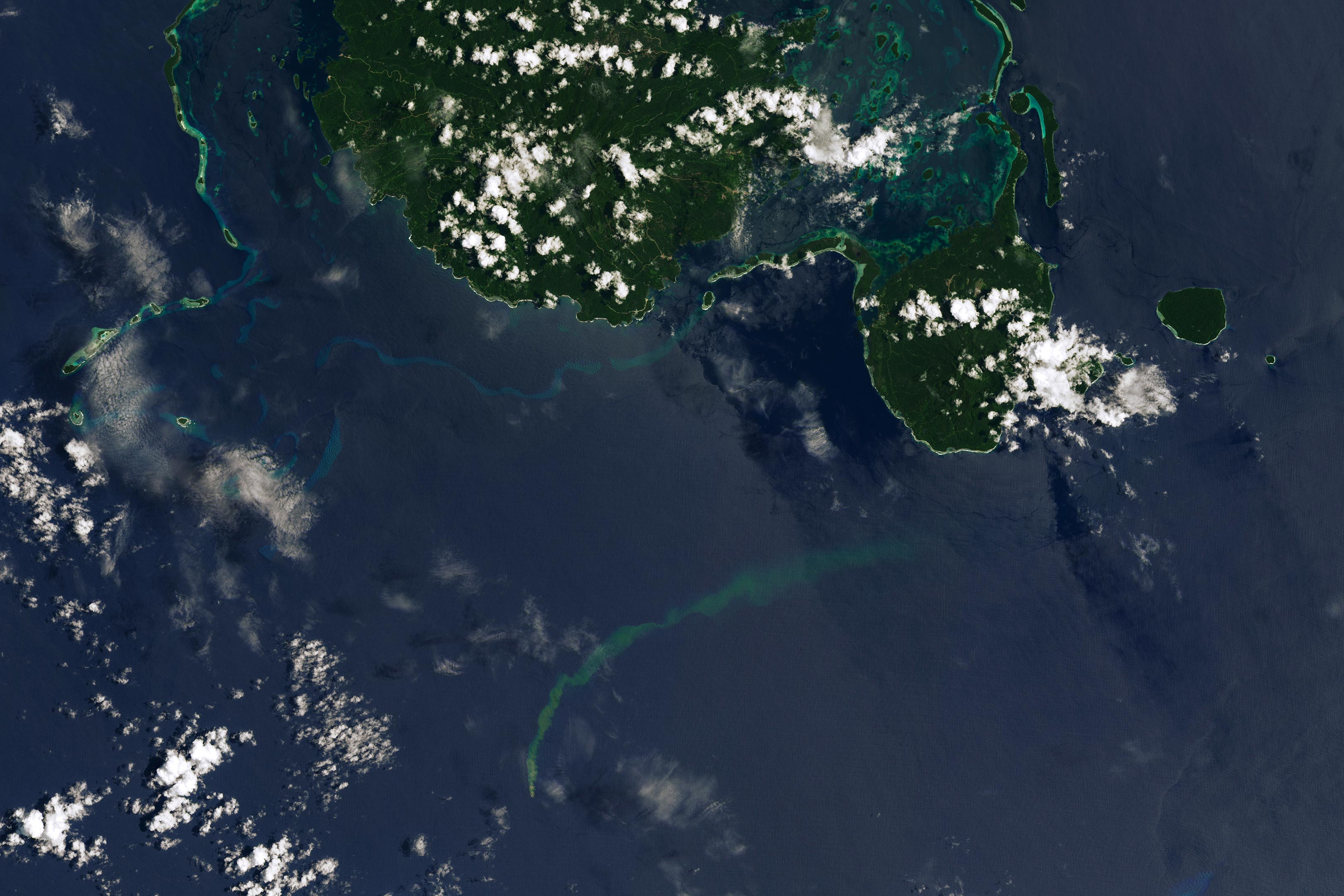
    Underwater Plume From Kavachi Annotated
    Satellite image of a plume of discolored water near the Kavachi undersea volcano captured on March 8, 2024, by the Operational Land Imager on Landsat 8.
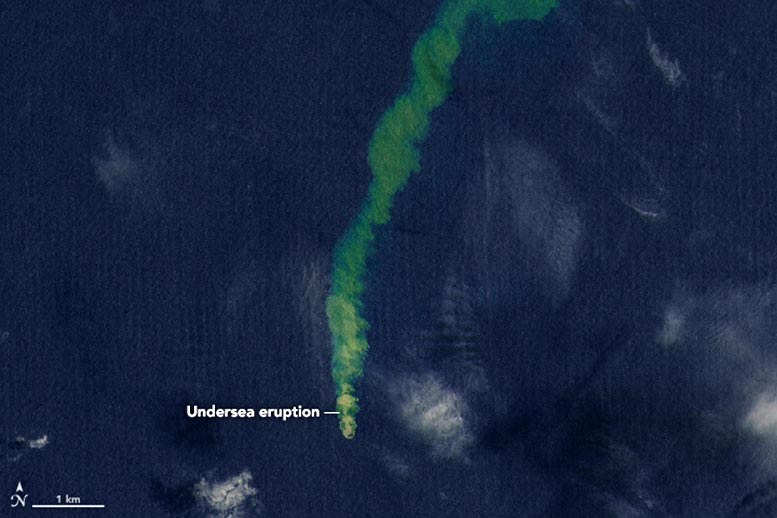
    Underwater Plume From Kavachi Detail
    Close-up detail of the undersea eruption, cropped from the image above.

    A Landsat satellite acquired this image of discolored water drifting from the active underwater volcano.

    Kavachi is one of the most active submarine volcanoes in the Pacific. This conical seamount, located in the Solomon Islands and named after a sea god of the Gatokae and Vangunu people, rises some 1,200 meters (3,900 feet) from the seafloor. But its summit remains just 20 meters (65 feet) below sea level, which makes it easier for satellites to detect discolorations of the water due to volcanic activity than at deeper undersea volcanoes.

    Volcanic Activity and Observations

    Kavachi has erupted at least 39 times since 1939, with the latest eruptive period beginning in 2021, according to the Smithsonian Institution’s Global Volcanism Program. In 2024, the volcano continued to stir—and satellites continued to capture images of discolored plumes of water.

    The image above, acquired on March 8 by the OLI (Operational Land Imager) on Landsat 8, shows a plume of discolored water near the undersea volcano. The plume drifted north-northeast toward Nggatokae Island. Vangunu Island, also pictured, lies about 24 kilometers (15 miles) north of Kavachi, and Papua New Guinea is about 800 kilometers (500 miles) to the west.

    The MODIS (Moderate Resolution Imaging Spectroradiometer) on NASA’s Terra and Aqua captured images of similar underwater plumes near Kavachi on several other occasions in recent weeks, including February 3, 15, and 23.

    Scientific Research and Findings

    Previous research has shown such plumes of superheated, acidic water can contain particulate matter, volcanic rock fragments, and sulfur, as well as precipitates of silicon, iron, and aluminum oxides. The color of plumes can offer clues about the composition of the particles within them. Yellow and brown plumes tend to have a higher proportion of iron, while white plumes tend to have a higher proportion of silicon or aluminum.

    Though Kavachi is challenging for scientists to access, a lull in activity allowed a team to explore it in 2015. The researchers observed marine life within the crater, including orange and white bacterial mats, silky and hammerhead sharks, bluefin trevally, and snapper.

    The authors of a report about the expedition noted that other active submarine volcanos—Vailulu’u Seamount in American Samoa and Kolumbo in Greece—are known to have highly acidic water and “kill zones” that contain carcasses of larger animals. “It is likely that the high crater walls at these sites cause physical entrainment and concentration of vent fluids, while Kavachi’s crater is relatively shallow and subjected to high surface currents that allow rapid mixing to occur,” they wrote in the report.

    Geological Context and Characteristics

    Kavachi formed in a tectonically active area just 30 kilometers (18 miles) northeast of a subduction zone. The volcano produces lavas that range from basaltic, which is rich in magnesium and iron, to andesitic, which contains more silica. It is known for having phreatomagmatic eruptions in which the interaction of magma and water eject steam, ash, volcanic rock fragments, and incandescent bombs out of the water and into the air.

    NASA Earth Observatory images by Lauren Dauphin, using Landsat data from the U.S. Geological Survey.

    Never miss a breakthrough: Join the SciTechDaily newsletter.
    Follow us on Google and Google News.

    Geography NASA NASA Earth Observatory Volcano
    Share. Facebook Twitter Pinterest LinkedIn Email Reddit

    Related Articles

    Island Obliterated: Dramatic Changes at Hunga Tonga-Hunga Ha’apai

    Hunga Tonga Island Obliterated – NASA Satellites Capture Massive Blast

    A Wolf Awakens in the Galápagos Islands at Night

    A Deadly Day on Mount Semeru: Destructive Rivers of Debris on Indonesian Volcano

    Wall of Lava Burns a Path Through La Palma

    Cumbre Vieja Lights Up the Night – Astronaut Photo Captures Volcanic Eruption From Space

    Socked in Stratovolcano: Astronaut on ISS Captures Incredible View of Uninhabited Atlasov Island

    Kilauea’s Lava Lake Returns – Hawaii’s Most Active Volcano Is Erupting Again

    Newberry Volcano Photographed by Astronaut Onboard the International Space Station

    Leave A Reply Cancel Reply

    • Facebook
    • Twitter
    • Pinterest
    • YouTube

    Don't Miss a Discovery

    Subscribe for the Latest in Science & Tech!

    Trending News

    The Universe Is Expanding Too Fast and Scientists Can’t Explain Why

    “Like Liquid Metal”: Scientists Create Strange Shape-Shifting Material

    Early Warning Signals of Esophageal Cancer May Be Hiding in Plain Sight

    Common Blood Pressure Drug Shows Surprising Power Against Deadly Antibiotic-Resistant Superbug

    Scientists Uncover Dangerous Connection Between Serotonin and Heart Valve Disease

    Scientists Discover a “Protector” Protein That Could Help Reverse Hair Loss

    Bone-Strengthening Discovery Could Reverse Osteoporosis

    Scientists Uncover Hidden Trigger Behind Stem Cell Aging

    Follow SciTechDaily
    • Facebook
    • Twitter
    • YouTube
    • Pinterest
    • Newsletter
    • RSS
    SciTech News
    • Biology News
    • Chemistry News
    • Earth News
    • Health News
    • Physics News
    • Science News
    • Space News
    • Technology News
    Recent Posts
    • A Common Diabetes Drug May Hold the Key to Stopping HIV From Coming Back
    • Ancient “Syphilis-Like” Disease in Vietnam Challenges Key Scientific Assumptions
    • Drinking Alcohol To Cope in Your 20s Could Damage Your Brain for Life
    • Scientists Crack Alfalfa’s Chromosome Mystery After Decades of Debate
    • Ancient Ant-Plant Alliance Collapses As Predatory Wasps Move In
    Copyright © 1998 - 2026 SciTechDaily. All Rights Reserved.
    • Science News
    • About
    • Contact
    • Editorial Board
    • Privacy Policy
    • Terms of Use

    Type above and press Enter to search. Press Esc to cancel.