
Close Menu
    Facebook X (Twitter) Instagram
    SciTechDaily
    • Biology
    • Chemistry
    • Earth
    • Health
    • Physics
    • Science
    • Space
    • Technology
    Facebook X (Twitter) Pinterest YouTube RSS
    SciTechDaily
    Home»Health»DNA-Based Nanogel for Targeted Chemotherapy
    Health

    DNA-Based Nanogel for Targeted Chemotherapy

    By American Chemical SocietyJanuary 29, 2021No Comments3 Mins Read
    Facebook Twitter Pinterest Telegram LinkedIn WhatsApp Email Reddit
    Share
    Facebook Twitter LinkedIn Pinterest Telegram Email Reddit
    DNA-Based Nanogel for Targeted Chemotherapy
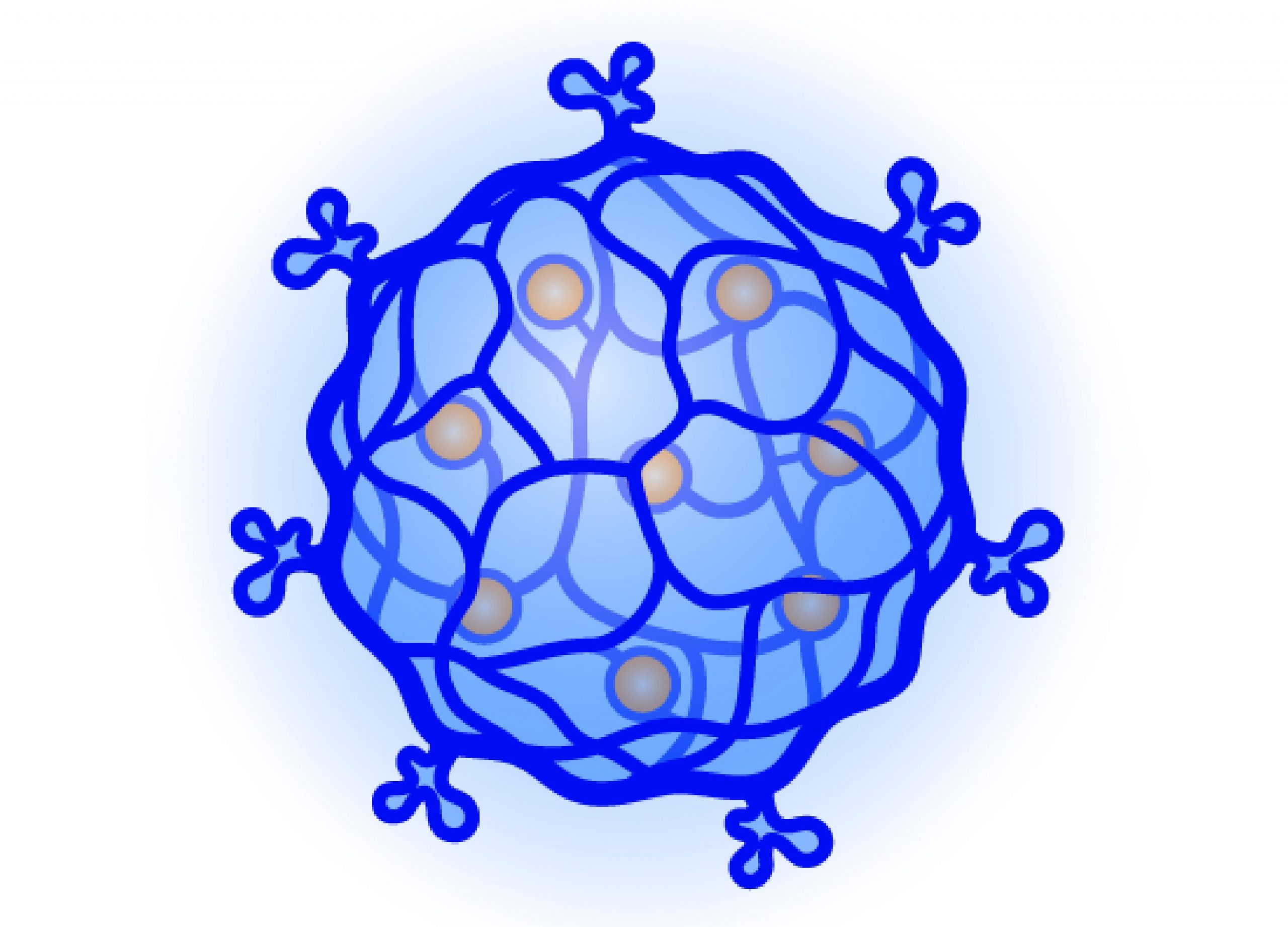
    A DNA-based nanogel (shown above) is broken down in cancer cells to release chemotherapy drugs. Credit: Adapted from Nano Letters 2020, DOI: 10.1021/acs.nanolet.0c03671

    DNA nanogels that react to a cancer-specific enzyme can deliver chemo drugs precisely, killing cancer cells while sparing healthy ones.

    Current chemotherapy regimens slow cancer progression and save lives, but these powerful drugs affect both healthy and cancerous cells. Now, researchers reporting in ACS’ Nano Letters have designed DNA-based nanogels that only break down and release their chemotherapeutic contents within cancer cells, minimizing the impacts on normal ones and potentially eliminating painful and uncomfortable side effects.

    DNA Nanogels: Smarter Drug Delivery Vehicles

    Once ingested or injected, chemotherapy medications move throughout the body, indiscriminately affecting healthy cells along with those that are responsible for disease. Since many of these drugs are toxic to all cells, the desired tumor shrinkage can be accompanied by undesirable side effects, such as hair loss, gastrointestinal issues and fatigue. Nanogels made of DNA are one way that these drugs could be delivered, but they would still enter all cells. Tianhu Li, Teck-Peng Loh and colleagues reasoned that biomarkers — proteins or other components that are present in differing amounts in cancer cells and their healthy counterparts — could play a role in breaking down a nanogel, causing it to release its contents only in those that are cancerous. A biomarker called FEN1, a repair enzyme that cuts certain types of DNA, is present in larger amounts in cancer cells compared with healthy ones. The researchers wanted to see whether they could design a DNA nanogel that would specifically be degraded in cancer cells by FEN1.

    To make DNA nanogels, the researchers used special DNA structures that FEN1 could recognize and cut. With cell-free systems, the researchers observed that the DNA-based nanogels were broken down by FEN1 but not by other DNA repair enzymes or compounds. When live cells were incubated with the DNA-based nanogels, healthy ones did not have enough FEN1 to break them down, but cancer cells did. When the chemotherapeutic drugs doxorubicin and vinorelbine were incorporated into the nanogel, human breast cancer cells died at higher rates than normal, healthy breast cells. These findings indicate DNA-based nanogels can introduce drugs into cancer cells with a high specificity, reducing the risk of side effects. The researchers say that the nanogels also could be used as probes for the biomarker enzyme, helping physicians more directly diagnose cancer compared with current methods.

    Reference: “Cancer Biomarker-Triggered Disintegrable DNA Nanogels for Intelligent Drug Delivery” by Hao Zhang, Sai Ba, Jasmine Yiqin Lee, Jianping Xie, Teck-Peng Loh and Tianhu Li, 29 October 2020, Nano Letters.
    DOI: 10.1021/acs.nanolett.0c03671

    The authors acknowledge funding from Northwestern Polytechnical University in China and the Agency for Science, Technology and Research in Singapore.

    Never miss a breakthrough: Join the SciTechDaily newsletter.
    Follow us on Google and Google News.

    American Chemical Society Cancer Cell Biology Nanotechnology Pharmaceuticals
    Share. Facebook Twitter Pinterest LinkedIn Email Reddit

    Related Articles

    Scientists Find Way to Turn Tumor-Protecting Cells Into Cancer Killers

    Unlocking Nature’s Secret Weapon: Fungus That Fights Cancer

    Weighing Cancer Cells To Personalize Drug Choices and Help With Treatment Decision-Making

    Using Biodegradable Nanoparticles to Shut Down the Power Stations of Cancer Cells

    The Latest in the Scientific Race to Develop an Effective COVID-19 Vaccine

    New Model Captures Shape and Speed of Tumor Growth for the First Time

    Gold Nanoparticles Intensify Cancer-Killing Radiation

    New Form of Radiation Cancer Therapy Has No Side-Effects

    RNA Delivering Nanoparticles Shrink Tumors in Mice

    Leave A Reply Cancel Reply

    • Facebook
    • Twitter
    • Pinterest
    • YouTube

    Don't Miss a Discovery

    Subscribe for the Latest in Science & Tech!

    Trending News

    Largest-Ever Study Finds Medicinal Cannabis Ineffective for Anxiety, Depression, PTSD

    250-Million-Year-Old Egg Solves One of Evolution’s Biggest Mysteries

    Living With Roommates Might Be Changing Your Gut Microbiome Without You Knowing

    Century-Old Cleaning Chemical Linked to 500% Increased Risk of Parkinson’s Disease

    What if Your Memories Never Happened? Physicists Take a New Look at the Boltzmann Brain Paradox

    One of the Universe’s Largest Stars May Be Getting Ready To Explode

    Scientists Discover Enzyme That Could Supercharge Ozempic-Like Weight Loss Drugs

    Popular Sweetener Linked to DNA Damage – “It’s Something You Should Not Be Eating”

    Follow SciTechDaily
    • Facebook
    • Twitter
    • YouTube
    • Pinterest
    • Newsletter
    • RSS
    SciTech News
    • Biology News
    • Chemistry News
    • Earth News
    • Health News
    • Physics News
    • Science News
    • Space News
    • Technology News
    Recent Posts
    • The Most Elusive Number in Physics Just Got Even More Mysterious
    • Scientists Uncover Hidden Trigger Behind Stem Cell Aging
    • Scientists Discover Coral Reefs Are Teeming With Previously Unknown Life
    • Scientists Find Way to Reverse Fatty Liver Disease Without Changing Diet
    • Could Humans Regrow Limbs? New Study Reveals Promising Genetic Pathway
    Copyright © 1998 - 2026 SciTechDaily. All Rights Reserved.
    • Science News
    • About
    • Contact
    • Editorial Board
    • Privacy Policy
    • Terms of Use

    Type above and press Enter to search. Press Esc to cancel.