
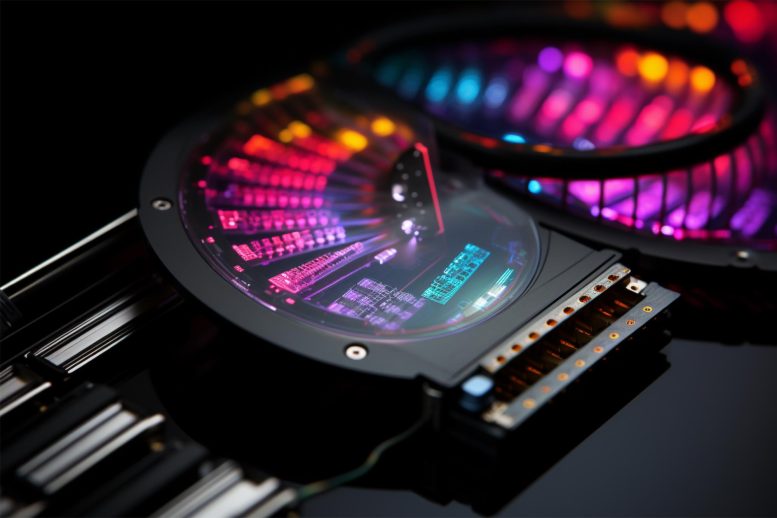
In the form of DNA, nature shows how data can be stored in a space-saving and long-term manner. Würzburg’s chair of bioinformatics is developing DNA chips for computer technology.
The hereditary molecule DNA is renowned for its ability to store vast amounts of information over long periods of time in an incredibly small space. For a good ten years, scientists have therefore been pursuing the goal of developing DNA chips for computer technology, especially for the long-term archiving of data. Such chips would be superior to conventional silicon-based chips in terms of storage density, longevity, and sustainability.
Four recurring basic building blocks are found in a DNA strand. A specific sequence of these blocks can be used to encode information, just as nature does. To build a DNA chip, the correspondingly coded DNA must be synthesized and stabilized. If this works well, the information is preserved for a very long time – researchers assume several thousand years. The information can be retrieved by automatically reading out and decoding the sequence of the four basic building blocks.
Challenges in DNA Data Storage
“The fact that digital DNA data storage with high capacity and a long lifespan is feasible has been demonstrated several times in recent years,” says Professor Thomas Dandekar, head of the Chair of Bioinformatics at Julius-Maximilians-Universität (JMU) Würzburg. “But the storage costs are high, close to 400,000 US dollars per megabyte, and the information stored in the DNA can only be retrieved slowly. It takes hours to days, depending on the amount of data.”
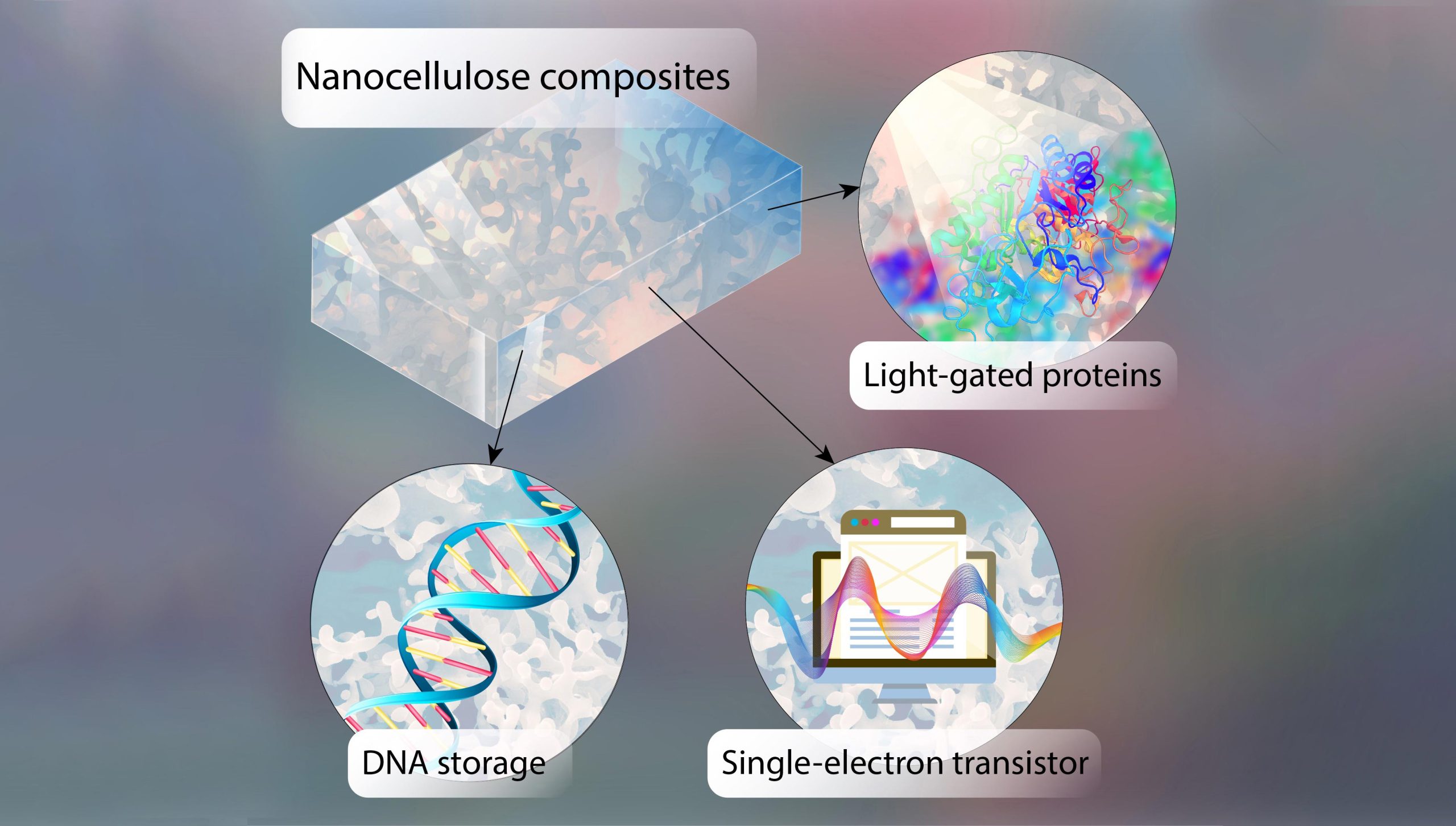
These challenges must be overcome to make DNA data storage more applicable and marketable. Suitable tools for this are light-controlled enzymes and protein network design software. Thomas Dandekar and his chair team members Aman Akash and Elena Bencurova discuss this in a recent review in the journal Trends in Biotechnology.
Dandekar’s team is convinced that DNA has a future as a data store. In the journal, the JMU researchers show how a combination of molecular biology, nanotechnology, novel polymers, electronics, and automation, coupled with systematic development, could make DNA data storage useful for everyday use possible in a few years.
Innovative DNA Chip Development
At the JMU Biocentre, Dandekar’s team is developing DNA chips made of semiconducting, bacterially produced nanocellulose. “With our proof of concept, we can show how current electronics and computer technology can be partially replaced by molecular biological components,” says the professor. In this way, sustainability, full recyclability, and high robustness even against electromagnetic pulses or power failures could be achieved, but also a high storage density of up to one billion gigabytes per gram of DNA.
Thomas Dandekar rates the development of DNA chips as highly relevant: “We will only last as a civilization in the longer term if we make the leap into this new type of sustainable computer technology combining molecular biology with electronics and new polymer technology.”
What is important for humanity, he said, is to move to a circular economy in harmony with planetary boundaries and the environment. “We need to achieve this in 20 to 30 years. Chip technology is an important example of this, but the sustainable technologies to produce chips without e-waste and environmental pollution are not yet mature. Our nanocellulose chip concept makes a valuable contribution to this. In the new paper, we critically examined our concept and advanced it further with current innovations from research.”
Further Improving DNA Storage Media
Dandekar’s team is currently working on combining the DNA chips made of semiconducting nanocellulose even better with the designer enzymes they have developed. The enzymes also need to be further improved.
“In this way, we want to achieve better and better control of the DNA storage medium and be able to store even more on it, but also save costs and thus step by step enable practical use as a storage medium in everyday life.”
Reference: “How to make DNA data storage more applicable” by Aman Akash, Elena Bencurova and Thomas Dandekar, 15 August 2023, Trends in Biotechnology.
DOI: 10.1016/j.tibtech.2023.07.006
The work described is financially supported by the German Research Foundation (DFG) and the Free State of Bavaria. Important cooperation partners are Sergey Shityakov, professor at the State University of Information Technologies, Mechanics and Optics (ITMO) in Saint Petersburg, Daniel Lopez, PhD, from the Universidad Autonoma de Madrid, and Dr. Günter Roth, University of Freiburg and BioCopy GmbH (Emmendingen).
Never miss a breakthrough: Join the SciTechDaily newsletter.
Follow us on Google and Google News.
1 Comment
Sounds like the Creator’s backup tape to me!