
Close Menu
    Facebook X (Twitter) Instagram
    SciTechDaily
    • Biology
    • Chemistry
    • Earth
    • Health
    • Physics
    • Science
    • Space
    • Technology
    Facebook X (Twitter) Pinterest YouTube RSS
    SciTechDaily
    Home»Space»DNA Tech and Life Sciences Take Center Stage As Space Station Boosts Orbit
    Space

    DNA Tech and Life Sciences Take Center Stage As Space Station Boosts Orbit

    By NASANovember 14, 2024No Comments3 Mins Read
    Facebook Twitter Pinterest Telegram LinkedIn WhatsApp Email Reddit
    Share
    Facebook Twitter LinkedIn Pinterest Telegram Email Reddit
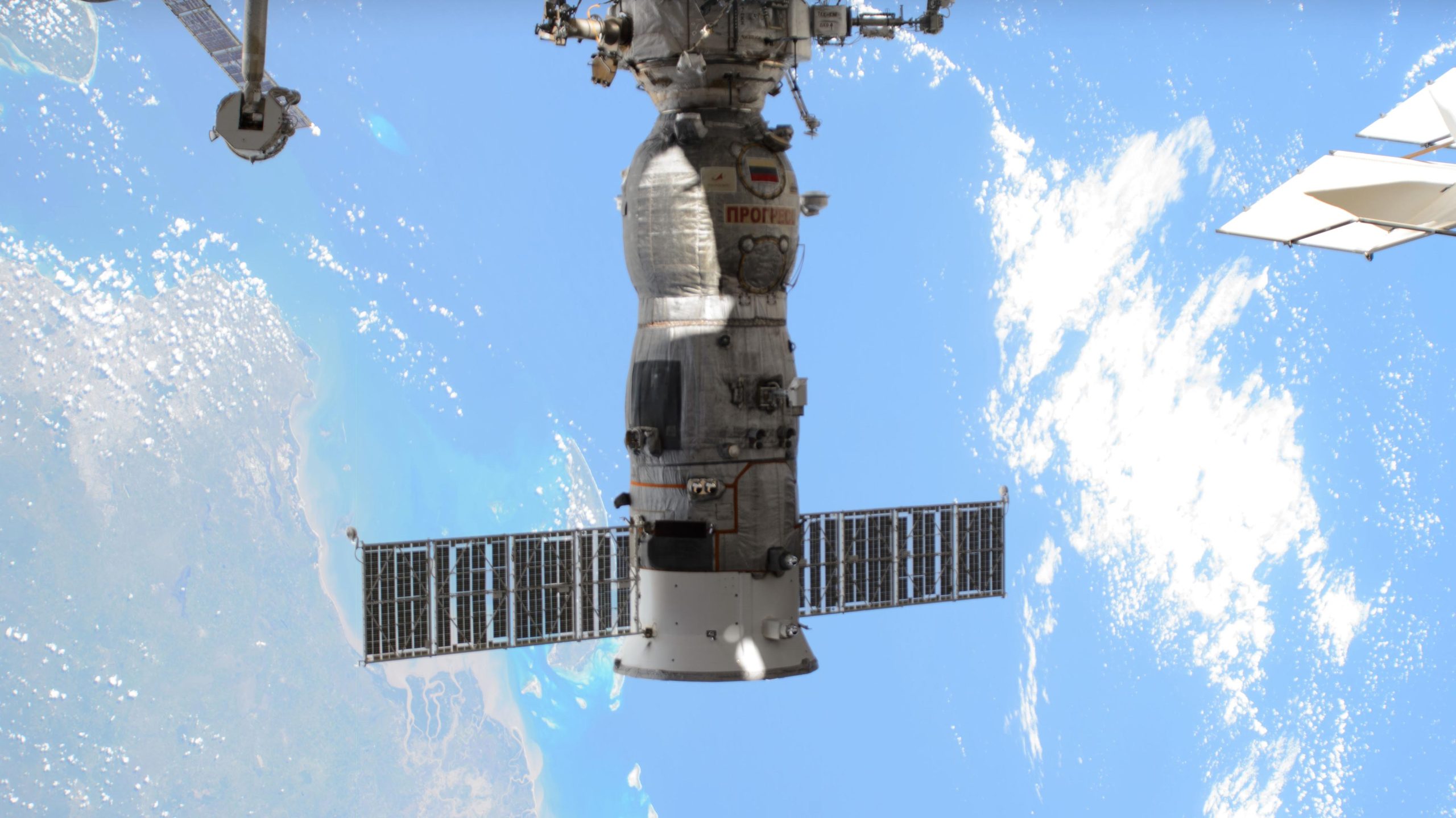
    Progress 86 Cargo Craft Poised to Undock From International Space Station
    The uncrewed Roscosmos Progress 86 cargo craft docked to the International Space Station’s Poisk module. Credit: NASA

    Wednesday’s research aboard the International Space Station (ISS) focused on DNA-like nanomaterials, ultrasound scans, and essential maintenance for advanced science equipment. The Expedition 72 crew also carried out critical life support and system servicing tasks, ensuring the orbital outpost’s smooth operation. The day concluded with adjustments to the station’s altitude, preparing for upcoming resupply missions.

    Innovations in Space Medicine

    NASA Flight Engineers Suni Williams and Nick Hague continued investigating how DNA-like nanomaterials might be manufactured in space to develop therapies for both space-related and Earth-based health conditions. In the Kibo laboratory module’s Life Science Glovebox, they processed and imaged messenger RNA (mRNA) samples to evaluate their quality in a microgravity environment. These space-manufactured samples will be compared with Earth-based ones to test the theory that space conditions could enhance vaccine quality, regenerative medicine, and more.
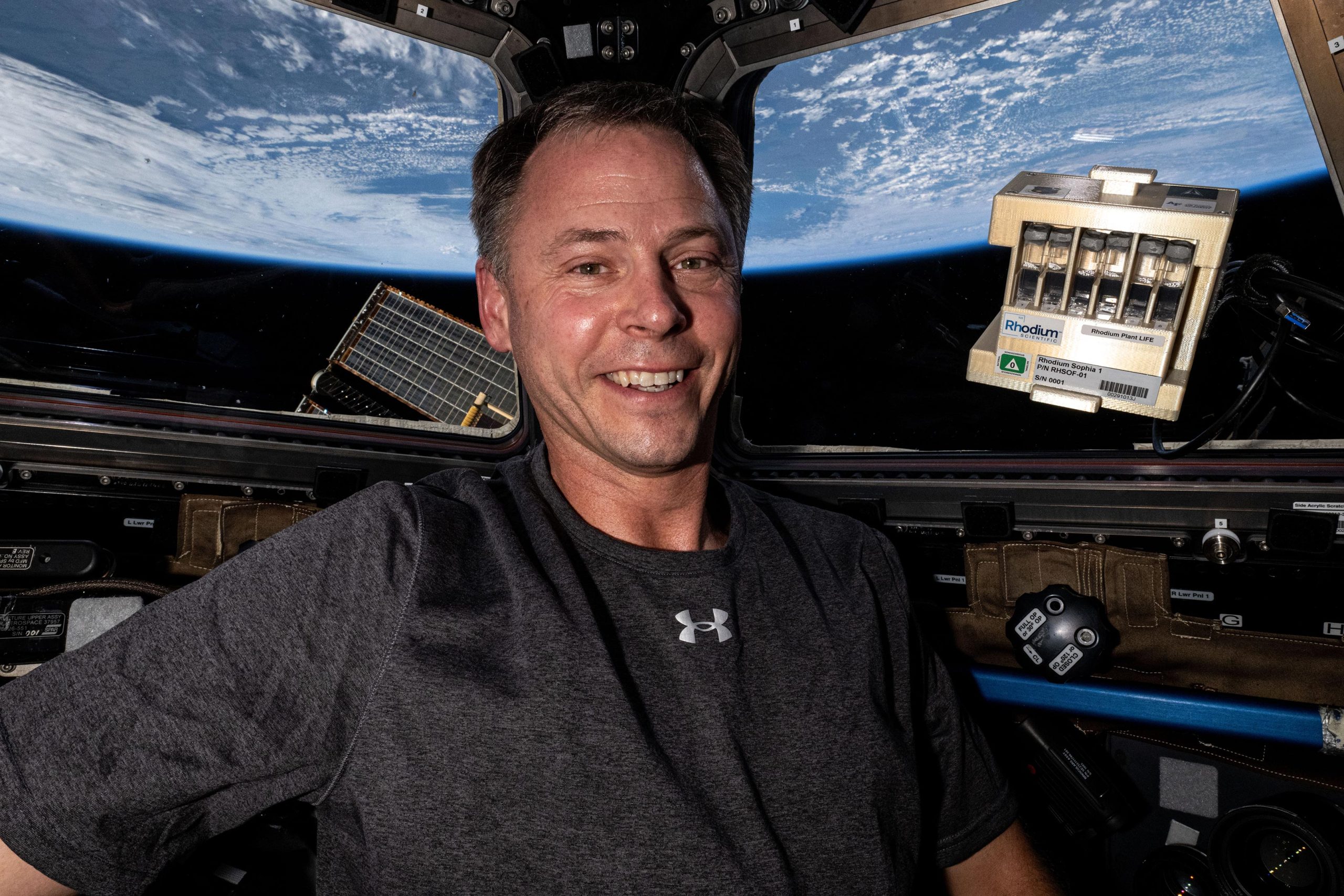
    Astronaut Nick Hague Shows Off Space Botany Hardware
    NASA astronaut and Expedition 72 Flight Engineer Nick Hague is pictured inside the cupola with space botany hardware that supports the Rhodium Plant LIFE investigation. The experiment studies the effects of radiation and microgravity on plant growth to promote self-sustainable long-term human missions and increase crop production on Earth. The International Space Station was orbiting 259 miles above the Alps in Austria at the time of this photograph. Credit: NASA

    Meanwhile, NASA Flight Engineer Butch Wilmore set up a DNA therapy experiment, repositioning a laptop to support ongoing biotechnology research. Wilmore also replaced hardware and experiment samples in the Combustion Integrated Rack as part of a study on how solid fuels burn in microgravity—research that could lead to improved fire safety on future spacecraft.

    Biological Studies and System Maintenance

    NASA Flight Engineer Don Pettit spent most of his day transferring biology hardware from an incubator to a glovebox located inside Kibo to study the effects of space-caused inflammation. Following that, the four-time space station visitor spent the rest of the afternoon on orbital plumbing tasks in the Tranquility module.

    Wildfires in South Africa's Great Escarpment From ISS
    Wildfires in South Africa’s Great Escarpment near the coast of the Indian Ocean are pictured from the International Space Station as it orbited 263 miles above. Credit: NASA

    Ultrasound Scans and Communication Tests

    Roscosmos Flight Engineers Ivan Vagner and Aleksandr Gorbunov scanned their stomachs with an ultrasound device after breakfast on Wednesday.  The cosmonauts were exploring how the digestive system adapts to the long-term weightless environment aboard the orbital outpost. Vagner and Gorbunov later joined Flight Engineer Alexey Ovchinin and checked the Zvezda service module’s telerobotically operated rendezvous system, or TORU, that can be used to control Roscosmos spaceships from the station. Finally, Ovchinin and Vagner tested ways to improve communications with international crews and flight controllers while Gorbunov checked thermal sensors inside the Zarya module.

    Station Positioning and Upcoming Missions

    The International Space Station is orbiting higher today after the Progress 89 cargo craft docked to the rear port of Zvezda and fired its thrusters for over 31 minutes. The orbital reboost places the station at the correct altitude for the Progress 90 resupply mission planned to launch next week after the departure of the Progress 88 cargo craft.

    Never miss a breakthrough: Join the SciTechDaily newsletter.
    Follow us on Google and Google News.

    Astronaut International Space Station NASA
    Share. Facebook Twitter Pinterest LinkedIn Email Reddit

    Related Articles

    NASA’s Crew-9 Returns After 286-Day Mission With a Spectacular Splashdown in the Gulf of America

    NASA’s SpaceX Crew-9 Splashes Down Off Coast of Florida

    SpaceX Dragon Undocks With NASA Crew-9 Members for Return to Earth

    Liftoff! NASA’s SpaceX Crew-10 Blasts Off From Kennedy Space Center [Video]

    Rocket Ready: NASA’s SpaceX Crew-10 Set for Liftoff

    NASA’s SpaceX Crew-10 Was Moments From Liftoff – Then a Last-Minute Malfunction Shut It Down

    NASA’s SpaceX Crew-10: Four Astronauts, a 17,500 MPH Rocket, and 200+ Experiments

    No Treadmill, No Problem – NASA’s Space Workout Experiment Could Change Fitness Forever

    NASA and SpaceX’s Unexpected Spacecraft Swap Sends Crew-10 to Space Sooner

    Leave A Reply Cancel Reply

    • Facebook
    • Twitter
    • Pinterest
    • YouTube

    Don't Miss a Discovery

    Subscribe for the Latest in Science & Tech!

    Trending News

    Breakthrough Bowel Cancer Trial Leaves Patients Cancer-Free for Nearly 3 Years

    Natural Compound Shows Powerful Potential Against Rheumatoid Arthritis

    100,000-Year-Old Neanderthal Fossils in Poland Reveal Unexpected Genetic Connections

    Simple “Gut Reset” May Prevent Weight Gain After Ozempic or Wegovy

    2.8 Days to Disaster: Scientists Warn Low Earth Orbit Could Suddenly Collapse

    Common Food Compound Shows Surprising Power Against Superbugs

    5 Simple Ways To Remember More and Forget Less

    The Atomic Gap That Could Cost the Semiconductor Industry Billions

    Follow SciTechDaily
    • Facebook
    • Twitter
    • YouTube
    • Pinterest
    • Newsletter
    • RSS
    SciTech News
    • Biology News
    • Chemistry News
    • Earth News
    • Health News
    • Physics News
    • Science News
    • Space News
    • Technology News
    Recent Posts
    • Scientists Print Artificial Neurons That Can Talk to the Brain
    • Bowel and Ovarian Cancers Are Dramatically Rising in Young Adults and Scientists Aren’t Sure Why
    • Alzheimer’s May Begin Decades Earlier Than You Think, New Mayo Clinic Study Finds
    • The Hidden Risk of Taking Breaks From Weight-Loss Drugs Like Ozempic
    • Total Solar Eclipse Made Cities Go Eerily Quiet Beneath the Surface
    Copyright © 1998 - 2026 SciTechDaily. All Rights Reserved.
    • Science News
    • About
    • Contact
    • Editorial Board
    • Privacy Policy
    • Terms of Use

    Type above and press Enter to search. Press Esc to cancel.