
Close Menu
    Facebook X (Twitter) Instagram
    SciTechDaily
    • Biology
    • Chemistry
    • Earth
    • Health
    • Physics
    • Science
    • Space
    • Technology
    Facebook X (Twitter) Pinterest YouTube RSS
    SciTechDaily
    Home»Space»Don’t Blink – A Stunning Comet Is Disintegrating Before Our Eyes
    Space

    Don’t Blink – A Stunning Comet Is Disintegrating Before Our Eyes

    By European Southern Observatory (ESO)February 11, 20251 Comment3 Mins Read
    Facebook Twitter Pinterest Telegram LinkedIn WhatsApp Email Reddit
    Share
    Facebook Twitter LinkedIn Pinterest Telegram Email Reddit
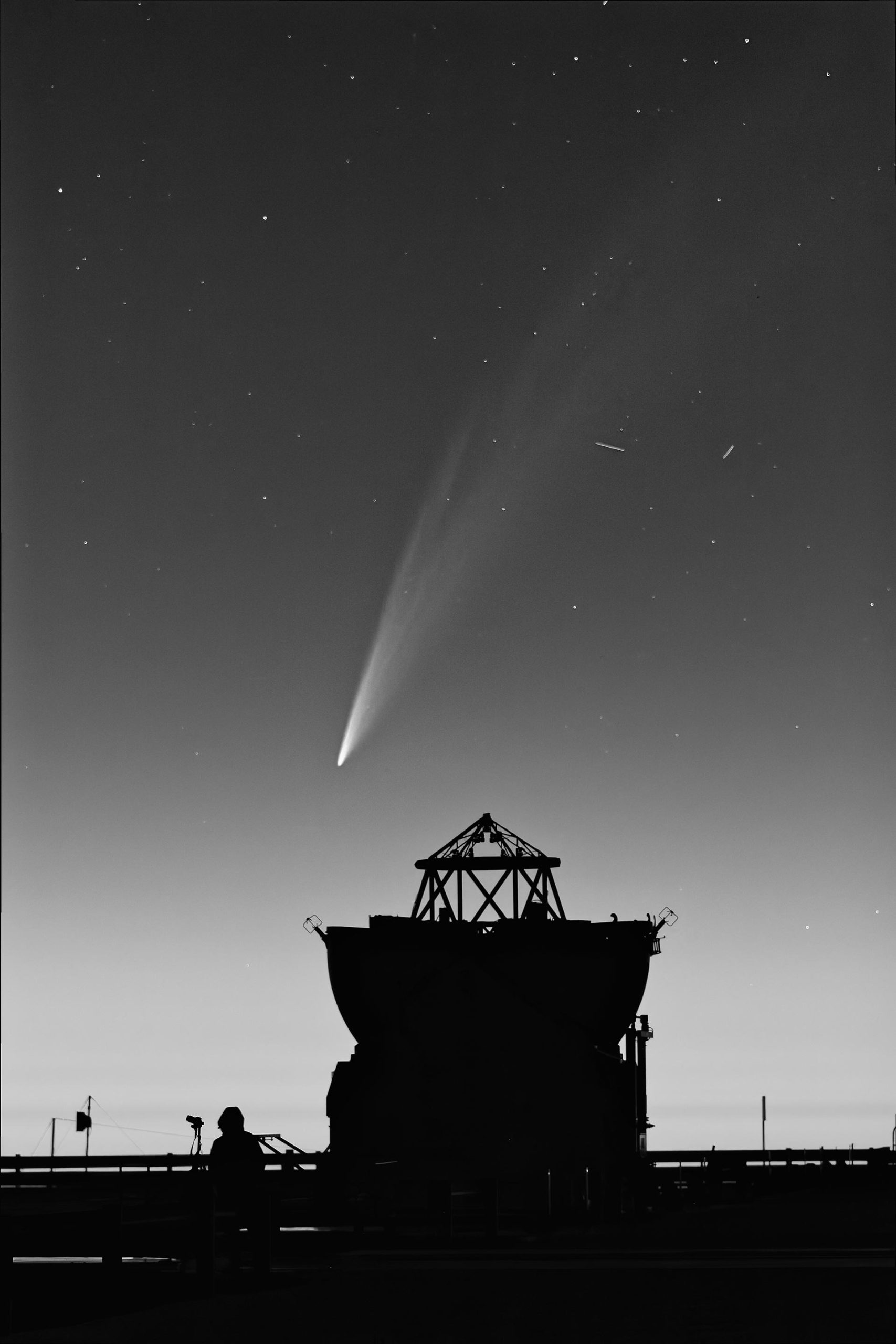
    Comet C/2024 G3 (ATLAS)
    The comet C/2024 G3 (ATLAS) briefly dazzled the southern hemisphere but may soon disintegrate, making this a rare, fleeting spectacle. Credit: J. Beltrán/ESO

    Comets are unpredictable, fleeting visitors in our sky, and C/2024 G3 (ATLAS) was no exception.

    This January, it graced the southern hemisphere with its glowing tail, formed as ice sublimated near the Sun. Now moving away, signs suggest its nucleus may be breaking apart, making it a race against time to witness this cosmic wonder.

    Cosmic Visitors with a Mind of Their Own

    “Comets are like cats: they have tails, and they do precisely what they want,” wrote David H. Levy, an amateur astronomer who discovered 23 comets. These celestial wanderers are indeed unpredictable, and their visibility in the sky is never guaranteed.

    A Stunning Sight in the Southern Sky

    In January, the southern hemisphere was treated to a spectacular sight — comet C/2024 G3 (ATLAS). Captured in a breathtaking image by engineer Juan Beltrán on January 20 at ESO’s Paranal Observatory in Chile, the comet showcased its fleeting beauty. Just last year, another comet made a brief appearance, this time photographed at the European Southern Observatory’s Headquarters in Garching, Germany (see image below). These non-periodic comets are rare visitors, lingering in our skies for only a few weeks. Miss your chance to see one, and you might be waiting thousands of years for its return.
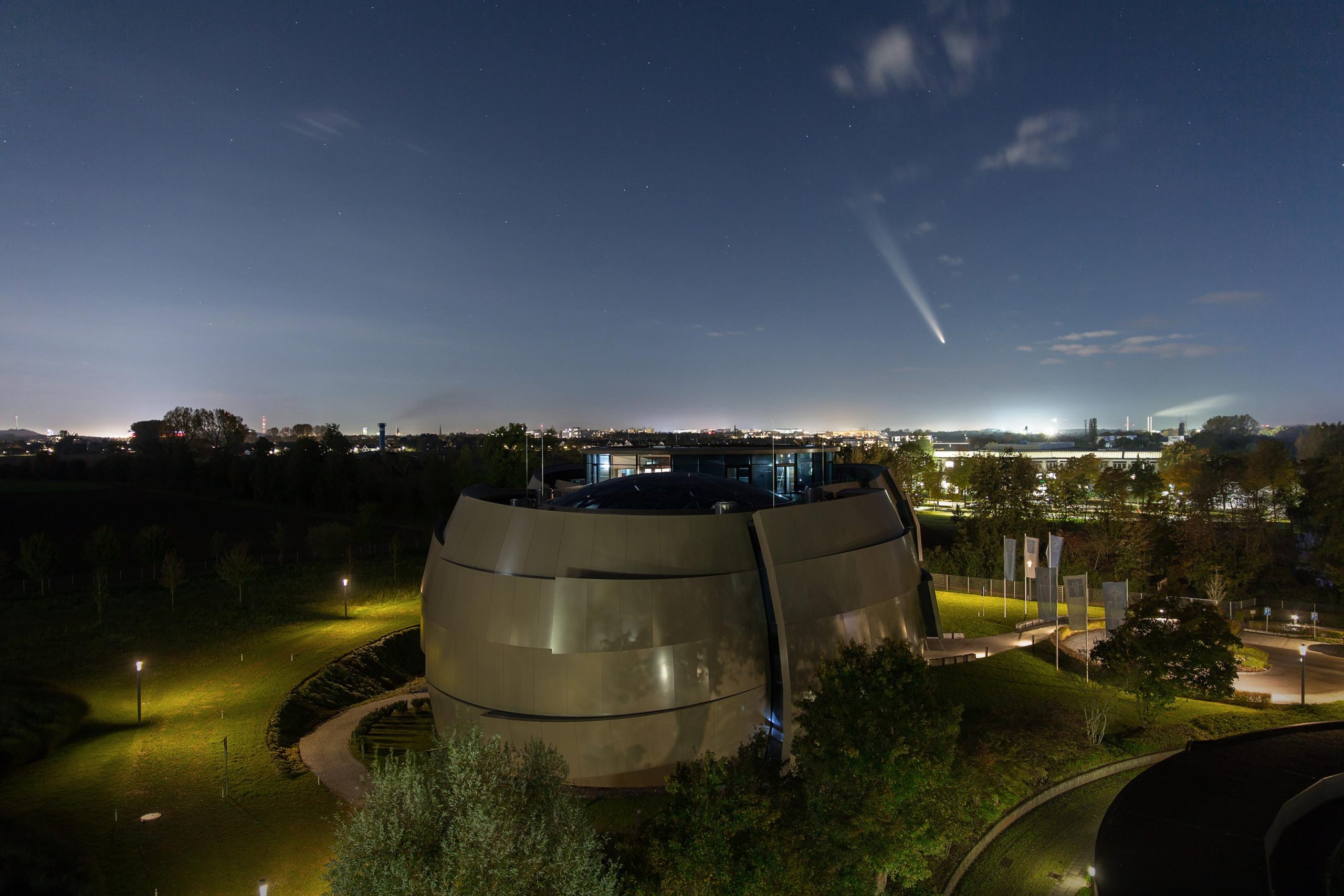
    Comet Tsuchinshan-ATLAS Meets ESO Supernova
    Earth has a majestic new visitor, seen above the ESO Supernova Planetarium & Visitor Centre, the comet C/2023 A3, also known as Tsuchinshan-ATLAS comes to us from the distant Oort Cloud, a gigantic cluster of icy objects that envelops the Solar System. As it got closer to the Sun, it heated up and developed tails of dust and gas observed by comet watchers around the world, including at ESO Headquarters in Garching bei München, Germany. Credit: ESO/J. C. Muñoz-Mateos

    The Science Behind a Comet’s Tail

    As comets approach the Sun they warm up, and the ice in them sublimates, meaning it goes directly from solid ice to gas. Dust particles are also released, and the solar wind and radiation push this gas and dust away from the Sun, creating extended tails. Although astronomers can calculate and estimate how long a comet will be visible, sometimes they surprise us, either by disappearing sooner, or by actually surviving their trip near the Sun relatively intact, saving their typical tail of gas and dust.

    The Fate of C/2024 G3 (ATLAS)

    For C/2024 G3 (ATLAS) that tail may fade quickly. The comet reached perihelion — the point where it is closest to the Sun — on January 13, 2025. At that point, it was only 13 million kilometers (8 million miles) away from our star. But it is now moving away, and there are signs that the nucleus might have fragmented even though the tail is still visible. If you are in the southern hemisphere you can still try to catch it towards the west after sunset; otherwise, check ESO’s webcams!

    Never miss a breakthrough: Join the SciTechDaily newsletter.
    Follow us on Google and Google News.

    Astronomy Comet European Southern Observatory
    Share. Facebook Twitter Pinterest LinkedIn Email Reddit

    Related Articles

    Mysterious Interstellar Visitor May Be the Most Pristine Comet Ever Found

    Astronomers Discover Two Distinct Families of Exocomets Around Beta Pictoris

    Quasar 3C 279 Shown in Unprecedented Sharpness

    Scientists Detect Dark Galaxies for the First Time

    Gas Cloud Headed Towards Milky Way’s Supermassive Black Hole

    View the Eta Aquarid Meteor Shower From Halley’s Comet

    No Evidence of Dark Matter Around the Sun

    Astronomers Combine Hundreds of Images of Carina Nebula to Reveal Thousands of Stars in Stellar Nursery

    Comet Lovejoy Streaks Past Desert Telescope

    1 Comment

    1. Debbie on February 12, 2025 12:39 pm

      It’s really neat stuff I happen to have something and I think it came from an asteroid or something that landed here and stuff and it’s got footprints on it and stuff which I thought was kind of neat and I was going to send you a picture but I don’t seem to know how

      Reply
    Leave A Reply Cancel Reply

    • Facebook
    • Twitter
    • Pinterest
    • YouTube

    Don't Miss a Discovery

    Subscribe for the Latest in Science & Tech!

    Trending News

    Largest-Ever Study Finds Medicinal Cannabis Ineffective for Anxiety, Depression, PTSD

    250-Million-Year-Old Egg Solves One of Evolution’s Biggest Mysteries

    Living With Roommates Might Be Changing Your Gut Microbiome Without You Knowing

    Century-Old Cleaning Chemical Linked to 500% Increased Risk of Parkinson’s Disease

    What if Your Memories Never Happened? Physicists Take a New Look at the Boltzmann Brain Paradox

    One of the Universe’s Largest Stars May Be Getting Ready To Explode

    Scientists Discover Enzyme That Could Supercharge Ozempic-Like Weight Loss Drugs

    Popular Sweetener Linked to DNA Damage – “It’s Something You Should Not Be Eating”

    Follow SciTechDaily
    • Facebook
    • Twitter
    • YouTube
    • Pinterest
    • Newsletter
    • RSS
    SciTech News
    • Biology News
    • Chemistry News
    • Earth News
    • Health News
    • Physics News
    • Science News
    • Space News
    • Technology News
    Recent Posts
    • Black Hole Jets Pack Power of 10,000 Suns, Stunning New Study Reveals
    • A Cosmic Crash Turned This Nearby Galaxy Into Chaos
    • This Alien Solar System Doesn’t Follow the Rules – and Scientists Are Intrigued
    • What Did Prehistoric Europeans Eat? Scientists Uncover Surprising Answers
    • Scientists Say This Overlooked Organ Could Hold the Key to Longer Life
    Copyright © 1998 - 2026 SciTechDaily. All Rights Reserved.
    • Science News
    • About
    • Contact
    • Editorial Board
    • Privacy Policy
    • Terms of Use

    Type above and press Enter to search. Press Esc to cancel.