

This month, catch planetary views of Saturn, Jupiter, and Mars, witness a close pass of the Parker Solar Probe by Venus, and get ready for an occultation of the bright star Spica by the Moon.
November brings exciting skywatching moments, from Saturn’s close approach to the Moon to early-morning views of Mars. Venus pairs with a slim crescent Moon and plays a role in NASA’s latest solar probe mission. Don’t miss the lunar occultation of Spica for early risers in eastern North America.
See the Moon Hide a Bright Star
In the early morning hours of November 27, catch a rare lunar occultation of Spica visible from parts of the U.S. and Canada.
Skywatching Highlights
- All month – Planet visibility report: Saturn shines in the south most of the night, Jupiter rises in the early evening alongside Taurus and Orion, while Mars trails a couple of hours behind, visible high in the early morning sky.
- November 4 – Slim crescent Moon pairs with Venus. Enjoy a beautiful sight just after sunset as the Moon and Venus meet up in the southwestern sky.
- November 10 – Saturn & the Moon. The ringed planet has a close pairing with the Moon tonight (perfect for binoculars)
- November 27 – Lunar occultation of Spica. Early risers in the eastern U.S. and Canada can catch the Moon passing in front of Spica this morning, briefly hiding the bright star from view.
Video Transcript:
What’s Up for November?
When to look for Saturn, Jupiter, and Mars this month, a NASA spacecraft swings by Venus on its way to the Sun, and the tricky business of seeing the Moon hide a bright star. And stick around until the end for photos of highlights from last month’s skies.
Saturn is visible toward the south for most of the night. For observers in the Americas, it has a close meetup with the Moon on the 10th, when the pair will appear less than a degree apart just after dark, making for a great sight through binoculars. Check the sky again around midnight, and you’ll see the Moon has visibly shifted a couple of degrees west of Saturn, showing evidence of the Moon’s orbital motion in just a few hours.
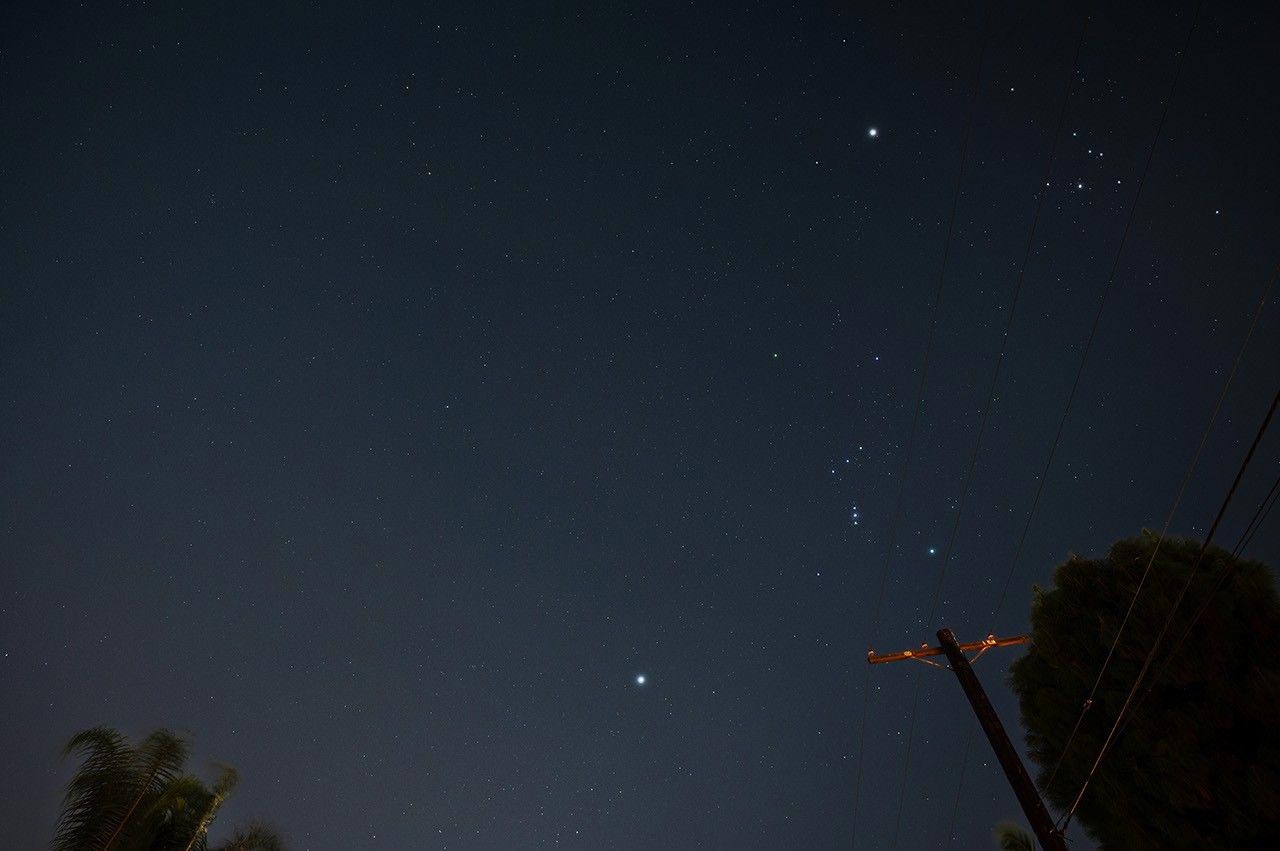
Jupiter is rising in the east early in the night, together with the bright stars of the constellations Taurus and Orion, and working its way across the sky by dawn. By the end of November, it’s rising just as the sky is getting dark. Mars follows behind Jupiter, rising about three hours after the giant planet.
As in October, early risers will find the Red Planet high overhead in the morning sky before dawn. In the evening sky, Venus is low in the southwest following sunset throughout the month of November. It’s blazing bright and unmistakable if you find a relatively unobstructed view. It appears much higher in the sky for those in the Southern Hemisphere, who’ll also be able to easily observe Mercury after sunset this month. And on the 4th, a slim crescent Moon will appear just below Venus for a beautiful pairing as the glow of sunset fades.
Now, staying with Venus, one of NASA’s intrepid solar system explorers is headed for a close encounter with this Earth-sized hothouse of a planet on November 6th. Parker Solar Probe studies our planet’s nearest star, the Sun. Its mission is to trace the flow of energy that heats the Sun’s outer atmosphere and accelerates the million-mile-per-hour stream of particles it emits. It makes its measurements from super close to the Sun, within the region where all the action happens. To do this, the spacecraft was designed to fly within just 4 million miles of the Sun’s surface, which is 10 times closer than the orbit of the closest planet, Mercury. No other spacecraft has ever gotten this close to the Sun before.
In the six years since its launch, the spacecraft has made a bunch of approaches to the Sun, using flybys of the planet Venus to shape its orbit. The November 6th flyby is the final such maneuver, intended to send the spacecraft toward its three closest-ever solar approaches, starting on December 24th. During this last Venus flyby, the mission will capture images of the planet. Previous views returned by Parker showed that the spacecraft could actually see features of the Venusian surface through its dense cloud cover. So look out for Venus in the evening sky, as the brilliant planet helps a craft from Earth to touch the face of the Sun.
In the couple of hours before sunrise on November 27th, skywatchers in the eastern half of the U.S. and Canada will have the chance to witness an occultation – an event where the Moon passes in front of, and temporarily hides, a bright star – in this case Spica. Observers in other parts of the world will see the Moon pass extremely close to Spica, but won’t see it cover up the star. This occultation is one of a series that began in June and will continue monthly through late next year. These happen as the Moon’s orbit slowly shifts northward and southward across the sky, and every so often, its path crosses in front of Spica monthly for a time. But each occultation is only visible from a small portion of Earth.
For example, while this November event favors North American viewers, South American observers will get their chance next April. For U.S. skywatchers, this November occultation is the last good opportunity in this series to see the Moon occult Spica until 2032, when a new series of monthly occultations will begin for locations across the globe. Now, if you miss this event, don’t worry!
The Moon also passes in front of three other bright stars from time to time. This means that no matter where you’re located, you’ll have the opportunity before too long to witness the impressive sight of a bright star briefly disappearing behind the Moon.
Watch our video for views of what some of the highlights we told you about in last month’s video actually looked like.
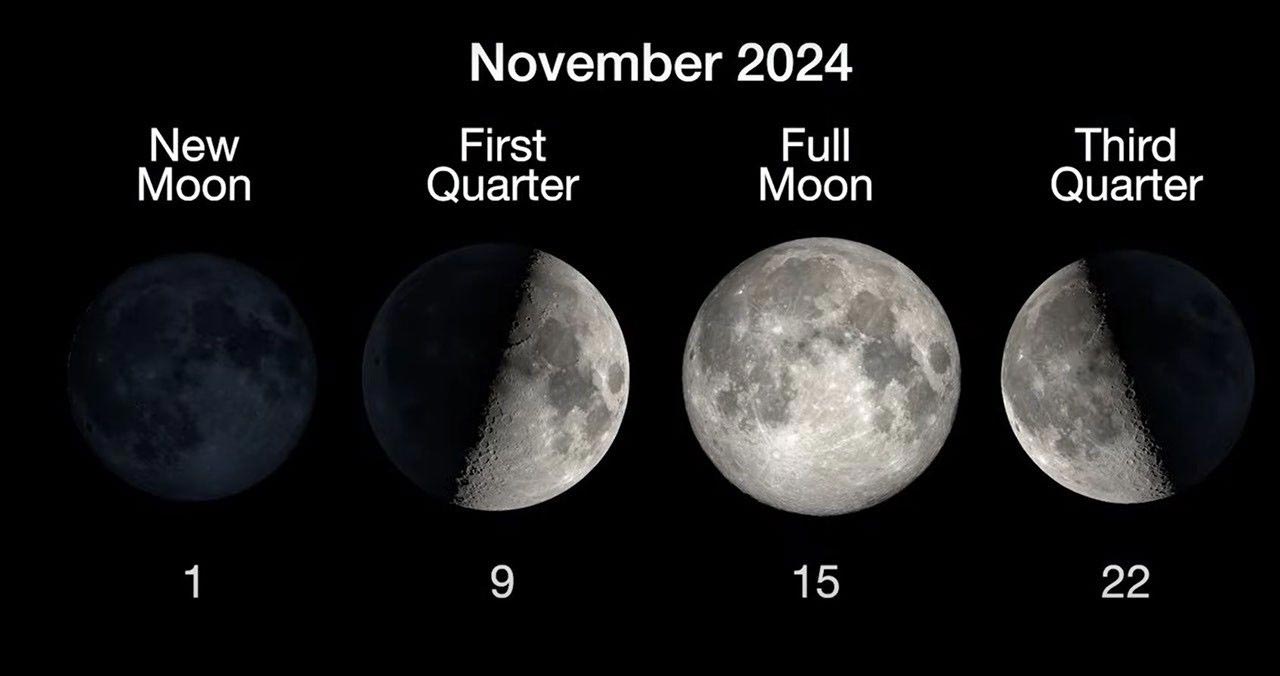
Above are the phases of the Moon for November.
Never miss a breakthrough: Join the SciTechDaily newsletter.
Follow us on Google and Google News.