
Close Menu
    Facebook X (Twitter) Instagram
    SciTechDaily
    • Biology
    • Chemistry
    • Earth
    • Health
    • Physics
    • Science
    • Space
    • Technology
    Facebook X (Twitter) Pinterest YouTube RSS
    SciTechDaily
    Home»Space»Don’t Miss the Delta Aquariid Meteor Shower Light Up the Night Sky
    Space

    Don’t Miss the Delta Aquariid Meteor Shower Light Up the Night Sky

    By Jonathan Deal and Lane Figueroa, Marshall Space Flight CenterJuly 28, 20241 Comment3 Mins Read
    Facebook Twitter Pinterest Telegram LinkedIn WhatsApp Email Reddit
    Share
    Facebook Twitter LinkedIn Pinterest Telegram Email Reddit
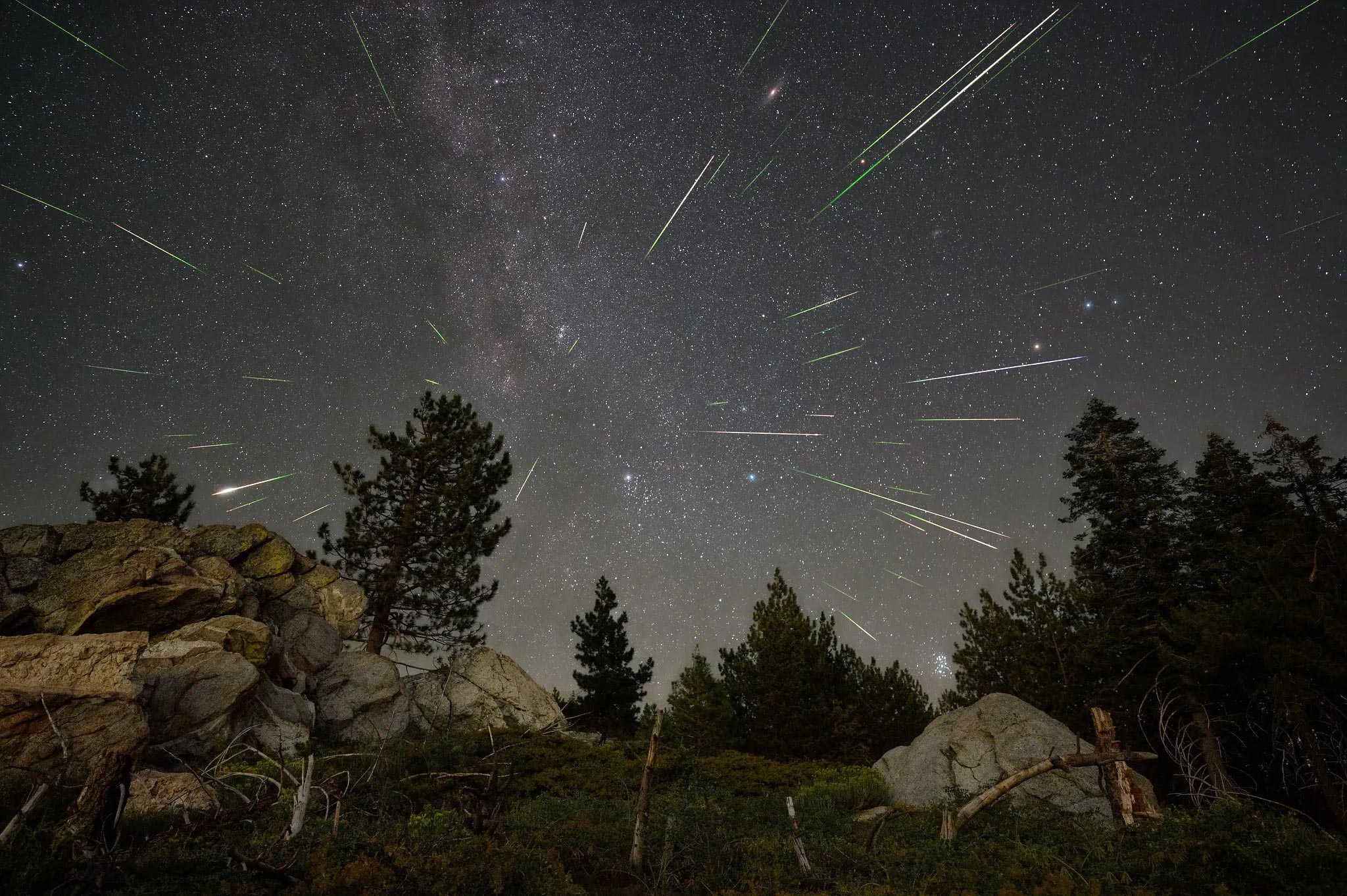
    Perseids Meteors Streak Over Sequoia National Forest
    Perseids meteors – which coincide with the Southern Delta Aquariids at the tail end of July – streak over Sequoia National Forest in this 2023 NASA photo. Credit: NASA/Preston Dyches

    The Southern Delta Aquariids meteor shower, peaking on July 28, offers a more subdued spectacle compared to the brighter Perseids.

    Ideal for viewers in the Southern Hemisphere, the shower is best observed in the darkest skies, with potential sightings of 2-5 meteors per hour. These meteors, thought to originate from Comet 96P/Machholz, are distinguishable by their radiant in the constellation of Aquarius.

    Summer Meteor Showers

    Most casual skywatchers know the bright, busy Perseids meteor shower arrives in late July and peaks in mid-August. Fewer are likely to name-drop the Southern delta Aquariids, which overlap with the Perseids each summer and are typically outshone by their brighter counterparts, especially when the Moon washes out the Southern delta Aquariids.

    This year, with the Southern Delta Aquariids set to peak on the night of July 28, the underdog shower isn’t likely to deliver any surprises. Unless you’re below the equator, it’ll take a keen eye to spot one.

    “The Southern delta Aquariids have a very strong presence on meteor radars which can last for weeks,” said NASA astronomer Bill Cooke, who leads the Meteoroid Environment Office at NASA’s Marshall Space Flight Center in Huntsville, Alabama. “Sadly, for most observers in the Northern Hemisphere, they’re difficult to spot with the naked eye, requiring the darkest possible skies.”

    Best Viewing Times and Conditions

    Meteor watchers – particularly those in the southern United States and points south – will be best served to check out the night sky July 28-29 before moonrise at 2 a.m.

    During peak shower activity, under ideal viewing conditions with no Moon in the sky, casual watchers may see 2-5 meteors per hour, flashing into view at speeds of 25 miles per second. A small percentage of these may leave glowing, ionized gas trails that linger visibly for a second or two after the meteor has passed. But most of the noticeable activity for the Southern Delta Aquariids occurs over a couple of days around its peak, so don’t expect to see any past the end of July.

    Identifying and Understanding Meteor Showers

    You can distinguish Southern Delta Aquariids meteors from the Perseids by identifying their radiant, or the point in the sky from which a meteor appears to originate. Southern delta Aquariids appear to come from the direction of the constellation of Aquarius, hence the name. The Perseids’ radiant is in the constellation of Perseus in the northern sky.

    Most astronomers agree the Southern Delta Aquariids originate from Comet 96P/Machholz, which orbits the Sun every 5.3 years. Discovered by Donald Machholz in 1986, the comet’s nucleus is roughly 4 miles across – about half the size of the object suspected to have wiped out the dinosaurs. Researchers think debris causing the Southern Delta Aquariid meteor shower was generated about 20,000 years ago.

    Never miss a breakthrough: Join the SciTechDaily newsletter.
    Follow us on Google and Google News.

    Astronomy NASA NASA Marshall Space Flight Center
    Share. Facebook Twitter Pinterest LinkedIn Email Reddit

    Related Articles

    Don’t Miss the Comet: Witness Tsuchinshan-ATLAS Before It Disappears for 80,000 Years

    NASA’s Fermi Space Telescope Captures Cosmic Fireworks in Dynamic Gamma-Ray Sky

    Astrophysicists Solve 40-Year-Old Black Hole Jet Mystery With NASA’s IXPE

    Surprising Results From NASA’s IXPE Help Unlock the Secrets of Famous Exploded Star

    NASA IXPE Observatory’s First Stunning Image: The Glowing Remains of an Exploded Star

    “X-Ray Magnifying Glass” Provides Unprecedented Look at Black Hole in the Early Universe

    Treasure Trove of Cosmic Delights Revealed by NASA’s Chandra X-ray Observatory

    Star Captured by Supermassive Black Hole’s Gravity – And Survives!

    NASA TV Will Broadcast Perseid Meteor Shower Program

    1 Comment

    1. LK on August 5, 2024 6:40 am

      Why am I being ahown this afyer the fact? It is august 5th…

      Reply
    Leave A Reply Cancel Reply

    • Facebook
    • Twitter
    • Pinterest
    • YouTube

    Don't Miss a Discovery

    Subscribe for the Latest in Science & Tech!

    Trending News

    One of the Universe’s Largest Stars May Be Getting Ready To Explode

    Scientists Discover Enzyme That Could Supercharge Ozempic-Like Weight Loss Drugs

    Popular Sweetener Linked to DNA Damage – “It’s Something You Should Not Be Eating”

    Ancient “Rock” Microbes May Reveal How Complex Life Began

    Researchers Capture Quantum Interference in One of Nature’s Rarest Atoms

    “A Plague Is Upon Us”: The Mass Death That Changed an Ancient City Forever

    Scientists Discover Game-Changing New Way To Treat High Cholesterol

    This Small Change to Your Exercise Routine Could Be the Secret to Living Longer

    Follow SciTechDaily
    • Facebook
    • Twitter
    • YouTube
    • Pinterest
    • Newsletter
    • RSS
    SciTech News
    • Biology News
    • Chemistry News
    • Earth News
    • Health News
    • Physics News
    • Science News
    • Space News
    • Technology News
    Recent Posts
    • Bee Bacteria Could Fix a Major Flaw in Plant-Based Milk
    • Scientists Discover a Surprising Way To Make Bread Healthier and More Nutritious
    • Natural Compounds Boost Bone Implant Success While Killing Bacteria and Cancer Cells
    • After 60 Years, Scientists Uncover Unexpected Brain Effects of Popular Diabetes Drug Metformin
    • New Research Uncovers Hidden Side Effects of Popular Weight-Loss Drugs
    Copyright © 1998 - 2026 SciTechDaily. All Rights Reserved.
    • Science News
    • About
    • Contact
    • Editorial Board
    • Privacy Policy
    • Terms of Use

    Type above and press Enter to search. Press Esc to cancel.